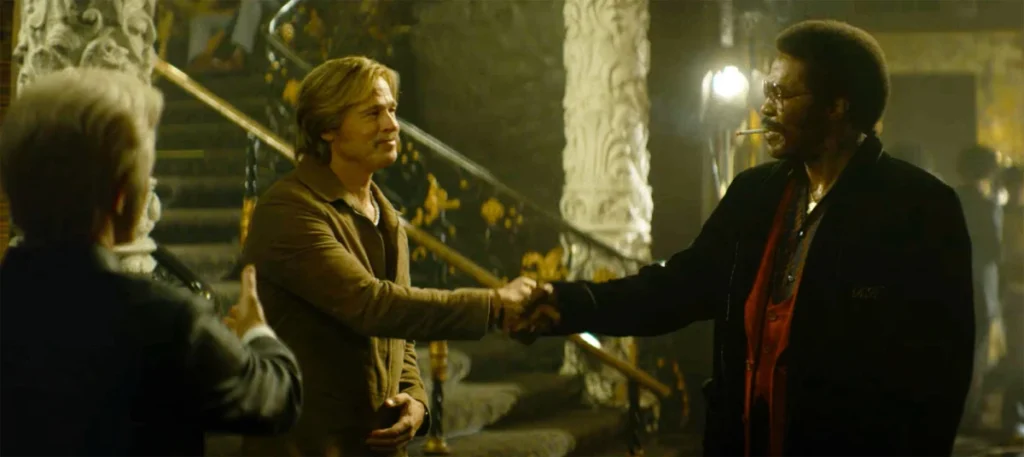

The landscape of modern cinema is set for a high-profile collision of auteurs as Netflix releases the second official trailer for The Further Mis-Adventures of Cliff Booth. Directed by acclaimed filmmaker David Fincher and written by Quentin Tarantino, the film serves as a direct narrative spin-off to Tarantino’s 2019 Academy Award-winning feature Once Upon a Time in Hollywood. Brad Pitt steps back into the iconic boots of Cliff Booth, the laconic, sunglasses-wearing stuntman whose effortless cool captured audiences worldwide. Scheduled for an exclusive theatrical rollout in over 500 global IMAX locations this November before premiering on Netflix in December, the project represents a rare creative union between two of the most distinctive voices in contemporary American filmmaking.
The latest promotional footage provides a much sharper, narrative-driven look into the world Fincher and Tarantino have constructed. Moving away from the idyllic, sun-drenched, yet underlyingly menacing counter-culture movement of 1969 depicted in the original film, the new story advances the timeline to 1977. Los Angeles has entered a grittier, post-hippie reality. The utopian dreams of the late sixties have curdled, and the city’s underbelly has grown increasingly complex and dangerous. For Cliff Booth, the fairytale is definitively over. The industry no longer relies on a hippie-slaying stuntman in quite the same way, but Hollywood’s ecosystem remains perpetually plagued by scandals, secrets, and high-stakes corruption. Booth finds himself transitioning into a role akin to a studio fixer—navigating a treacherous landscape defined by murder, blackmail, theft, and extortion.
Main Facts of the Production and Release Schedule
The scale of the distribution strategy underscores Netflix’s confidence in the project. The film is slated for a specialized theatrical run starting November 25, 2026, hitting more than 500 IMAX screens worldwide. This cinematic engagement precedes its official digital debut on Netflix, which is scheduled for December 23, 2026, positioning the feature as a major holiday viewing event for the streaming giant.

The ensemble cast supporting Brad Pitt features a formidable lineup of talent, including Elizabeth Debicki, Scott Caan, Carla Gugino, Yahya Abdul-Mateen II, Peter Weller, Corey Fogelmanis, JB Tadena, and Karren Karagulian. Behind the camera, the production matches this star power with a powerhouse crew. The screenplay is penned by Quentin Tarantino, utilizing characters and mythology originating from his cinematic universe. Directorial duties are spearheaded by David Fincher, whose meticulous, dark aesthetic promises to lend a distinct neo-noir texture to the proceedings.
Production is backed by a heavyweight team of producers, including Ceán Chaffin, David Heyman, Shannon McIntosh, Brad Pitt himself, and Tarantino. Visual storytelling is anchored by cinematographer Erik Messerschmidt, a frequent Fincher collaborator known for his precise, moody lighting and framing, which should starkly contrast with the bright, nostalgic lenses used by Robert Richardson in the 2019 predecessor.
Chronology and Background Context
To fully understand the trajectory of The Further Mis-Adventures of Cliff Booth, one must examine the timeline of its development. The genesis traces back to the massive critical and commercial success of Once Upon a Time in Hollywood, which grossed over $377 million worldwide and earned 10 Academy Award nominations, securing wins for Best Supporting Actor (Brad Pitt) and Best Production Design. Following the film’s release, Tarantino frequently discussed expanding the literary and cinematic universe surrounding his characters, notably penning a novelization of the film that offered deeper backstories for both Rick Dalton and Cliff Booth.
While Tarantino initially flirted with directing further stories himself, the project ultimately shifted toward David Fincher, a long-time peer and friend of Tarantino. Fincher, whose recent output with Netflix includes Mank (2020) and The Killer (2023), signed on to helm the feature under his overarching deal with the streaming platform. Originally referred to simply as The Adventures of Cliff Booth, the film gradually evolved into The Further Mis-Adventures of Cliff Booth as production ramped up.

The narrative chronology jumps forward by eight years. In 1969, Cliff Booth was an aging, unfazed stunt double living in a trailer with his pit bull, Brandy, casually brushing shoulders with the Manson family cult before the explosive climax on Cielo Drive. By 1977, the cultural landscape of the United States had shifted dramatically. The Watergate scandal had broken, the Vietnam War had ended, and the innocence of the 1960s had given way to the cynicism, economic stagnation, and gritty realism of the late 1970s. In this environment, Booth’s unique, extralegal skill set makes him exceptionally qualified to handle the messy reality of a transitioning Hollywood studio system.
Supporting Data and Production Insights
The decision to premier the film in IMAX format highlights a broader industry trend where streaming services utilize premium theatrical windows to build prestige and event status around high-budget original content. Securing over 500 IMAX locations globally for a streaming-backed movie is a significant logistical achievement, reflecting strong theater chain participation despite the abbreviated window before its digital release.
Fincher’s directorial style introduces a fascinating stylistic pivot for the material. While Tarantino’s direction is characterized by kinetic energy, pop-culture-heavy dialogue, and explosive bursts of violence, Fincher is renowned for his clinical precision, slow-burn tension, psychological depth, and methodical pacing. The fusion of Tarantino’s character-driven, pulp-infused script with Fincher’s atmospheric, razor-sharp visual eye has generated substantial anticipation among cinephiles.
Furthermore, the supporting cast brings a wealth of prestige and genre versatility. Elizabeth Debicki, fresh off acclaimed performances in television and film, adds an aura of classical Hollywood elegance mixed with modern dramatic weight. Veterans like Peter Weller and Carla Gugino ground the 1970s period setting with authentic genre credibility, while Yahya Abdul-Mateen II introduces a dynamic contemporary presence to the unfolding noir narrative.

Official Responses and Industry Implications
While traditional press junkets and formal review embargoes remain months away, the release of the second trailer has triggered widespread discourse across entertainment media and fan communities. Industry analysts note that the collaboration between Fincher and Tarantino—two titanic writer-directors of the modern era—represents a watershed moment for auteur-driven cinema within the streaming ecosystem.
For Netflix, the project represents a continued investment in high-end, director-driven theatrical plays. By offering an exclusive IMAX window, the platform aims to capture the theatrical audience that values premium large-format presentations, while simultaneously securing a major tentpole attraction for its holiday streaming catalog. This hybrid distribution model reflects the ongoing evolution of film exhibition, where traditional theatrical boundaries continue to blur in the face of dominant streaming platforms.
Broader Impact and Analysis
The release of The Further Mis-Adventures of Cliff Booth carries several implications for the future of cinematic universes and franchise expansion. Rather than relying on traditional superhero or action-blockbuster paradigms, this project explores the potential of character-driven cinematic expansion, treating a dramatic supporting character from an original auteur film as a vehicle for a genre-shifting sequel.

By shifting the genre from the sun-bleached hangout movie of 1969 to a sleazy, neo-noir studio fixer story set in 1977, the filmmakers avoid repeating the exact formula of the original film. Instead, they use the passage of time as a thematic device, reflecting both the aging of the character and the darker evolution of Hollywood itself. As the release dates approach, anticipation continues to mount, positioning Fincher and Tarantino’s joint venture as one of the definitive cinematic events of the late 20th and early 21st-century crossover landscape.