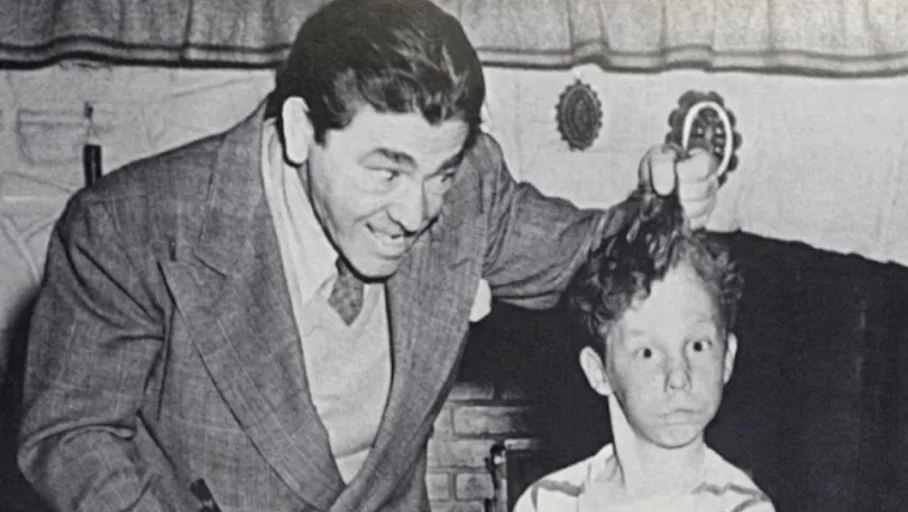

Paul Howard, who occupied a unique and cherished place in American comedy history as the only son of Moe Howard—the undisputed leader and tactical mastermind of The Three Stooges—has passed away at the age of 91. His death was officially announced this week by a spokesperson for C3 Entertainment, the corporate custodian and licensing entity that manages the intellectual property, brand, and enduring legacy of the legendary slapstick troupe.
Residing for his final years on the upscale Upper East Side of Manhattan, Paul Howard’s passing marks a deeply symbolic end of an era. With his death, the direct lineage of the original trio’s immediate households comes to a close. He was the final remaining son of any of the pioneering members who constituted the definitive configuration of the act: Moe Howard, his brothers Curly Howard and Shemp Howard, and their longtime partner Larry Fine. For decades, Paul stood as a living bridge to a golden age of Hollywood filmmaking, Vaudeville, and physical comedy, offering historians, researchers, and millions of devoted fans an intimate, unfiltered look at the domestic reality behind one of the most prolific and enduring comedy teams in cinematic history.
Guardianship of a Slapstick Dynasty
Since the death of his father, Moe Howard, in May 1975 at the age of 77, Paul Howard assumed the mantle of legacy guardian. While the world knew Moe as the aggressive, bowl-cut-wearing, eye-poking, head-slapping boss of the Stooges, Paul knew him simply as a dedicated father who successfully managed to separate his fiercely chaotic professional persona from his peaceful, family-oriented home life.
Rather than fading quietly into the background of Hollywood history, Paul embraced his role as an ambassador for the Stooges’ universe. Over the span of several decades, he became a familiar and welcome fixture at fan conventions, memorabilia shows, and retrospective screenings across the United States. At these gatherings, he engaged directly with generations of admirers who had grown up watching the studio short subjects on television. He shared humorous anecdotes, backstage memories, and deeply personal insights into the complex dynamics that drove his father, his Uncle Shemp, and his Uncle Curly.
Those who interacted with Paul often remarked on his gentle demeanor, sharp memory, and unwavering dedication to preserving the dignity and professional achievements of his family. He understood that the slapstick violence of the Stooges—often dismissed by contemporary critics in their early years—was actually a marvel of choreographed precision, physical athleticism, and theatrical timing. Through public appearances, interviews, and community engagement, Paul ensured that the human beings behind the cinematic chaos were remembered not merely as cartoonish caricatures, but as hardworking entertainers who dedicated their lives to making audiences laugh through periods of profound national stress, including the Great Depression and World War II.
The 2015 Docuseries: Preserving History for a New Generation
One of Paul Howard’s most significant contributions to the preservation of his family’s history came later in his life when he served as the primary narrator for the critically acclaimed nine-part docuseries titled Hey Moe, Hey Dad!, released in 2015.
The ambitious project offered a comprehensive deep dive into the lives and careers of the Howard family, utilizing rare archival footage, personal home movies, scrapbooks, and extensive family accounts that had rarely, if ever, been seen by the general public. In addition to Paul’s guiding narration, the series featured rich, emotional interviews with surviving members of the Howard, Fine, and DeRita families—acknowledging Curly Joe DeRita, who stepped into the Stooges’ lineup during their later film and television era.
Furthermore, Hey Moe, Hey Dad! captured the broad cultural impact of The Three Stooges by incorporating interviews with prominent contemporary entertainers and cultural critics, including Academy Award-winning actress Whoopi Goldberg and renowned film historian Leonard Maltin. Both figures spoke at length about how the Stooges influenced generations of comedians and shaped the landscape of modern visual comedy. Today, the docuseries remains accessible to global audiences via The Three Stooges+ official YouTube channel, serving as an educational and entertaining monument to the troupe’s enduring cultural footprint.
A Family Rooted in Show Business and History
Paul Howard’s familial heritage extended far beyond the soundstages of Columbia Pictures, intertwining with some of the most fascinating cultural phenomena of the 20th century.
Born on July 8, 1935, Paul was the youngest child of Moe Howard and Helen Schonberger. Moe and Helen had married in a traditional ceremony in June 1925, forging a partnership that would weather the immense pressures of Vaudeville touring, grueling film production schedules, and the shifting tides of the entertainment industry. The couple welcomed their first child, a daughter named Joan, in April 1927. Joan later carved out her own successful path in the creative arts as a talented writer and actress, maintaining a lifelong connection to her family’s legacy until her passing in September 2021 at the age of 94. Helen, the matriarch of the family, lived just six months past Moe’s death, passing away in late 1975.
Adding a fascinating footnote to the family tree, Moe’s wife Helen was a cousin of the legendary illusionist, escape artist, and stunt performer Harry Houdini. This remarkable connection placed Paul Howard within a remarkably rich nexus of American entertainment history, bridging the worlds of master escapology and legendary physical comedy.
For the greater part of his adult life, Paul lived a quiet and grounded existence in Rifton, New York, where he resided for more than four decades before eventually making the decision to relocate to Manhattan’s vibrant Upper East Side in his later years. Despite his famous lineage, he maintained a humble lifestyle, prioritizing family, community, and the careful stewardship of his father’s historical archive.
Surviving Family and Continuing Lineage
Following his passing, Paul Howard leaves behind a close-knit family that continues to carry forward the memory of the Howard name. He is survived by his devoted wife, Joanne; his daughter, Jennifer; his nephew, Jeffrey; and his cousin, Janie Howard Hanky. Janie, born in May 1948, is the daughter of Jerome "Curly" Howard, making her a vital living link to one of the most beloved comedic performers in cinema history.
The survival of these family members, alongside corporate entities dedicated to brand preservation, ensures that the historical records, personal artifacts, and cultural contributions of the Howard family will remain intact for future historians and fans.
The Broader Impact and Historical Implications
The passing of Paul Howard closes a direct chapter on an era of American entertainment that can never be replicated. The Three Stooges produced nearly 200 short films for Columbia Pictures between 1934 and 1958, a body of work defined by relentless slapstick, anarchic humor, and a unique fraternal chemistry that modern film critics and sociologists continue to study.
In the early decades of their career, the Stooges were frequently dismissed by mainstream film critics who viewed their brand of physical comedy as lowbrow or overly chaotic. However, as decades passed, cultural consensus shifted dramatically. Academics and filmmakers began to recognize the Stooges as brilliant satirists, master physical actors, and cinematic pioneers whose influence can be seen in generations of subsequent comedy acts, from television sketch shows to modern physical comedy and punk rock culture.
Paul Howard’s role in this historical reassessment cannot be overstated. By stepping forward to share intimate family narratives, clarify misconceptions about his father and uncles, and lend his voice to documentary projects, Paul transformed personal grief into public education. He ensured that the humanity, professional discipline, and genuine warmth of men like Moe, Curly, and Shemp were never overshadowed by the fictional violence of their onscreen personas.
As the last immediate son of the original ensemble departs, the responsibility of maintaining the Stooges’ institutional memory shifts entirely to second-generation descendants, corporate archivists, and dedicated film historians. Yet, the foundational work completed by Paul Howard over the course of his 91 years guarantees that the story of The Three Stooges remains accurate, deeply human, and permanently etched into the cultural fabric of American entertainment history.