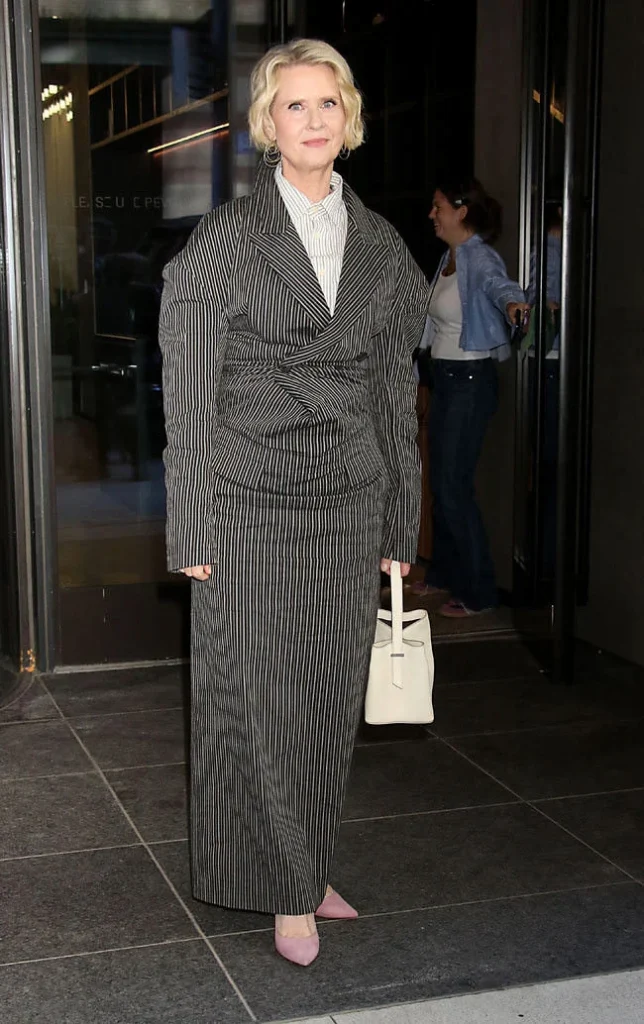

The intersection of prestige television promotion and avant-garde fashion sparked widespread discussion on November 5, 2026, when actress and activist Cynthia Nixon appeared as a guest on Bravo’s late-night talk show Watch What Happens Live with Andy Cohen. Stepping into the New York City studio to promote her role in the hit HBO historical drama series The Gilded Age, Nixon opted for a striking striped ensemble from Issey Miyake’s Fall 2026 collection, styled by Alicia Lombardini. While the artistic merit of the Japanese design house’s pleats and architectural tailoring was universally acknowledged by fashion critics, the television appearance ignited a broader conversation regarding the logistical and visual challenges of wearing high-concept apparel within the traditional parameters of late-night television promotional circuits.
Chronology of the Press Appearance and Fashion Selection
Cynthia Nixon’s late-night television engagement formed part of a tightly scheduled press itinerary designed to generate viewership for the latest season of The Gilded Age. The period drama, created by Julian Fellowes and set against the backdrop of late-nineteenth-century New York society, requires its cast to engage in extensive media rounds, balancing historical press obligations with contemporary stylistic choices.

On the afternoon of November 5, 2026, Nixon was photographed arriving at the Watch What Happens Live studios. Styled by Alicia Lombardini—known for curating bold, intellectually resonant wardrobes for her celebrity clients—Nixon selected a piece straight from Issey Miyake’s Fall 2026 runway. The ensemble, characterized by distinctive striped patterns and innovative fabric manipulation, diverged significantly from the standard, camera-optimized silhouettes typically favored by publicists and television stylists. Following the recording of the broadcast, fashion commentators and industry insiders immediately dissected the look, evaluating its success against the unique physical demands of a television set.
Sartorial Analysis: The Issey Miyake Fall 2026 Collection
The choice of Issey Miyake places Nixon within a distinct echelon of sartorial risk-takers. The brand, globally renowned for its pioneering work with synthetic fabrics and permanent pleating techniques introduced by its founder in the late twentieth century, prioritizes movement, sculptural form, and textural complexity over conventional tailoring.
The Fall 2026 ensemble worn by Nixon featured intricate linear dynamics and voluminous draping. In a runway context, these garments command attention through their kinetic interaction with the model’s stride and the controlled environment of a fashion show. However, translating these complex architectural pieces to a seated television format introduces distinct visual obstacles. Industry observers noted that the structural slouch inherent to the design—intended to evoke fluidity and ease—can inadvertently translate on camera as a lack of posture when the wearer is seated in the customary club chairs of a talk show set.

Furthermore, the styling decision to pair the ensemble with vibrant pink pumps introduced a chromatic contrast that drew mixed reviews from style analysts. While the footwear injected a jolt of unexpected color into the monochromatic or neutral-heavy palette often associated with Miyake’s textile engineering, some critics questioned whether the competing visual elements detracted from the integrity of the primary garment.
The Logistics of Television Press Tours
The incident underscores the perpetual tension between high-fashion artistry and the pragmatic requirements of television publicity. Publicists and stylists operating within the entertainment industry generally adhere to specific heuristics when dressing talent for promotional appearances. Standard protocols typically dictate garments with high-contrast necklines, solid colors that register cleanly on high-definition broadcast equipment, and structured silhouettes that maintain their integrity while the interviewee is seated.
Late-night sets, such as the colorful, intimate clubhouse environment engineered by Andy Cohen, present distinct lighting and spatial constraints. Complex textures, such as fine pleats or intricate knits, can sometimes create optical moiré patterns on television screens, while oversized garments risk overwhelming the wearer’s frame when viewed from a fixed, waist-up or three-quarters camera angle. By choosing an Issey Miyake creation, Nixon and Lombardini deliberately bypassed conventional television styling formulas in favor of a cerebral, high-fashion statement that prioritized artistic expression over safe, broadcast-tested formulas.

Industry Implications and Public Reception
The discussion surrounding Nixon’s outfit reflects a growing appetite among seasoned actors to use standard promotional platforms as runways for independent, design-forward labels. Rather than relying on predictable cocktail dresses or standard-issue designer gowns, performers with established cultural profiles are increasingly utilizing late-night television spots to showcase conceptual fashion.
This trend carries implications for both celebrity stylists and luxury design houses. While risk-taking on television may occasionally invite critiques regarding traditional camera flattery, it significantly elevates the cultural currency of the brands involved, sparking digital engagement and driving discourse across dedicated fashion and entertainment platforms. For Nixon, whose public persona frequently bridges high-culture theater, television, and political activism, the choice of a complex, intellectual brand like Issey Miyake aligns seamlessly with her established public identity.
Ultimately, while the ensemble may not have conformed to the rigid, conventional guidelines traditionally recommended for a promotional tour stop, it succeeded in generating substantial media attention, reinforcing the notion that red-carpet and television wardrobes can—and perhaps should—function as platforms for genuine artistic experimentation.