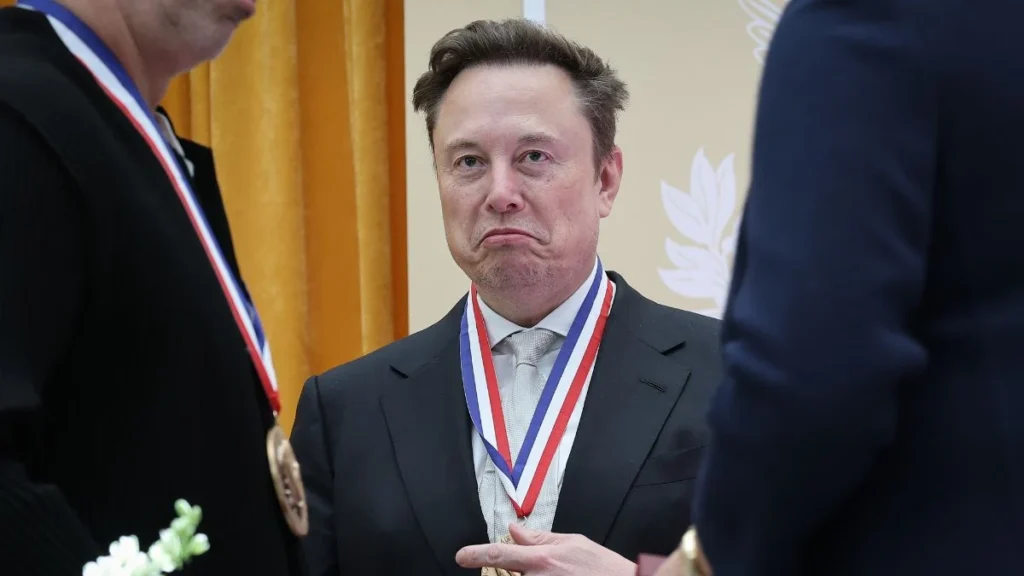

The landscape of American politics is experiencing an unprecedented financial infusion as the 2026 United States midterm elections approach their final phases. At the epicenter of this historic wave of capital is billionaire entrepreneur Elon Musk, who has firmly established himself as the single largest individual political donor of the current election cycle. According to comprehensive analyses of federal campaign finance disclosures and reports compiled by BBC Verify, Musk has channeled nearly $500 million toward Republican candidates, conservative political action committees, and allied advocacy groups.
This staggering financial commitment arrives at a moment when the overall cost of American elections has shattered previous historical benchmarks. OpenSecrets, a nonpartisan research group that tracks money in U.S. politics, projects that total spending for the 2026 midterms will reach a staggering $11.9 billion. This figure represents an approximate 30 percent increase compared to the previous midterm cycle in 2022. Federal filings evaluated by mid-October indicated that more than $9.5 billion had already been deployed, with political action committees (PACs) and super PACs accounting for roughly $5.5 billion of that total.
Musk’s financial strategy has been meticulously targeted, focusing heavily on pivotal senatorial contests across the country where the balance of power in the United States Senate hangs in the balance. By leveraging his immense wealth through structured political vehicles, the tech mogul has redefined the scale of individual influence in modern American electoral politics, prompting renewed debates regarding campaign finance reform, the role of super PACs, and the growing dominance of ultra-wealthy megadonors in shaping the democratic process.
The Mechanics and Destination of Musk’s Contributions
The vast majority of the funds directed by Musk have been funneled through two primary conduits: America PAC, the political action committee he founded during the 2024 presidential election cycle, and the Republican-leaning Senate Leadership Fund.
Under United States federal election law, super PACs operate under specific regulatory frameworks. Officially designated as independent-expenditure-only committees, they possess the legal authority to accept unlimited financial contributions from individuals, corporations, labor unions, and other political committees. However, these entities are strictly prohibited from contributing funds directly to candidate campaigns. Instead, they must operate independently, deploying their resources on advertising, voter mobilization, and grassroots outreach designed either to favor or oppose specific candidates.
America PAC has served as the operational arm for much of Musk’s recent political strategy. Financial reviews indicate that the super PAC has pumped more than $45 million into a single, intensely watched Senate race in Texas. In this contest, incumbent Republican Ken Paxton is facing a formidable challenge from Democratic candidate James Talarico. The race has drawn national attention not only because of its potential to alter the ideological composition of the Senate, but also due to the sheer volume of outside money flooding local media markets.
Beyond Texas, America PAC has made substantial investments in other key battleground states. The group has poured approximately $10 million into each of the highly competitive Senate races in Michigan and Ohio. These states are viewed by political strategists on both sides of the aisle as essential checkpoints in the broader war for congressional majority control, ensuring that financial contributions will continue to pour in unabated until the final ballots are cast.
A Historic Wave of Megadonor Spending
While Elon Musk’s nearly $500 million expenditure places him at the absolute summit of individual donors, he is far from alone in writing massive checks for the 2026 midterms. The financialization of American politics has reached unprecedented heights, driven by a small cadre of ultra-wealthy individuals capable of self-funding major political operations.
Data compiled by the Brennan Center for Justice reveals that the top 40 individual donors collectively contributed $2.4 billion by October 14, establishing a historic record for fundraising velocity at that point in a midterm cycle. This elite tier of contributors spans both sides of the ideological spectrum, reflecting a deeply polarized political environment where both parties rely heavily on billionaire backing.
On the liberal side of the ledger, organizations and networks linked to billionaire philanthropist George Soros contributed $102 million to various progressive and Democratic-aligned groups. Simultaneously, former New York City Mayor Michael Bloomberg deployed more than $60 million to support Democratic candidates and causes, continuing his long-standing tradition of investing heavily in environmental, gun control, and electoral initiatives.
Conversely, conservative megadonors have matched or exceeded these sums. Financier Jeff Yass, alongside prominent Republican donors Richard and Elizabeth Uihlein, each surpassed the $100 million threshold in contributions dedicated to conservative causes and Republican-leaning outside spending groups. This concentration of financial power among a handful of individuals has concentrated unprecedented resources into select competitive districts and statewide races, fundamentally altering traditional campaign dynamics.
Chronology and Escalation of the 2026 Cycle
The trajectory of spending in the 2026 midterm cycle has been marked by a continuous acceleration of capital deployment, diverging sharply from historical spending patterns.
- Early 2025: Following the conclusion of the 2024 presidential election, political committees and major donors immediately began laying the groundwork for the midterms. Early polling and historical trends—which typically favor the party out of the White House during a midterm election—ignited aggressive early fundraising efforts by Republican donors seeking to lock in majorities in Congress.
- Late 2025 to Early 2026: Super PACs, including America PAC, began ramping up their data-driven voter mobilization operations. Elon Musk integrated his political infrastructure more deeply into conservative network strategies, shifting from occasional high-profile endorsements to systematic, sustained financial investments in state-level races.
- Mid-2026 (Primary Season): As primary elections concluded across the country, spending surged exponentially. State contests that were once considered safe for either party transformed into expensive battlegrounds due to the influx of outside super PAC money.
- September to October 2026: Federal election filings released in mid-October captured the staggering scale of the cycle, revealing that total spending had already cleared $9.5 billion. Analysts noted that independent expenditures by outside groups outpaced direct candidate fundraising in several key Senate contests, cementing the dominance of outside money.
- Late October to November 2026 (Final Stretch): Campaigns entered their final weeks amidst a relentless saturation of television, digital, and mail advertisements funded largely by the record-breaking contributions of Musk and his fellow megadonors. Final financial tallies are expected to be published in post-election disclosures, which will provide a definitive accounting of the total capital deployed.
Broader Implications and Public Debate
The unprecedented financial footprint of Elon Musk and other megadonors in the 2026 midterms has reignited intense debate among political scientists, lawmakers, and campaign finance reform advocates regarding the health and integrity of American democracy.
Critics of the current campaign finance system argue that the dominance of individuals contributing hundreds of millions of dollars threatens to drown out the voices of ordinary citizens. Opponents of unlimited super PAC spending contend that such vast sums skew public policy priorities, empower special interest groups, and create an inherent conflict of interest between elected officials and their billionaire benefactors. Organizations advocating for structural reform point out that when a single individual can outspend entire state party apparatuses, the principle of egalitarian representation is severely compromised.
On the other hand, defenders of robust political spending maintain that financial contributions constitute a protected form of free expression under the First Amendment, as established by landmark judicial precedents such as the Supreme Court’s Citizens United v. FEC ruling. Proponents of high-spending models argue that money in politics simply provides the necessary resources to inform voters, drive civic engagement, and counter entrenched political establishments. From this perspective, Musk’s investments represent a transparent mechanism for ideological advocacy, allowing citizens with substantial means to publicly support the policy agendas and candidates they believe best serve the nation.
As the 2026 midterm cycle reaches its conclusion, the lingering questions surrounding campaign finance will undoubtedly persist. The sheer volume of capital deployed by Elon Musk and his peers has set a new standard for modern political warfare, ensuring that future election cycles will operate within a financial stratosphere unlike anything seen in previous eras of American history.