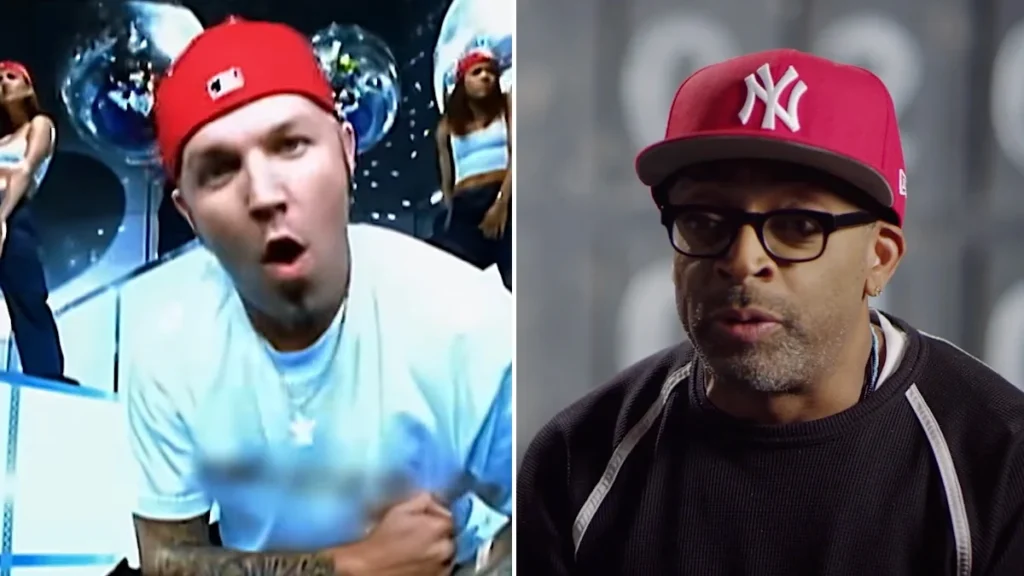

The cultural intersection of professional sports, high-fashion merchandising, and 1990s nu-metal music has long been a subject of fascination for pop culture historians. While the backwards red New York Yankees cap became an indelible visual shorthand for Limp Bizkit frontman Fred Durst during the late 1990s and early 2000s, the origin of this specific piece of headwear traces back to a singular request made by filmmaker Spike Lee. In a recent profile published by Variety, the director of "Do the Right Thing" revealed that his insistence on a non-traditional color scheme for the iconic franchise led to a direct intervention by the late Yankees owner George Steinbrenner, effectively changing the trajectory of sports merchandise.
The 1996 Catalyst: A Fashion Dilemma
The chronology of this fashion evolution begins during the 1996 Major League Baseball World Series. As the Yankees faced off against the Atlanta Braves, the team found themselves in a precarious position, dropping the first two games of the series. Spike Lee, a lifelong and visible supporter of New York sports, sought to coordinate his attire with a specific New Era Yankees jacket he had recently acquired. The jacket featured a distinctive red stripe, prompting Lee to desire a matching red Yankees hat.
At the time, professional baseball headwear was strictly bound by team color palettes—navy blue and white for the Yankees. When Lee contacted New Era, the primary supplier for MLB caps, his request was initially rebuffed. The manufacturer maintained a policy of adhering to official team branding, leaving no room for the aesthetic experimentation Lee envisioned. Recognizing the limitations of standard corporate protocol, Lee bypassed the manufacturer’s representatives and reached out to George Steinbrenner, the notoriously hands-on owner of the Yankees.
"I called up New Era and they said, ‘We don’t do that,’" Lee recalled in his recent interview. "So, I got Steinbrenner on the phone. I told him what I wanted, he called New Era, and they made me a red Yankee hat."
The Evolution of Sports Merchandising
Lee’s influence on the red cap extended far beyond a personal wardrobe choice. Before this intervention, the concept of "fashion caps"—hats produced in colors that did not match the team’s actual uniform—was virtually nonexistent in the professional sports sphere. The red hat effectively pioneered a shift in the merchandising industry, moving team logos into the realm of lifestyle apparel.
By the time the late 1990s rolled around, the red Yankees hat had transcended its origins as a bespoke item for a filmmaker. It became a staple of urban fashion and, subsequently, the definitive accessory for Fred Durst and the nu-metal movement. Durst’s habitual wearing of the cap, often backward, became a defining aesthetic of the era, cementing the red Yankees logo as a symbol of the aggressive, high-energy musical subculture that dominated the MTV era.
When confronted with the suggestion that his invention laid the aesthetic foundation for Limp Bizkit’s brand, Lee was characteristically blunt. "Limp Bizkit!?! That’s some… He didn’t have it before me! New Era made it for me!" The director’s insistence underscores a clear timeline: the existence of the red cap in the cultural consciousness is directly attributable to his 1996 request, which eventually trickled down from a high-profile accessory into a mass-market retail product.
Market Implications and the Licensing Landscape
The broader impact of this shift in merchandising cannot be overstated. Following the introduction of the red Yankees hat, Major League Baseball and New Era experienced a significant uptick in non-traditional team apparel sales. This trend eventually evolved into the "colorway" model, where teams release hats in a wide array of colors—from camouflage and neon to pastels and monochrome—to appeal to a demographic that values fashion over team allegiance.
From an economic perspective, this shift represented a diversification of revenue streams. By detaching the brand (the Yankees logo) from the team’s visual identity (navy blue), the organization was able to capture a larger share of the streetwear market. Today, the "fashion cap" segment constitutes a substantial portion of the $1.5 billion licensed sports merchandise market in the United States. While teams like the New York Yankees are notoriously conservative regarding their brand identity, the success of the red cap proved that consumer demand for aesthetic flexibility could outweigh traditional branding concerns.
Fred Durst and the Nu-Metal Aesthetic
While Spike Lee provided the catalyst for the red hat’s creation, Fred Durst provided the cultural oxygen that allowed it to become a global phenomenon. In the context of the late 90s, the backwards cap was more than a hat; it was a badge of rebellion against the polished aesthetics of early 90s pop music.
The convergence of Lee’s artistic influence and Durst’s musical platform created a strange, unintended synergy. Durst’s adoption of the hat helped bridge the gap between the stadium-rock aesthetic and urban streetwear. Although there is no evidence of a direct collaboration between Lee and Durst regarding the hat, the director’s role as the primary innovator is now firmly established in the public record.
For industry analysts, this serves as a case study in how cultural influencers can disrupt traditional corporate supply chains. New Era, which had previously operated under the assumption that "teams only had hats in their team colors," was forced to reconsider its business model based on the request of a single, influential individual.
The Legacy of the 1996 World Series
The 1996 World Series ultimately proved to be a turning point for both the Yankees and, coincidentally, for fashion. After falling into an 0-2 deficit, the Yankees rallied to win four consecutive games, clinching the championship title. Whether one attributes the turnaround to the team’s resilience or the symbolic arrival of the red hat, the lore of the accessory has only grown in the decades since.
As Limp Bizkit prepares for their upcoming 2027 North American tour in support of Metallica, the red Yankees hat remains a staple of the band’s legacy. It serves as a reminder of a period where the boundaries between Hollywood, professional sports, and the recording industry were becoming increasingly porous.
Conclusion: An Enduring Icon
The narrative provided by Spike Lee offers a definitive account of the origins of one of the most recognizable items in modern sportswear. While many fans of the nu-metal era may have associated the red Yankees cap exclusively with Fred Durst, the reality is rooted in a deliberate, executive-level request made by a filmmaker seeking to complete a personal look.
This history illustrates the power of individual agency in shaping global trends. By securing a phone call with George Steinbrenner, Spike Lee did more than just acquire a piece of clothing; he inadvertently dictated the aesthetic direction of a major subculture for over a decade. As the red Yankees cap continues to be sold in retail outlets worldwide, it remains a tangible artifact of the moment when a director’s fashion whim permanently altered the relationship between sports franchises and the global fashion industry. The hat is no longer just a piece of sports memorabilia; it is a piece of cultural history, born from a World Series conversation that forever changed the way fans interact with the brands they support.