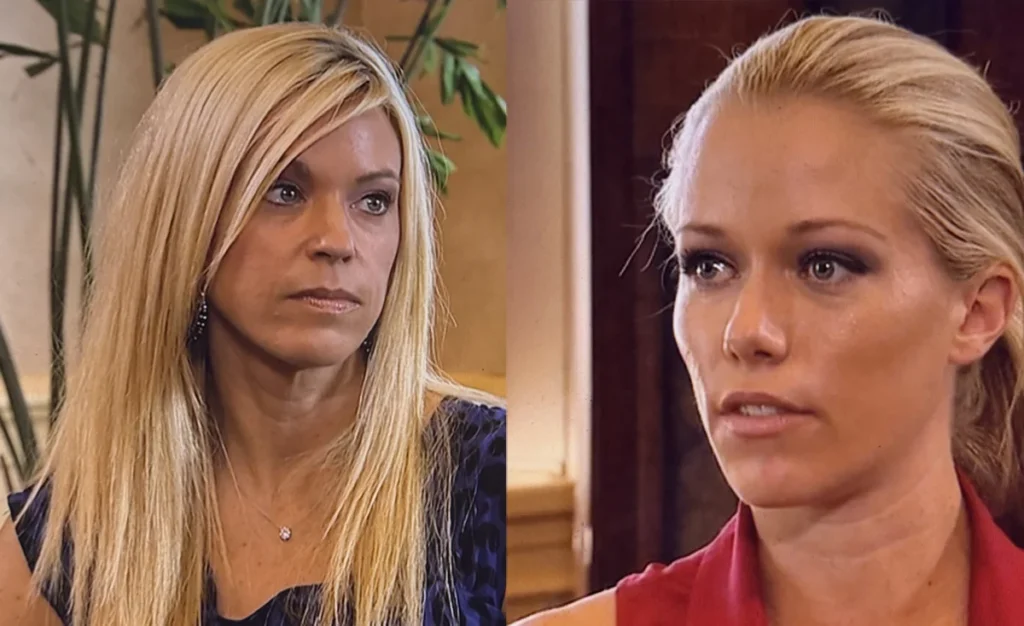

The 2013 reality television landscape was dominated by high-concept social experiments, one of the most prominent being ABC’s Celebrity Wife Swap. The series placed two public figures in each other’s households for a week-long immersion, requiring them to first adhere to the existing family rules before implementing their own, often drastically different, lifestyle mandates. This dynamic was designed to catalyze interpersonal friction and personal growth. However, more than a decade later, the production has returned to the public consciousness not for its entertainment value, but as a potential window into a controversial family environment that has since become the subject of serious allegations.
Kendra Wilkinson, the former Playboy model and reality television personality known for The Girls Next Door, participated in the program in 2013, trading lives with Kate Gosselin of the long-running TLC series Jon & Kate Plus 8. In light of the recent publication of a memoir by Collin Gosselin—one of the eight children featured on the Gosselin family program—which alleges physical and emotional abuse at the hands of his mother, observers have begun re-examining the televised history of the Gosselin household. Fans have increasingly turned to those who witnessed the home life of the family firsthand to determine if there were early warning signs of the dysfunction now being detailed by Collin.
A Recollection of Discomfort
In a recent engagement on social media, Wilkinson was asked by a follower if she had observed any concerning behavior from Collin during her time in the Gosselin home. Her response was measured but telling. While acknowledging that the swap occurred over ten years ago, Wilkinson noted that she felt a sense of "awkwardness" while filming. Specifically, she recalled that Collin, who was a child at the time, seemed to "lean on" her for support, suggesting a level of emotional vulnerability that stood out to her even amidst the chaotic schedule of a reality television production.
Wilkinson also provided a vivid, anecdotal account of the pressure exerted by the cameras. Describing an environment she found overwhelming, she recalled a moment where she attempted to shield the children from the constant presence of the production crew. "I gathered the kids and told them to run from the cameras into the woods," Wilkinson recounted. "We all ran away. That was a moment I’ll never forget." This statement highlights the tension inherent in the Gosselin household, where the boundaries between professional filming requirements and a nurturing home environment were frequently blurred.
The Chronology of the Controversy
The public scrutiny surrounding Kate Gosselin’s parenting style dates back years, but the current discourse reached a fever pitch following the release of Collin’s memoir. The following timeline outlines the key milestones in the family’s public life and the subsequent fallout:
- 2007–2009: Jon & Kate Plus 8 becomes a cultural phenomenon, chronicling the daily lives of the Gosselin family. The show draws massive ratings but also sparks early criticism regarding the impact of constant filming on the children.
- 2013: Kendra Wilkinson participates in Celebrity Wife Swap, spending a week in the Gosselin household.
- 2016: Kate Gosselin confirms that Collin has been sent away to an institution for "special needs" treatment.
- 2018: Jon Gosselin gains primary custody of Collin after the teenager is released from the facility.
- 2023: Collin Gosselin publishes a memoir alleging that his time in the institution was unjustified and that his upbringing was marked by abuse.
- 2023–2024: Jon Gosselin advocates publicly for his son, calling for investigations and expressing severe criticism of his ex-wife’s public explanations regarding their son’s mental health.
Official Responses and Conflicting Narratives
The divide between the parents remains profound. Jon Gosselin has been vocal in his support of his son’s claims, recently suggesting that the evidence presented in the memoir warrants criminal investigation. In an interview with Entertainment Tonight, Jon challenged the narrative that his son suffered from mental health issues, arguing that such claims are a form of defamation.
"She needs to stop," Jon stated regarding his ex-wife’s public comments. "He is not mentally ill. I would definitely have grounds to sue Kate for defamation and libel. I don’t even think it’s suing. I think it’s just criminal charges." Jon further suggested that there is a double standard in how the situation is being handled, noting that if he had been the subject of such allegations, he would likely be facing incarceration. He also alluded to the complicity of those who worked with the family during the peak of their reality television success, stating, "There were a lot of people that could have done something and did nothing. And I have your names."
Conversely, Kate Gosselin has maintained a stance of total denial. She has consistently asserted that her decisions regarding her children were based on the guidance of medical professionals and pediatric specialists. She has argued that her actions were in the best interest of the children, specifically regarding Collin’s behavioral needs at the time, and has characterized the allegations as being driven by a desire for attention or a misunderstanding of the circumstances.
Broader Implications of Reality Television
The situation involving the Gosselin family serves as a critical case study regarding the ethical boundaries of reality television, particularly when children are involved. The industry has faced persistent questions regarding whether the financial benefits of such programs justify the potential psychological toll on minors.
Data from the American Academy of Pediatrics has long suggested that high-intensity media exposure can affect child development, particularly when that exposure involves the loss of privacy and the constant surveillance of a production crew. When the household is also a workplace, the traditional parent-child dynamic is often compromised. Experts in family law and child psychology note that the blurred lines between "real life" and "scripted content" can make it difficult for children to distinguish between genuine care and performance-based interactions.
The case of the Gosselin family also highlights the challenges of holding public figures accountable for events that occurred behind closed doors. Because much of the alleged abuse took place in a private residence, legal recourse is often limited by the lack of objective evidence, leaving public opinion to be shaped by conflicting testimonies.
The Path Forward
As of the current date, no criminal charges have been filed against Kate Gosselin in relation to the abuse allegations, and she continues to deny any wrongdoing. Collin Gosselin has expressed that his primary goal in sharing his story is not necessarily punitive, but rather a desire for an acknowledgement of his experience and an apology for the childhood he describes as traumatic.
The discourse surrounding this issue continues to evolve as the public reconciles the "perfect family" image that was broadcast to millions with the starkly different reality described by those who lived it. For participants like Kendra Wilkinson, the experience serves as a reminder of the inherent volatility of the reality television industry. Her reflections provide a brief but significant insight into the atmosphere of a home that was simultaneously one of the most famous and most mysterious in America.
The case remains a sobering example of the long-term consequences that can arise when private family life is transformed into public entertainment, and it reinforces the necessity for robust protections for minors in the entertainment industry. For now, the public remains focused on the voices of those who were children on camera, as they continue to define their own stories and navigate the complex legacy of their childhoods.