
The global cultural and philanthropic communities converged in Los Angeles on September 21, 2026, for one of the most anticipated milestones in the city’s modern history: the grand opening gala of the Lucas Museum of Narrative Art. Founded by visionary filmmaker George Lucas and his wife, Mellody Hobson, the institution opened its doors to a star-studded guest list featuring prominent figures from the worlds of cinema, music, fashion, and politics. The inauguration of the museum marks the realization of a decadelong vision to establish a permanent architectural and cultural sanctuary dedicated exclusively to visual storytelling, ranging from illustration and comic art to cinema and digital media. As attendees walked the red carpet, the convergence of high fashion and institutional philanthropy set a vibrant tone for an evening that celebrated narrative art across generations and mediums.

Background Context and Architectural Vision

Conceived initially by George Lucas as a repository for his extensive personal collection—which includes works by Norman Rockwell, N.C. Wyeth, R. Crumb, and countless cinematic storyboards—the Lucas Museum of Narrative Art has weathered numerous logistical and geographic hurdles since its inception. Originally proposed for Chicago and San Francisco, the project finally found its permanent home in Los Angeles’s Exposition Park. The museum’s striking, futuristic design, spearheaded by architect Ma Yansong of MAD Architects, features an organic, sweeping silhouette that instantly establishes it as a monumental landmark in the urban landscape of Southern California.

The opening night gala was designed not only to celebrate the physical completion of the museum building but also to honor the democratization of art that Lucas and Hobson have long championed. By focusing on narrative art—work that tells a story, reflects human culture, and bridges high art with popular culture—the institution fills a critical gap in the museum ecosystem. The red carpet event served as a major public relations and cultural launchpad, drawing international media attention and gathering an eclectic mix of Hollywood elite, global musicians, and international political figures to signal the institution’s broad cultural reach.

A Night of Diverse Styles: Red Carpet Chronicle

The guest list for the grand opening reflected the cross-disciplinary appeal of George Lucas’s vision. Attendees arrived in ensembles that ranged from classic, understated elegance to avant-garde statement pieces, mirroring the eclectic nature of narrative art itself.

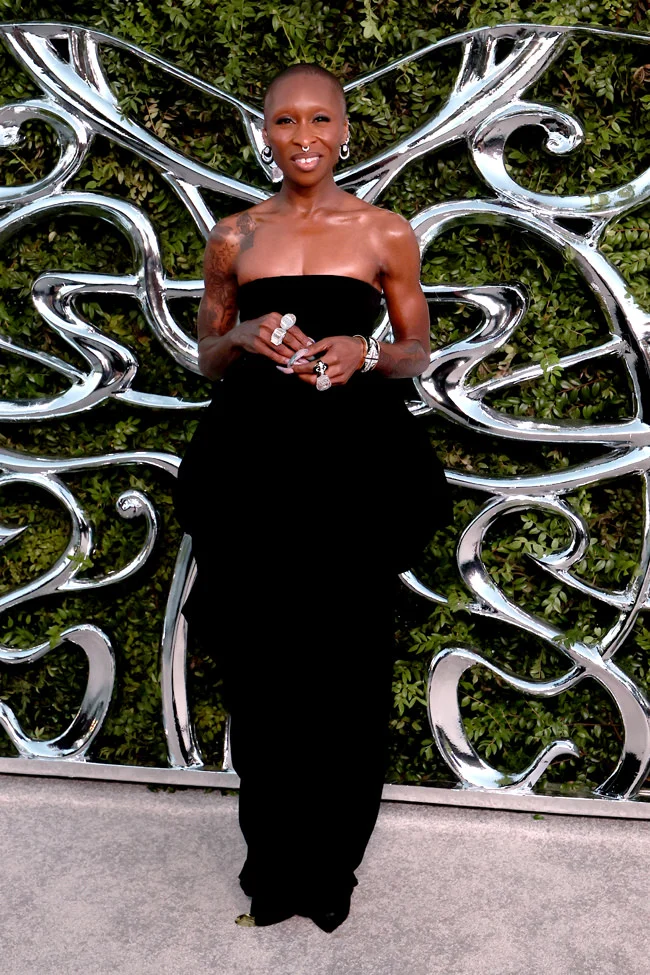
Among the notable arrivals, actress and director Bryce Dallas Howard stepped out in a design by Self-Portrait. Her ensemble drew analytical attention for its structured silhouette, specifically focusing on the geometry of the bodice and straps, which sparked varied commentary regarding modern tailoring and proportion on the red carpet. Pop artist Camila Cabello opted for archival Donna Karan, embracing a fluid, Grecian-inspired aesthetic that nodded to historical design traditions. Meanwhile, Tony and Grammy Award-winning artist Cynthia Erivo arrived in a minimalist creation by Khaite, intentionally dialing back her signature maximalist approach to allow an intricate display of fine jewelry to take center stage.

The intersection of music, fashion, and culture continued with Doja Cat, who wore a striking gown by Nué, and Eva Longoria, who selected an architectural design by Älkyaz Özel, accented by statement neckwear. Filmmaker Greta Gerwig chose a sophisticated piece by Ashlyn, notable for its asymmetric strap detailing, while actress Helen Hunt represented Stella McCartney in a sharp, contemporary silhouette that contrasted with her playful styling.

Janelle Monáe brought high drama to the red carpet in an Antonio Grimaldi creation characterized by a pronounced collar and dramatic neckwear. In one of the evening’s most unexpected and widely discussed appearances, former Canadian Prime Minister Justin Trudeau attended alongside pop superstar Katy Perry, who wore a blinding, custom creation by Christian Siriano. The appearance marked a rare crossover of international political figures into high-profile American cultural events.

Further expanding the breadth of attendees, Keke Palmer wore a vibrant Saint Laurent ensemble paired with dynamic hair styling, while Kerry Washington appeared in an intricate design by Wiederhoeft, featuring a structured, corset-style bodice paired with a contrasting skirt. Actress Laura Dern walked the red carpet in Bella Freud, selecting a fluid, colorful shirt-and-trouser combination that favored ease of movement. Actor Michael B. Jordan commanded attention in a classic Tom Ford suit elevated by a patterned tie that added a subtle graphic element to the monochrome tailoring.

Supermodel Miranda Kerr chose an intricate patterned dress by Rebecca Vallance, paired with minimalist footwear, while media mogul Oprah Winfrey wore a relaxed, sophisticated pantsuit combination by Ralph Lauren, emphasizing comfort and tailored volume. Queen Latifah made a rare and celebrated red carpet appearance in a form-fitting, glamorous gown by Roland Mouret, highlighting structural tailoring. Finally, Tracee Ellis Ross generated considerable discussion in an avant-garde, textured design by Bottega Veneta, pushing the boundaries of sculptural red-carpet fashion.

Statements, Reactions, and Institutional Impact

While the gala was primarily a celebratory social event, representatives and cultural analysts noted its broader implications for the Los Angeles arts economy. The Lucas Museum of Narrative Art is projected to bring millions of visitors to Exposition Park annually, stimulating local tourism, hospitality, and educational programming. Philanthropic leaders and arts administrators in attendance praised the museum’s commitment to community outreach initiatives, which include free public educational programs, art therapy partnerships, and expansive digital archives designed to make narrative art accessible to underserved youth across Southern California.

Though official financial figures for the opening gala fundraiser have not yet been fully released by the museum’s board of directors, early estimates suggest the event raised significant capital for the institution’s endowment fund, ensuring the long-term preservation and acquisition of critical works. Representatives for the museum emphasized that the collection will prioritize works that reflect diverse human experiences, ensuring that storytelling through art remains inclusive and reflective of global narratives.

Broader Implications and Cultural Legacy

The opening of the Lucas Museum of Narrative Art arrives at a pivotal moment for traditional cultural institutions, which are increasingly seeking ways to bridge the gap between elite high art and accessible popular culture. By validating comic books, illustration, digital media, and cinematic storyboards as fine art worthy of institutional preservation, George Lucas and Mellody Hobson have redefined what a modern museum can and should be.

The event’s red carpet fashion choices, heavily scrutinized by global style commentators, served as a microcosm of this ideological blending. From archival vintage pieces to cutting-edge avant-garde creations, the attire mirrored the museum’s core mission: honoring the past while boldly experimenting with the future of visual culture. As the Lucas Museum opens its doors to the general public, its success will likely serve as a blueprint for future cultural institutions aiming to engage contemporary audiences through the universal power of storytelling.