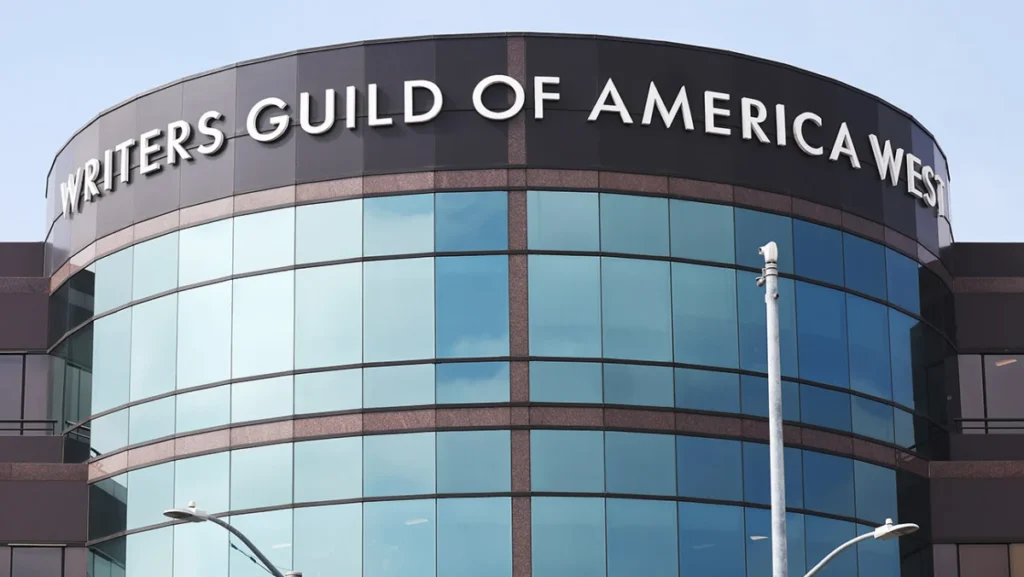

The Writers Guild of America West has officially concluded its highly anticipated 2026 board of directors elections, ushering in a dynamic mix of fresh creative leadership and experienced institutional governance. The election results, which were finalized and announced on Tuesday, highlight the union’s ongoing commitment to representing a diverse cross-section of writers working across traditional broadcast television, cable networks, and rapidly expanding streaming platforms.
Among the notable developments in this election cycle is the successful inclusion of three prominent writers who are stepping into board roles for the very first time. Andrew Goldberg, widely recognized for his creative work on the acclaimed adult animated comedy series Big Mouth as well as Mating Season, joins the board alongside Mark Swift, whose diverse writing credits include the hit feature film Baywatch and the comedy series Send Help. Completing the trio of newly elected members is Nikita Hamilton, a talented writer whose contributions to emotionally resonant dramas such as A Million Little Things and the stylish magazine-room drama The Bold Type have earned her widespread industry respect.
These three new directors were initially tapped by the union’s internal board nominating committee earlier in the election cycle, a traditional process designed to identify engaged, knowledgeable, and dedicated union members who are capable of navigating the complex administrative and advocacy challenges facing modern screenwriters. Their introduction to the board comes at a critical juncture for the labor organization as it continues to advocate for fair compensation, robust health and pension benefits, and stringent protections regarding emerging entertainment technologies.
In addition to welcoming this new wave of talent, WGA West members overwhelmingly demonstrated their faith in the existing leadership by re-electing five incumbent candidates to serve additional two-year terms. Melinda Hsu, Raphael Bob-Waksberg, Chris Hazzard, Cathryn Humphris, and Danny Tolli successfully retained their seats, ensuring a vital sense of institutional continuity and historical knowledge as the board addresses ongoing industry negotiations and policy enforcement.
The Electoral Process and Voter Turnout
The 2026 election cycle was characterized by robust member engagement, reflecting a deeply invested union membership mindful of the high stakes currently defining the entertainment labor landscape. A total of 2,451 valid ballots were cast by WGA West members during the voting window, which opened on August 26 and concluded at the final deadline on September 15.
The tabulation of votes was conducted with rigorous third-party oversight and internal accountability, managed jointly by Votenet Solutions—a specialized electronic voting and election management service—and the WGA West’s dedicated tellers committee. This meticulous verification process ensures absolute transparency and fairness in determining the composition of the union’s governing body.
Individual vote tallies released following the conclusion of the election underscore the strong mandate secured by several key incumbents. Melinda Hsu led the field in individual support, securing an impressive 1,661 votes from her peers. She was closely followed by Raphael Bob-Waksberg, the creative mind behind critically acclaimed animated programming, who garnered 1,441 votes. Chris Hazzard rounded out the top tier of voter support, pulling in 1,429 votes.
The newly elected and successfully re-elected board members will integrate directly into an established leadership structure. They will serve alongside union president Michele Mulroney, vice president Travis Donnelly, and secretary-treasurer Peter Murrieta. None of these three executive officers faced mandatory re-election during this particular cycle, providing a stable executive core to guide the newly constituted board through its upcoming legislative and advocacy agenda.
Background Context of WGA West Governance
To fully understand the significance of the 2026 board elections, it is essential to examine the governance structure and historical mission of the Writers Guild of America West. Operating as a labor union representing thousands of professional writers—spanning film, television, news, documentaries, and new media—the WGA West functions as a powerful advocate for creative professionals based primarily in Los Angeles and the broader western region of the United States.
The board of directors acts as the primary decision-making and policy-setting body for the guild between general membership meetings. Directors are tasked with a wide array of responsibilities, including overseeing the enforcement of collective bargaining agreements, managing union finances, formulating strategy for future contract negotiations with the Alliance of Motion Picture and Television Producers (AMPTP), and addressing grievances raised by individual members regarding credits, working conditions, and compensation.
Elections for the board are held biennially, allowing members a regular opportunity to recalibrate the union’s leadership in response to shifting industry dynamics. In recent years, these dynamics have grown increasingly complex. The rapid proliferation of subscription video-on-demand (SVOD) streaming services, the shortening of television seasons, the widespread adoption of artificial intelligence in creative workflows, and ongoing disputes over residual payments have transformed the economic reality of professional screenwriting. Consequently, the board of directors must possess both creative empathy and sharp business acumen to protect the livelihoods of union members.
The profiles of the newly elected board members reflect this necessary blend of traditional television craftsmanship and modern streaming savvy. Andrew Goldberg’s experience on Big Mouth places him at the forefront of the animation sector, an area that has experienced unique labor challenges and rapid growth over the past decade. Mark Swift’s career spans both major Hollywood studio feature films, such as Baywatch, and independent or cable television projects like Send Help, providing him with a comprehensive understanding of the financial disparities between feature writing and series work. Meanwhile, Nikita Hamilton’s work on network television hits like A Million Little Things and cable dramas like The Bold Type gives her vital insight into the changing rhythms of traditional writer’s rooms, network notes, and the pressures of episodic scheduling.
Analysis of Implications and Industry Impact
The inclusion of Goldberg, Swift, and Hamilton, alongside the stabilizing presence of returning veterans like Hsu and Bob-Waksberg, positions the WGA West board to address several pressing challenges facing the entertainment industry in the latter half of the decade.
First and foremost among these implications is the ongoing evolution of residuals in the streaming era. While the historic 2023 WGA strike successfully secured ground-breaking protections and viewership-based streaming bonuses, the practical enforcement, refinement, and expansion of these agreements remain paramount. Board members will play a critical role in monitoring how studios implement these metrics and ensuring that writers are fairly compensated as audience consumption habits continue to migrate away from linear broadcast and cable toward digital platforms.
Furthermore, the rise of generative artificial intelligence represents an existential frontier for the writing profession. Although the WGA established pioneering guardrails during its last major contract negotiation to restrict studios from using AI to undermine writer authorship or credit, the technological landscape is advancing at an unprecedented pace. The newly constituted board will be charged with interpreting these guardrails, litigating potential violations, and preemptively formulating strategies for the next round of collective bargaining agreements. The presence of writers deeply embedded in modern production pipelines ensures that the board remains acutely aware of how technological tools are practically utilized on the ground.
Another critical area of focus for the incoming board will be the persistent issue of writer’s room downsizing and shortened employment windows. As television networks and streaming services increasingly favor truncated seasons—often ranging from six to ten episodes—compared to the traditional twenty-two-episode network model, early-career and mid-level writers face severe underemployment and compressed writing schedules. This trend threatens to erode the traditional developmental pipeline through which younger writers learn the craft of showrunning and series management. With board members who have worked extensively across varied format lengths and network structures, the WGA West is well-equipped to study these structural shifts and advocate for policy solutions that safeguard career sustainability.
Official Responses and Member Outlook
While formal statements from individual newly elected board members following the final certification of the vote emphasize a spirit of unity and dedication, industry observers note that the mood among guild membership is one of vigilant readiness. The high voter turnout—with nearly two thousand five hundred members participating—signals that screenwriters view internal union democracy not as a passive formality, but as an essential tool for collective defense and professional advancement.
Union leadership, spearheaded by President Michele Mulroney, Vice President Travis Donnelly, and Secretary-Treasurer Peter Murrieta, welcomed the election results, emphasizing that the diverse backgrounds of the board will enhance the organization’s ability to advocate for all writing genres. By blending the institutional memory of returning directors like Melinda Hsu and Raphael Bob-Waksberg with the contemporary perspectives of Andrew Goldberg, Mark Swift, and Nikita Hamilton, the guild has constructed a leadership team capable of bridging generational and platform-specific divides within its membership.
As the newly formed board prepares to convene for its initial official sessions, the focus will quickly pivot from internal governance to external advocacy. With upcoming contract milestones on the distant horizon and daily enforcement matters requiring constant attention, the WGA West board of directors stands ready to steer the union through the complexities of a rapidly modernizing Hollywood.