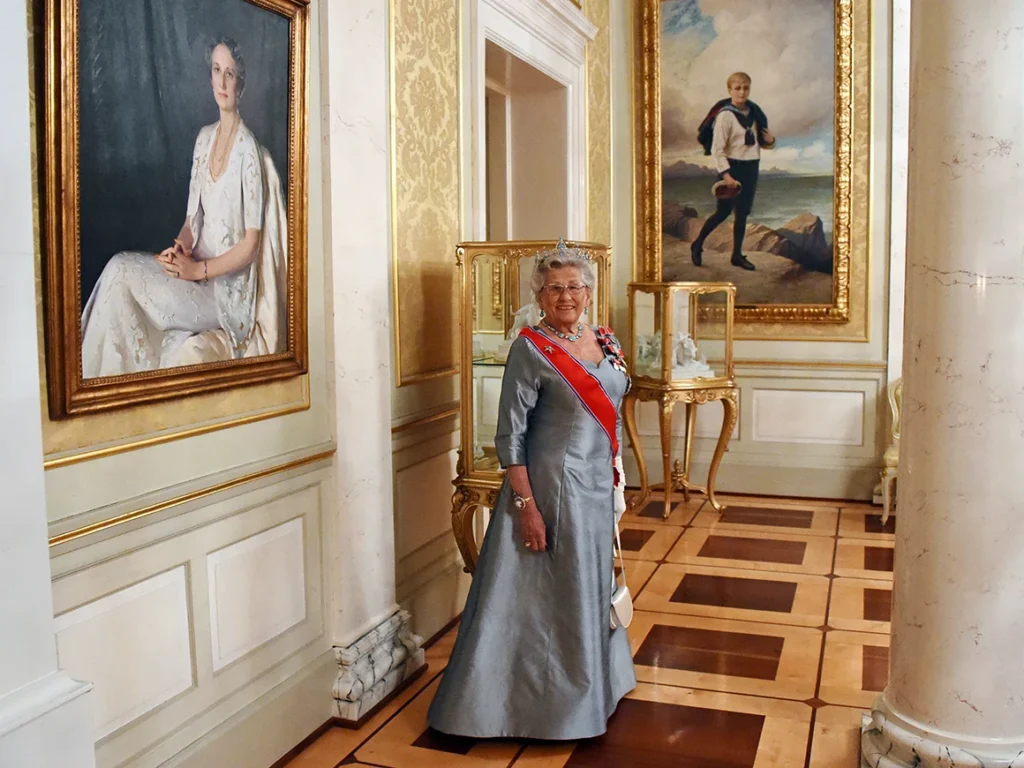

The Kingdom of Norway is preparing for a deeply poignant and historic national farewell as final arrangements are announced for the funeral of Princess Astrid, who passed away on September 11 at the age of 94. Her death, occurring just two days after the state funeral of her beloved younger brother, King Harald, marks the end of an extraordinary era for the House of Glücksburg. The Norwegian Royal Court confirmed that the princess’s funeral service will be held on September 23 at Ris Church in Oslo, a location bearing immense symbolic and historical significance for the late royal.
The passing of Princess Astrid brings a profound wave of grief to a nation already mourning its long-reigning monarch. As the nation prepares to lay to rest one of its most cherished and enduring public figures, the upcoming ceremony at Ris Church is expected to draw members of the royal family, international dignitaries, and ordinary citizens wishing to pay their final respects to a woman who defined an era of royal duty, resilience, and public service.
The Historic Setting and Funeral Arrangements
The funeral service for Princess Astrid is scheduled to begin at 1:00 PM local time on September 23 at Ris Church, mirroring the exact hour that King Harald’s funeral service commenced on September 9 at Oslo Cathedral. King Haakon VIII—her nephew and the reigning sovereign—is expected to lead the mourning family, accompanied by Queen Sonja, whose decades-long, close friendship with Princess Astrid cemented a deep bond within the royal household.
The choice of Ris Church holds a remarkable and emotional connection to the princess’s life story. Consecrated and opened for worship in 1932, the church shares its birth year with Princess Astrid herself. Now, exactly 94 years later, this architectural landmark in the Norwegian capital will serve as the solemn backdrop for her final farewell. The service will be broadcast live by Norwegian media outlets, allowing the entire nation and international observers to participate in the solemn national mourning.
Swedish royal relatives, with whom Princess Astrid shared close familial ties, are also anticipated to be among the congregation. The intimacy of Ris Church contrasts with the grand state proceedings of her brother’s funeral, yet it promises to offer a deeply personal and reflective environment to honor a princess who served as the nation’s first lady for many years.
A Life Forged in War, Duty, and Resilience
Born in 1932, Princess Astrid was the second child and second daughter of Crown Prince Olav and Crown Princess Märtha, who was born a Princess of Sweden. Her early childhood in Oslo was upended by the turbulence of the Second World War. Following the Nazi occupation of Norway in 1940, young Astrid, alongside her mother, her brother Harald, and her older sister Ragnhild, fled into exile, finding refuge in the United States. This formative period instilled in the young royals a profound sense of duty and national solidarity.
Following the war, Princess Astrid pursued her education, studying at the prestigious Oxford University. Upon completing her studies, she returned to Norway to confront a unique familial and constitutional responsibility. With both her grandfather, King Haakon VII, and her father, Crown Prince Olav, widowed, and her older sister Ragnhild married and relocated to Brazil, Princess Astrid stepped into the role of de facto first lady of Norway. She fulfilled these demanding ceremonial duties with poise and grace through the final years of King Haakon VII’s reign and the early years of King Olav V’s reign.
Her steadfast dedication to public life faced personal trials, notably when she chose to marry Johan Martin Ferner, a businessman, in 1961. The union sparked widespread public debate and establishment opposition because Ferner was a commoner and a divorcee. Standing firmly by her convictions, Princess Astrid declined to abandon the relationship and married him in a discreet ceremony at Asker Church. The couple went on to raise five children together.

Although she officially relinquished her role as the nation’s first lady in 1968 following her brother’s marriage to Sonja Haraldsen, Princess Astrid never retreated from public service. For decades afterward, she maintained an extensive portfolio of patronages, championed numerous charitable causes, and carried out a relentless schedule of official engagements well into her later years.
Character, Glamour, and Unbreakable Familial Bonds
Known for her sharp wit, forthright manner, and infectious sense of humor, Princess Astrid remained a vibrant and beloved fixture of Norwegian society. Her self-deprecating charm was legendary; she once famously compared one of her heirloom tiaras to a radio transmitter, delighting the public and media alike. Even as she entered her nineties, she retained her characteristic glamour, regularly appearing at major state events, galas, and official visits with an elegance that defied her advanced age.
Her relationship with her brother, King Harald, was perhaps the defining personal dynamic of her later life. The siblings shared an exceptionally close bond, marked by mutual affection, shared humor, and a deep, lifelong partnership in supporting the monarchy. This profound connection was starkly highlighted in the final days of King Harald’s life and immediately following his passing.
In the wake of the king’s death, the Royal Court released deeply moving images of Princess Astrid sitting in quiet solitude beside her brother’s coffin, as well as a poignant photograph of her observing the vast sea of floral tributes, candles, and messages left by grieving citizens outside the Royal Palace in Oslo. Her attendance at King Harald’s funeral on September 9—where she sat among the congregation to honor him—proved to be her final public appearance, coming just hours before her own declining health culminated in her passing less than 48 hours later.
Official Tributes and National Mourning
Upon announcing her death on September 11, King Haakon led the nation in grief, paying heartfelt tribute to her decades of unwavering service and devotion. In his official statements, the monarch affectionately and repeatedly referred to her simply as "Aunt Astrid," reflecting the deep personal loss felt by the royal family alongside the institutional grief of the state.
Simultaneously, Princess Astrid’s children released a deeply moving statement celebrating the boundless love, warmth, and care she had provided them throughout her life. The outpouring of condolences from international royal houses, foreign leaders, and ordinary Norwegian citizens underscores the immense respect she commanded throughout her 94 years.
Broader Impact and Implications for the Monarchy
The passing of Princess Astrid, occurring immediately after the death of King Harald, represents a historic watershed moment for the Norwegian monarchy. It closes a living chapter that connected modern Norway directly to the dramatic trials of World War II, the reigns of King Haakon VII and King Olav V, and the foundational decades of the contemporary Norwegian state.
As the nation gathers at Ris Church on September 23, the focus will not only be on mourning a remarkable woman but also on reflecting upon an era of royal service characterized by resilience, duty, and deep public affection. The transition highlights a new generation within the House of Glücksburg, bearing the heavy responsibility of carrying forward the legacy of service exemplified by Princess Astrid and her brother throughout a century of profound transformation.