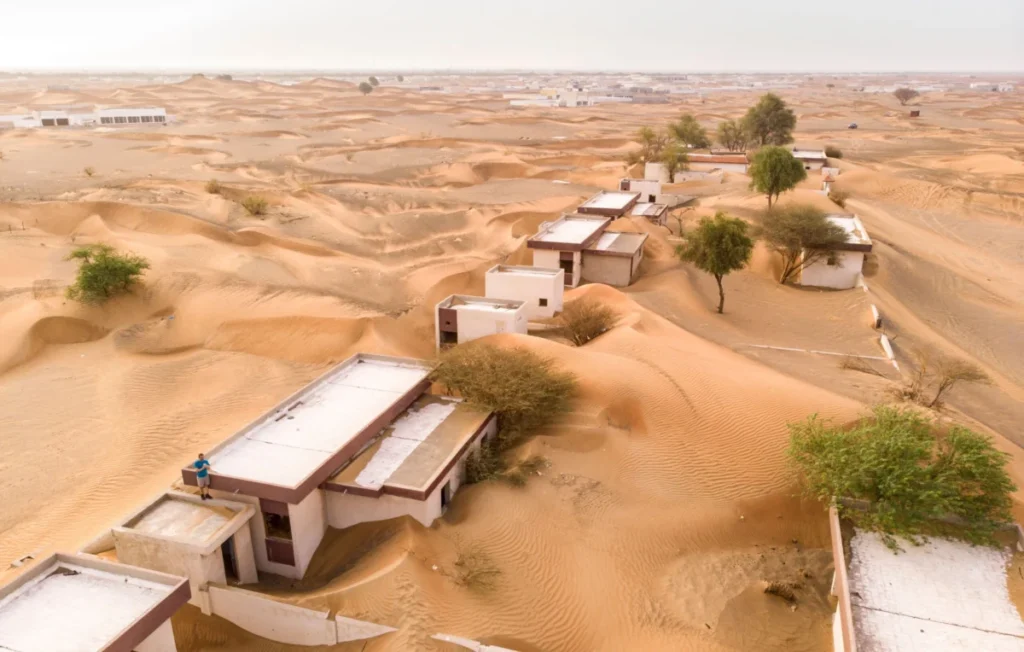

When human presence recedes, the natural world systematically dismantles the structures left in its wake, turning thriving human centers into haunting, organic tableaux. This phenomenon of ecological succession—where flora and fauna reclaim spaces once dominated by steel, brick, and glass—serves as a poignant reminder of the impermanence of civilization. From the encroaching sands of the Arabian Peninsula to the vine-choked ruins of industrial powerhouses, the process of reclamation follows a predictable yet fascinating trajectory, dictated by geography, climate, and the specific circumstances of a site’s abandonment.

The Mechanism of Abandonment: Why Cities Fall
The transformation of a bustling town into a ghost town typically follows one of three paths: economic obsolescence, environmental catastrophe, or geopolitical instability. Economic collapse remains the most frequent driver in the modern era. When a region’s primary industry—be it coal mining, logging, or manufacturing—shuts down, the supporting infrastructure often lacks the resilience to pivot. Once the tax base evaporates, the physical city enters a state of rapid decay.
Environmental pressures act as the catalyst that accelerates this decline. In arid regions, sand dunes function as slow-moving glaciers, burying architecture under tons of silica. In temperate climates, moisture and plant life pose the greatest threat; once roofs fail and water permeates a structure, freeze-thaw cycles and fungal growth compromise the structural integrity of walls and foundations within a single generation.

Chronology of Reclaimation
The timeline of an abandoned structure’s return to the earth is often measured in decades, yet the initial steps are immediate.
- Year 0–2: The cessation of maintenance. HVAC systems fail, leading to humidity buildup. Pests and small mammals move into climate-controlled interiors.
- Year 2–10: Exterior envelopes are breached. Vegetation, particularly opportunistic species like lichen and moss, begins to colonize masonry. Structural failure in roofing allows water ingress.
- Year 10–50: Secondary growth begins. Trees take root in upper stories and basements. In arid climates, internal spaces fill with wind-blown particulates.
- Year 50–100: Structural collapse. Load-bearing walls succumb to rot or seismic activity, returning the building materials to the substrate.
- Year 100+: Archeological integration. The site becomes indistinguishable from the surrounding landscape, leaving only faint geometric anomalies in the soil.
Case Studies in Ecological Succession
The Desert Inundation of Al Madam, UAE
Located in the Sharjah desert, the abandoned village of Al Madam provides a stark example of rapid environmental reclamation. Built in the 1970s, the village was intended to house local tribes. However, the encroaching desert sands proved insurmountable. By the late 1990s, the residents had vacated the premises. Today, the village serves as a masterclass in how sand can act as a fluid force, filling living rooms and hallways to the ceiling, effectively erasing the line between interior and exterior space.

The Industrial Decay of Pripyat, Ukraine
Perhaps the most famous example of forced abandonment, Pripyat was evacuated in 1986 following the Chernobyl nuclear disaster. Unlike economic ghost towns, the suddenness of the evacuation left a "frozen" urban environment. Over the last four decades, the lack of human interference has transformed the city into an unexpected wildlife sanctuary. Data from the Polessye State Radioecological Reserve indicates that populations of wolves, elk, and lynx have surged in the absence of human activity, proving that even radioactive landscapes can host robust biological recovery.
The Submerged History of Kayaköy, Turkey
Kayaköy, a former Greek village in southwestern Turkey, was abandoned during the population exchange between Greece and Turkey in 1923. Unlike modern industrial ruins, the stone structures of Kayaköy have been subject to decades of weather erosion. The site remains a protected museum, yet the creeping ivy and skeletal remains of the homes illustrate the slow, quiet return of the hillside to the Mediterranean scrubland.

Quantitative Impacts of Urban Abandonment
The environmental impact of these abandoned sites is significant. When a large-scale project—such as a mine or a planned community—is abandoned, it often leaves behind "brownfields." According to environmental impact studies conducted by urban planning agencies, these sites can remain toxic for centuries if industrial chemicals are not properly remediated. However, when the abandonment is purely residential, the land often undergoes a process of "re-wilding."
Research published in the Journal of Applied Ecology suggests that urban sites, when left fallow, can act as biodiversity "stepping stones." These locations often host rare plant species that cannot survive in cultivated or actively managed urban environments. The absence of mowing, herbicide application, and light pollution creates a niche for specialized insects and avian species, effectively increasing the local biodiversity index compared to the period when the town was occupied.

Official Perspectives on Ghost Town Preservation
Governments and historical societies often struggle with the duality of these sites. On one hand, they represent failures of development; on the other, they are historical artifacts. In countries like Japan, where rural depopulation has led to an explosion of haikyo (ruined sites), the government has begun to classify certain areas as historical preservation zones. Conversely, in regions where structures pose a safety hazard due to structural instability, municipal authorities frequently prioritize demolition over preservation.
Architectural historians argue that the aesthetic appeal of these sites—often termed "ruin porn"—should not overshadow the human cost. "Every abandoned home was once a site of daily life, memory, and personal history," notes Dr. Elena Vance, a landscape urbanist specializing in post-industrial transformation. "When we view these places merely as ‘eerie’ or ‘beautiful,’ we risk stripping away the socio-economic context of why these people were forced to leave."

The Implications for Future Urban Planning
The existence of these reclaimed cities offers a cautionary tale for modern urban development. As climate change accelerates, the feasibility of maintaining cities in increasingly volatile environments—such as coastal regions prone to rising sea levels or desert zones susceptible to extreme heat—is being questioned. The "reclamation" process observed in places like Al Madam or the coastal ruins of Namibia serves as a natural indicator of the limits of human engineering.
Urban planners are now increasingly looking at "managed retreat" strategies, where human settlements are intentionally dismantled before environmental forces cause catastrophic damage. By studying how nature reclaims these sites, engineers can gain insights into how to build more resilient structures, or, conversely, how to design buildings that return to the earth with minimal environmental impact once their lifecycle is complete.

Conclusion: The Earth’s Constant Evolution
The cycle of reclamation is not a sign of failure, but rather a reflection of the earth’s inherent drive toward equilibrium. While humans view the deterioration of a city as a tragedy or an eyesore, the biosphere views it as the return of nutrients and land to the natural cycle. As we move further into the 21st century, the relationship between the built environment and the natural world will continue to shift. Whether through the slow accumulation of desert sand or the aggressive spread of forest canopy, the earth remains the ultimate architect, perpetually reclaiming, redesigning, and repurposing the spaces we momentarily call our own. The abandoned towns of today are the wilderness preserves of tomorrow, marking a transient chapter in the long, continuous history of the planet.