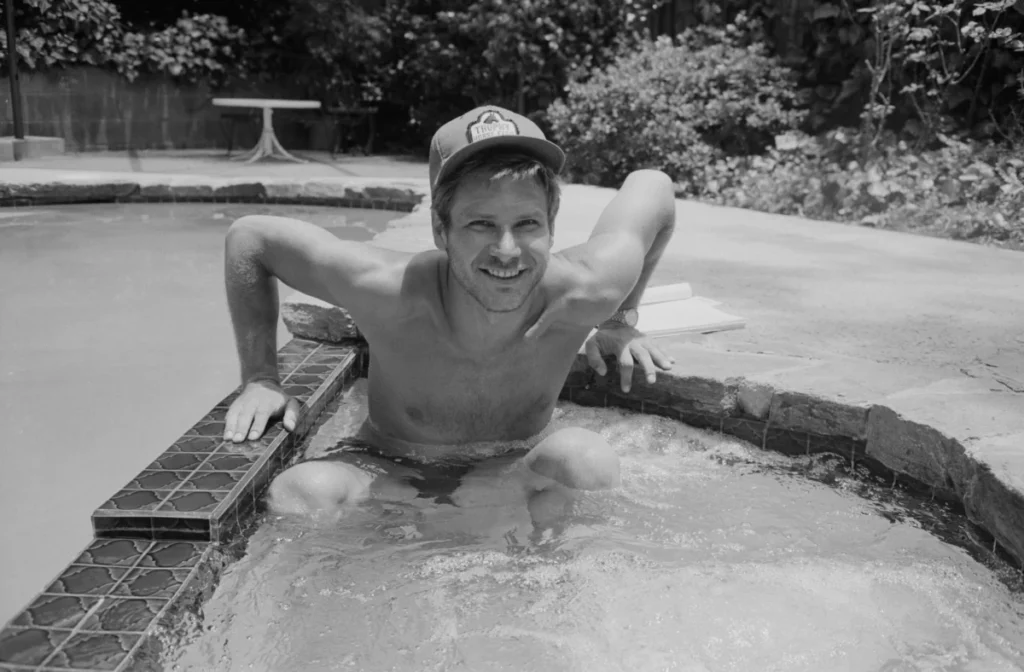

While Harrison Ford has cemented his status as one of cinema’s most enduring icons, portraying legendary characters such as Han Solo and Indiana Jones, his off-screen life has been defined by a deliberate, long-standing commitment to privacy and a multifaceted career as a master craftsman. Long before he became a global box-office draw, Ford was a working carpenter, a trade that not only sustained his family during his early, lean years in Los Angeles but also instilled in him a grounded perspective that has influenced his real estate portfolio and lifestyle choices for decades. By carefully balancing the demands of Hollywood with a desire for solitude and a connection to the land, Ford has curated a series of residences that reflect both his personal evolution and his enduring dedication to his family.

The Carpenter-Turned-Star: A Formative Foundation
Harrison Ford’s journey to superstardom is inextricably linked to his work as a carpenter. After moving from Chicago to Los Angeles, the aspiring actor struggled to find consistent film roles. To provide for his family, he turned to carpentry, a skill he largely taught himself. This trade became his financial bedrock, allowing him to be selective about the acting roles he accepted. Ford has frequently noted that this financial independence was crucial; it prevented him from having to take work he found uninspiring, effectively shielding his artistic integrity.

His transition from the construction site to the silver screen was serendipitous. While working on a project for the offices of Francis Ford Coppola, he caught the attention of director George Lucas. Ford had previously appeared in a minor role in Lucas’s 1973 film American Graffiti. As the story goes, he was installing millwork at the production offices when George Lucas and Richard Dreyfuss arrived to conduct casting sessions for Star Wars. Ford, wearing his tool belt, engaged in a conversation with them. The production team was looking for fresh faces, and eventually, Ford was asked to assist in reading lines for other actors auditioning for the film. There was no explicit plan for him to audition for the role of Han Solo, yet his natural screen presence and rapport with the filmmakers led to his casting, forever changing the trajectory of his career.
Chronology of Real Estate and Domestic Stability

Ford’s real estate history offers a window into his private life, tracing his path from a struggling actor to one of the most recognizable figures in the world. His early properties were characterized by a desire to replicate the comfort and aesthetic of his upbringing in Park Ridge, Illinois.
In 1981, as The Empire Strikes Back solidified his stardom and the anticipation for Raiders of the Lost Ark reached a fever pitch, Ford was residing in a barn-style home in Benedict Canyon. The property, constructed in 1941, reflected his hands-on approach to homeownership. Ford invested significant time into the property, polishing floors, installing doors, and crafting custom furniture. He has often remarked that his carpentry tools were packed up for a film project, only to remain untouched as his acting career took off, marking a symbolic shift in his professional identity.

By 1983, following his marriage to screenwriter Melissa Mathison, Ford purchased a sprawling residence in the Mandeville Canyon neighborhood of Brentwood for $1 million. Designed by the esteemed architect Gerard Colcord and built in 1951, the 7,164-square-foot estate became the family’s primary residence for nearly three decades. The property was a testament to his success, featuring two guesthouses, a comprehensive library, and a wine cellar. Throughout this period, Ford continued to utilize his carpentry skills, building various pieces of furniture for the home, which he viewed as a sanctuary from the intense public scrutiny of his fame.
The Pivot to Wyoming: A Connection to the Wilderness

While his California residences served his professional needs, Ford’s acquisition of an 800-acre ranch in Jackson Hole, Wyoming, represented his desire for a deeper connection to nature. Ford has spoken at length about the profound impact that the Teton landscape had on him. When presented with the option to purchase only a portion of the land or the entire 800-acre tract, he chose the latter, seeking the preservation of the streams, trees, and wildlife that define the region. For Ford, the Wyoming ranch was not merely a vacation home but a return to a more primitive, grounded existence—a stark contrast to the “fishbowl” of Hollywood.
The Evolution of a Private Citizen

Ford’s philosophy on parenthood and privacy has been consistent throughout his career. In a 2000 interview with the Los Angeles Times, he expressed a firm desire to protect his children from the pressures of celebrity. He limited his output to roughly one film per year to ensure he could remain present for his family. This intentional pacing was a strategic choice to avoid the pitfalls of a work-obsessed industry life.
However, Ford has also been reflective about the personal costs of such a high-profile career. In recent years, he has spoken candidly about his workaholic tendencies during the height of his fame, suggesting that his dedication to his craft occasionally came at the expense of his presence as a father. This intellectual honesty underscores his character: he does not seek to sanitize his history but rather to “own” his choices and the consequences that followed.

The Economic Imprint of an A-List Portfolio
The financial appreciation of Ford’s properties provides a macro-view of the Los Angeles real estate market over the last forty years. His Mandeville Canyon estate, which he sold in 2012 for $8.2 million, highlights the significant value placed on privacy and architectural pedigree in the Brentwood area. Subsequent ownership by high-profile figures, including Snapchat CEO Evan Spiegel and model Miranda Kerr, further solidified the property’s prestige. When the estate sold again in 2024 for $16 million, it underscored the enduring appeal of the homes Ford once inhabited.

Following his 2010 marriage to actor Calista Flockhart, Ford moved into a new residence in the same Mandeville Canyon enclave. Purchased for $12.65 million, the gated estate comprises over 13,000 square feet of living space, including seven bedrooms and nine bathrooms. The purchase reflected the couple’s preference for a home that could accommodate a blended family while providing the necessary amenities for a quiet, secluded lifestyle.
Broader Implications: The "Hollywood" Mirage

Ford’s perspective on the industry has also evolved. He has famously dismissed “Hollywood” as a physical place, referring to it instead as a “fictional” concept. In his view, the modern film business is decentralized, with production hubs appearing in states like Georgia, Louisiana, and Montana. This shift has allowed actors of his stature to live anywhere, provided they are willing to prioritize their personal freedom over the industry’s traditional "roll call."
Ford’s career and life choices serve as a case study in the sustainability of a long-term artistic career. By refusing to conform to the traditional narrative of a movie star—who must reside in the heart of Los Angeles and constantly participate in the social machinery of the industry—Ford has maintained a level of longevity that is rare. His focus on craftsmanship, the land, and the sanctity of the home has provided him with a psychological buffer against the volatility of fame.

Conclusion: A Legacy of Intentionality
As Harrison Ford continues to take on complex roles, such as his work in the critically acclaimed series Shrinking, his life remains characterized by the same intentionality that defined his early years. From the man who built his own furniture in a Benedict Canyon workshop to the veteran actor who manages vast tracts of land in Wyoming, Ford has consistently sought to define his life on his own terms. His real estate portfolio is not merely a collection of assets; it is a physical map of his commitment to his family and his desire to remain grounded in the face of immense, global success. In an industry defined by ephemeral trends, Ford’s career and lifestyle choices stand as a testament to the power of maintaining a private, balanced existence while continuing to tell stories that resonate with audiences across generations.