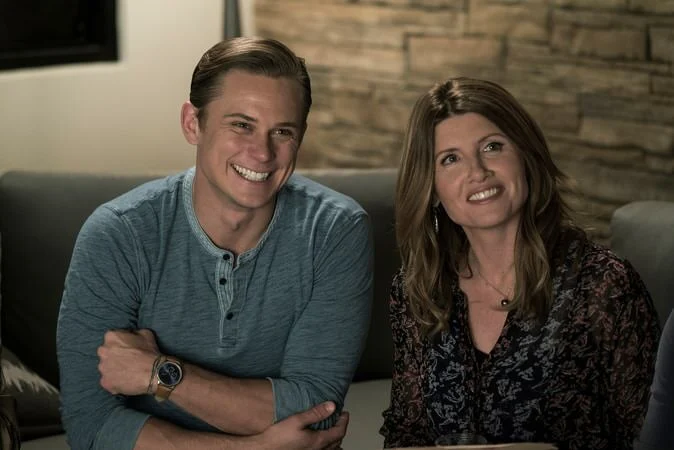

Released in theaters nationwide in February 2018, the action-comedy film Game Night, directed by the filmmaking duo John Francis Daley and Jonathan Goldstein, has continued to cement its status as a modern classic within the studio comedy genre. Written by Mark Perez and featuring an ensemble cast led by Jason Bateman and Rachel McAdams, the film follows a group of competitive friends whose weekly game night spirals into a real-life murder mystery when an elaborately staged immersive experience turns dangerously authentic. While mid-budget comedies have faced a notoriously difficult box office landscape over the past decade, Game Night stands out as a rare critical and commercial success that relied on sharp writing, stellar ensemble chemistry, and a refusal to pander to the lowest common denominator.
Production and Background Context
The development of Game Night began years before its theatrical premiere, with New Line Cinema acquiring Mark Perez’s spec script in 2013. Initially, the project cycled through various configurations, with Jason Bateman attached early on as an actor and producer. Directors John Francis Daley and Jonathan Goldstein, known for their work on Vacation (2015) and later Dungeons & Dragons: Honor Among Thieves (2023), boarded the project with a vision to elevate the traditional studio comedy by integrating genuine cinematic stakes and thriller mechanics.
The directors deliberately chose to shoot the film with a polished, high-contrast aesthetic reminiscent of David Fincher or Michael Mann thrillers, contrasting the heightened reality of a neo-noir film with absurd comedic situations. This visual style became a defining characteristic of the production, utilizing sweeping drone shots of Atlanta and atmospheric lighting to ground the narrative’s mounting tension. With a modest production budget estimated at roughly $37 million, Warner Bros. and New Line positioned the film as a counter-programming option for late winter, a strategy that ultimately paid off as positive word-of-mouth propelled the movie through a steady theatrical run.
Box Office Performance and Chronology of Release

Game Night opened in North American theaters on February 23, 2018, distributed by Warner Bros. Pictures. Entering a competitive weekend that included the family-friendly sequel Peter Rabbit and the sci-fi thriller Annihilation, the comedy grossed $16.6 million in its opening weekend, finishing second at the box office.
Despite a crowded marketplace, the film demonstrated exceptional box office legs, a metric typically reserved for major blockbusters or critically lauded prestige pictures. Propelled by strong audience exit polls and positive critical reviews—amassing an 85% approval rating on the review aggregator Rotten Tomatoes—Game Night grossed $69.2 million domestically and an additional $48.5 million internationally, bringing its worldwide cumulative box office total to approximately $117.7 million.
The film’s financial performance proved vital during a transitional period for Hollywood studios, which were increasingly scaling back production on original, R-rated and PG-13 mid-budget comedies in favor of massive intellectual property (IP) tentpoles and superhero franchises. Industry analysts frequently cite Game Night as a textbook example of how a well-cast, smartly written original concept can achieve profitability without relying on pre-existing comic book roots or multi-film cinematic universes.
Ensemble Cast Dynamics and Character Arcs
At the core of Game Night’s enduring appeal is its meticulously assembled ensemble cast. Jason Bateman stars as Max Davis, a successful financial analyst whose lifelong competitiveness—driven largely by the shadow of his hyper-successful brother Brooks, played by Kyle Chandler—defines his adult life. Rachel McAdams stars opposite Bateman as Annie, Max’s fiercely competitive wife who shares his obsession with game nights.
The supporting cast features a roster of recognizable television and film actors who form Max and Annie’s regular game night circle. Billy Magnussen plays Ryan, a vacant yet charming serial dater, alongside Sharon Horgan as Michelle, an intellectual who constantly questions her compatibility with him. Lamorne Morris portrays Kevin, a cybersecurity expert, and Kylie Bunbury plays his wife, Sarah. The narrative catalyst arrives when Brooks hosts a game night at his lavish home, offering his vintage Corvette as the grand prize for an immersive mystery event—only to be promptly kidnapped by masked operatives in front of his terrified guests.

The primary comedic engine of the film relies on the dissonance between the characters’ rational, highly educated professional backgrounds and the escalating, life-threatening chaos of the underworld they inadvertently stumble into. Rather than leaning on slapstick or juvenile humor, the screenplay favors rapid-fire dialogue, situational irony, and deadpan comedic delivery.
Critical Reception and Analysis
Film critics upon release praised Game Night for its structural precision and tonal balance. The screenplay by Mark Perez has been frequently singled out by screenwriting instructors and analysts for its efficient exposition and intricate plotting. Every major character is assigned a distinct narrative arc, complete with resolved relationship dynamics and standalone comedic beats, preventing the expansive ensemble from feeling bloated or underutilized.
A notable element frequently highlighted in academic and critical analyses of the film is its deconstruction of toxic masculinity and sibling rivalry. Max’s entire worldview is initially dictated by his inferiority complex regarding his brother Brooks, a dynamic that mirrors classic noir tropes of fraternal betrayal and deception. By subverting these thriller tropes into a domestic comedy framework, Daley and Goldstein create a narrative where emotional reconciliation between spouses and siblings takes place against a backdrop of accidental property destruction, bullet wounds, and international espionage rings.
Furthermore, the supporting performance of Jesse Plemons as Gary Higgins, the socially isolated, divorced police officer neighbor who lives across the street, has widely been regarded as a masterclass in deadpan character acting. Plemons’s understated menace and dead-eyed delivery provide a crucial grounding element, ensuring that the film’s stakes feel tangible even as the plot veers into farcical territory. Lines such as Gary’s bewildered inquiry regarding a grocery store promotion—"How can that be profitable for Frito-Lay?"—have entered contemporary pop culture lexicons as emblematic examples of modern deadpan humor.
Broader Impact and Legacy in the Comedy Genre

In the years following its theatrical run, Game Night has frequently appeared on retrospective lists evaluating the best comedies of the 2010s. Its legacy is particularly pronounced given the subsequent contraction of the studio comedy market. As streaming services and shifting theatrical distribution models drastically reduced the number of mid-budget studio comedies greenlit by major Hollywood players, films like Game Night are increasingly viewed by industry commentators as the last of a distinct era.
The film’s success also significantly elevated the directorial profiles of John Francis Daley and Jonathan Goldstein, proving their capacity to handle complex tonal shifts involving violence, suspense, and broad comedy without losing narrative cohesion. Similarly, the project further cemented Rachel McAdams’s versatility as a comedic actress capable of anchoring high-concept physical comedy alongside veteran comedic straight men like Bateman.
Ultimately, Game Night endures not as a revolutionary cultural artifact or a vehicle for profound social commentary, but as a meticulously constructed exercise in pure cinematic entertainment. By trusting an audience’s intelligence and pairing a tightly wound mystery plot with top-tier comic talent, the production demonstrated that efficient, well-executed studio comedies could still capture the cultural zeitgeist and deliver sustained commercial success.