
The cinematic landscape is no stranger to stories of survival against impossible odds, but few premises have captured the imagination quite like the prospect of being swallowed alive by a marine leviathan. 20th Century Studios has officially released the third theatrical trailer for Whalefall, an upcoming psychological survival thriller directed by acclaimed filmmaker Brian Duffield. Scheduled to breach theaters nationwide on October 16, 2026, the film adapts Daniel Kraus’s 2023 bestselling novel of the same name. Featuring a stacked cast led by Austin Abrams and supported by veteran actors such as Josh Brolin and Elisabeth Shue, the project has quickly become one of the most anticipated and visually baffling releases of the autumn box office season.
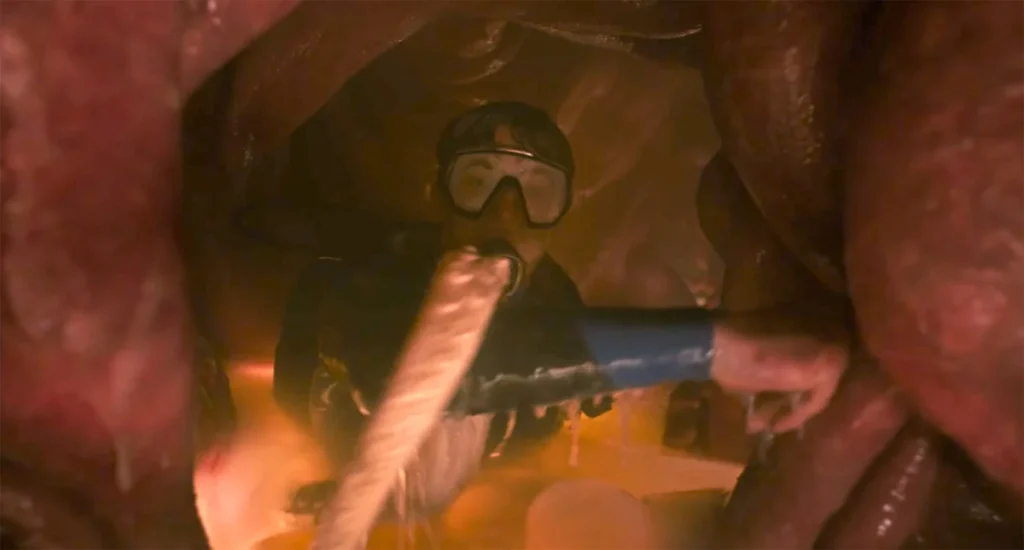
The latest promotional footage offers audiences a harrowing glimpse into the claustrophobic depths of a sperm whale’s multi-chambered stomach, showcasing cutting-edge visual effects and a relentless tone that strips away fantastical elements in favor of grounded, visceral realism.
The Genesis of Whalefall: From Bestselling Page to Screen
The journey of Whalefall began with the publication of Daniel Kraus’s critically acclaimed novel in the summer of 2023. Kraus, known for his ability to blend high-concept speculative premises with deeply emotional human cores, constructed a narrative driven by a stark biological reality: while exceedingly rare, the odds of a human being swallowed alive by a sperm whale are not zero.
The cinematic adaptation was fast-tracked following the commercial and critical success of director Brian Duffield’s previous sci-fi thriller, No One Will Save You. Duffield, whose directorial and screenwriting credits also include the dark teen comedy Spontaneous, partnered directly with Kraus to adapt the complex novel for the screen. Production was mounted under major industry banners, securing heavyweight producers including Brian Grazer and Ron Howard of Imagine Entertainment, alongside Duffield, Jeb Brody, and Allan Mandelbaum.

When 20th Century Studios acquired the project, industry analysts immediately recognized its unique market potential. Combining the claustrophobic tension found in films like 127 Hours or Buried with the awe-inspiring scale of ocean-faring disaster epics, Whalefall promised an unprecedented cinematic environment that had virtually never been depicted with scientific and physical authenticity on film.
Plot Mechanics and Narrative Framework
At the heart of Whalefall is a deeply personal father-son dynamic complicated by an extraordinary catastrophe. The story follows Jay Gardiner, portrayed by Austin Abrams, a young scuba diver who ventures into the treacherous waters off the central coast of California. His mission is grim and deeply personal: to locate and recover the remains of his late father, Dominic Gardiner, played by Josh Brolin, who died under tragic circumstances.
During the dive, a massive sperm whale—one of the ocean’s apex predators—engulfs Jay whole. Suddenly thrust into the pitch-black, acidic, and shifting confines of the animal’s digestive system, Jay finds himself facing a ticking clock. With only one hour of oxygen remaining in his scuba tank, he must navigate the horrifying internal anatomy of the beast to engineer a desperate escape.
Trapped in the multi-chambered stomach of the whale, physical escape seems statistically impossible. However, the narrative relies on psychological survival as much as physical ingenuity. To stay alive, Jay is forced to recall and apply the hard-earned, practical, and sometimes abrasive lessons imparted by his late father throughout his childhood. This thematic integration of grief, familial reconciliation, and sheer survival grit forms the emotional anchor of the film.
An All-Star Ensemble Cast

While Austin Abrams carries the physical and emotional weight of the solo-survival sequences trapped inside the marine mammal, Whalefall boasts a supporting cast of notable cinematic talent. Josh Brolin anchors the narrative’s emotional foundation as the deceased father, whose presence echoes through flashbacks and internalized memories.
Academy Award nominee Elisabeth Shue joins the ensemble, alongside veteran character actor John Ortiz, acclaimed indie favorite Jane Levy, and rising talent Emily Rudd. The inclusion of such a high-caliber roster underscores 20th Century Studios’ financial and creative confidence in the project, elevating it from a creature feature or standard B-movie monster thriller into a prestige psychological drama disguised as a survival epic.
Marketing Timeline and Promotional Rollout
The rollout for Whalefall has been calculated to maximize audience curiosity through a series of increasingly revealing promotional beats:
- Summer 2026: 20th Century Studios debuted the initial teaser trailer. The brief, high-impact footage shocked viewers by depicting the sudden, shocking moment of ingestion, immediately sparking viral discussions across social media platforms regarding the premise’s scientific plausibility.
- Late Summer 2026: A second full-length trailer expanded on the narrative stakes, introducing the strained father-son relationship and the grim underwater search for Josh Brolin’s character.
- September 10, 2026: The third and final official trailer dropped via YouTube, shifting focus toward the grueling tactical challenges Jay faces while navigating the multiple chambers of the whale’s stomach, showcasing advanced practical and digital effects.
- October 16, 2026: The film is scheduled for a wide theatrical release across North America.
Technical and Artistic Ambitions
Recreating the internal environment of a sperm whale for a feature-length film presented an immense challenge for Duffield and his creative team. Unlike fantastical cinematic sea monsters, a sperm whale’s anatomy is a matter of documented marine biology. The production design team had to balance terrifying realism with cinematic clarity, ensuring that viewers could follow Jay’s desperate actions within an organically alien landscape.

Cinematographers and visual effects supervisors faced the daunting task of generating believable textures, lighting limitations, and spatial dynamics inside a moving, organic containment vessel. Because the character’s primary light source is limited to his diving equipment and emergency flares, the visual palette leans heavily into oppressive shadows, bioluminescent accents, and the visceral, wet textures of marine biology.
Box Office and Cultural Implications
As the fall 2026 box office season takes shape, Whalefall occupies a unique strategic position for 20th Century Studios. Positioned between late-summer blockbuster fatigue and the traditional winter awards contenders, the film serves as an original mid-budget event picture in an era heavily dominated by pre-existing intellectual properties, superhero sequels, and franchise continuations.
Industry analysts are watching the project closely to determine if audiences will embrace high-concept, high-tension survival dramas that lack supernatural monsters or traditional villains. By anchoring the terror in a real-world, albeit statistically improbable, biological event, the film relies heavily on word-of-mouth curiosity and the sheer novelty of its central premise.
With its combination of an acclaimed auteur director, a talented ensemble cast led by Abrams and Brolin, and an unforgettable narrative hook derived from Daniel Kraus’s novel, Whalefall is poised to make a massive splash when it finally arrives in cinemas on October 16, 2026.