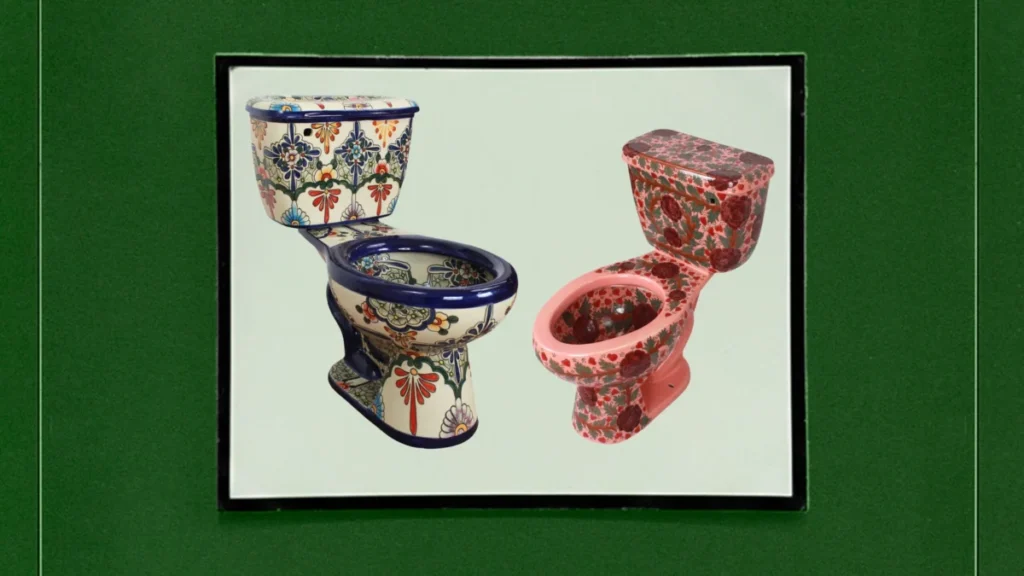

The contemporary interior design landscape is witnessing a significant shift as homeowners increasingly move away from the clinical minimalism that has dominated the last two decades. While bathroom renovations have traditionally focused on neutral palettes and functional upgrades, such as high-pressure showerheads or smart bidets, a new trend is emerging that treats the most utilitarian of fixtures—the toilet—as a centerpiece of artistic expression. Central to this movement is the rising popularity of Talavera toilets, hand-painted ceramic fixtures that bridge the gap between functional plumbing and traditional folk art. These pieces, characterized by vibrant colors and intricate patterns, represent a broader cultural pivot toward maximalism and the preservation of global artisanal techniques within the modern home.
The Evolution of Bathroom Aesthetics: From Utilitarian to Ornamental
For much of the 20th and early 211st centuries, Western bathroom design adhered to a strict code of hygiene-focused aesthetics. The prevailing logic dictated that the toilet should be porcelain, white, and as unobtrusive as possible. This "clinical" approach was rooted in the Victorian-era association between white surfaces and cleanliness. Attempts to deviate from this norm in American culture, most notably the mid-century trend of "fuzzy" plush toilet seat covers and matching rug sets, are now often viewed with a sense of collective design regret, largely due to the difficulty of maintaining such items in a high-moisture environment.
However, the recent surge in "maximalist" interior design—a style defined by "more is more," bold patterns, and a rejection of empty space—has led designers to reconsider the toilet. Rather than attempting to hide the fixture or minimize its presence, maximalists are opting to transform it into a work of art. This reclassification of the toilet from a biological necessity to a decorative object is most evident in the growing demand for Mexican Talavera pottery. Unlike the monochromatic upgrades offered by luxury brands like Toto, which focus on technological integration and sleek lines, the Talavera movement prioritizes human craftsmanship and historical narrative.
Historical Chronology: The Global Journey of Talavera
The origins of the Talavera style are a testament to centuries of global trade and cultural synthesis. To understand the significance of a hand-painted toilet in a modern Los Angeles or New York home, one must trace the technique back to the 16th century.
- The Spanish Foundation (1500s): The technique known as majolica—where colorful metal-oxide glazes are applied to a white, opaque base—reached its zenith in the Spanish city of Talavera de la Reina. This city became the majolica capital of the world, refining a style that blended Moorish influences with European Renaissance motifs.
- The Colonial Transition (1600s): Following the Spanish conquest of Mexico, artisanal techniques were exported to the New World. Spanish potters settled in Puebla, Mexico, attracted by the high-quality local clay. They established guilds and implemented strict standards for the production of what would become known as "Talavera de Puebla."
- The Asian Influence (1600s–1700s): Perhaps the most critical development in the Talavera aesthetic was the influence of the Manila Galleons. These Spanish trading ships traveled between the Philippines and Acapulco, carrying Chinese porcelain. The blue-and-white color palette, often mistakenly thought to be purely Spanish, was actually an adaptation of Chinese Ming Dynasty designs. Pueblan potters reinterpreted these patterns, blending them with indigenous Mexican floral and animal motifs to create the distinct look seen today.
- The Modern Artisanal Market (2000s–Present): In the 21st century, the production of Talavera has expanded beyond Puebla to regions like Guanajuato. Digital marketplaces such as Etsy have allowed small-scale workshops to reach a global audience, bypassing traditional brick-and-mortar luxury showrooms.
Market Analysis and Sourcing Trends
The market for high-end, hand-painted toilets is currently dominated by a handful of specialized artisans. Market research indicates that digital storefronts, such as CasaCastilloArt based in Guanajuato, Mexico, have become the primary hubs for this niche industry. As of mid-2024, these shops offer hundreds of unique toilet designs, alongside thousands of complementary pieces including sinks, mirrors, and floor tiles.
The price point for these fixtures typically ranges from $1,100 to $1,500, placing them in the luxury segment of the home improvement market. This cost reflects the labor-intensive nature of the production process. Each toilet is hand-molded and entirely coated in hand-painted adornments. Notably, the artistry extends beyond the visible exterior; many models feature intricate designs inside the tank and under the lid, ensuring that the "maximalist" experience is consistent throughout the object’s form.
The designs often categorized by sellers include:
- Acapulco Azul: A classic blue-and-white pattern that honors the Chinese porcelain trade roots.
- Flores Beige: Earthy, floral motifs that lean into the Mediterranean influence.
- Multicolor Maximalist: Vibrant combinations of yellows, oranges, and greens that reflect traditional Mexican folk art.
Celebrity Influence and Interior Design Adoption
The adoption of Talavera fixtures by high-profile figures has accelerated the trend’s move into the mainstream. A prominent example is supermodel Cara Delevingne, whose Los Angeles residence features a prominent Talavera toilet sourced from Mexican artisans. Her home, designed in collaboration with architect Nicolo Bini, is frequently cited as a masterpiece of "eclectic maximalism." By placing a hand-painted toilet beneath expensive banana-leaf wallpaper, the design challenges the notion that high-end decor and utilitarian plumbing are mutually exclusive.
Architects and designers suggest that the appeal of these items lies in their ability to provide a "sense of place" and "human touch" in an era of mass-produced, flat-packed furniture. As consumers become more conscious of the origins of their household goods, the narrative of a hand-painted piece from a family workshop in Guanajuato becomes a compelling selling point.
Technical Considerations and Consumer Reception
Despite the aesthetic appeal, the use of hand-painted ceramics in plumbing raises practical questions regarding durability and hygiene. Industry experts note that high-quality Talavera toilets are fired at temperatures exceeding 1,800 degrees Fahrenheit, which vitrifies the clay and glaze, making the surface non-porous and resistant to bacteria.
However, the trend is not without its detractors. Public discourse on platforms like Reddit often features debates regarding the "appropriateness" of applying high art to a toilet. Critics argue that the nature of the fixture’s use inherently devalues the artistry, while proponents argue that every corner of a home—including the bathroom—should be a source of visual pleasure. This "aesthetic parasite," as some designers call it, refers to the compulsion to beautify every functional aspect of life, no matter how mundane.
Broader Impact and Implications for the Home Improvement Industry
The rise of the Talavera toilet is indicative of a larger movement toward "Global Craft" in interior design. This movement has several implications for the broader industry:
- Disruption of Traditional Showrooms: As consumers buy directly from artisans in Mexico, traditional bathroom supply companies may need to diversify their offerings beyond standard white and chrome to remain relevant to the maximalist demographic.
- Sustainability and Slow Design: Hand-painted ceramics align with the "slow design" movement, which emphasizes longevity and artisanal value over disposable, trend-chasing products. A Talavera toilet is often viewed as a permanent architectural feature rather than a temporary fixture.
- Cultural Appreciation vs. Appropriation: The global popularity of Talavera has led to increased awareness of the "Denominación de Origen" (Denomination of Origin) status for Puebla-made ceramics. This legal framework helps protect Mexican artisans from low-quality imitations produced in other countries, ensuring that the economic benefits of the trend return to the communities of origin.
In conclusion, the emergence of the beautiful, hand-painted toilet represents the final frontier of home customization. By integrating centuries of Spanish, Mexican, and Asian history into a single plumbing fixture, homeowners are reclaiming the bathroom as a space of cultural and artistic significance. Whether viewed as a maximalist masterpiece or a contentious design choice, the Talavera toilet has undeniably transformed the conversation around what it means to build a beautiful home.