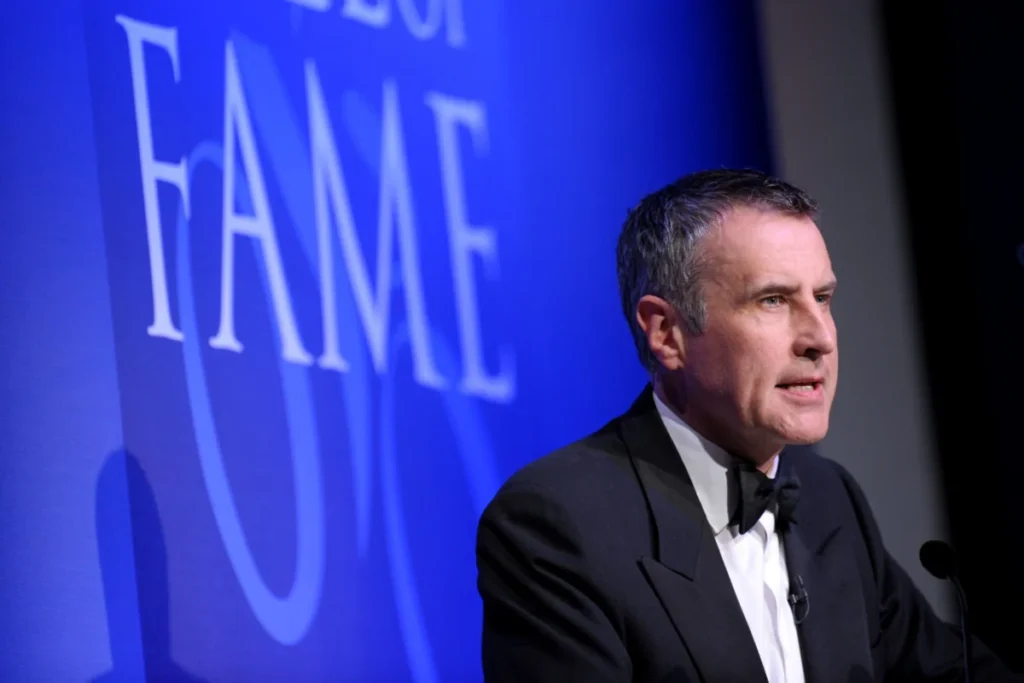

The broadcasting world is mourning the loss of Dermot Murnaghan, a towering figure in British news journalism and presentation, who passed away peacefully on Saturday morning at the age of 68. His family confirmed that his death followed a period of illness with prostate cancer, a disease he had bravely and openly campaigned against in his final year. Murnaghan’s distinguished career spanned decades, during which he became a household name through his prominent roles as a lead anchor at Sky News for 15 years, and as a presenter for news bulletins across the BBC, ITV, and Channel 4. His passing has triggered an outpouring of tributes from colleagues, political figures, and charity organisations, all remembering his remarkable professionalism, warmth, and significant contributions to both journalism and public health awareness.
A Distinguished Career Spanning Decades
Dermot Murnaghan’s journey in broadcasting began in 1989, marking the start of a prolific career that would see him become one of the most recognisable and respected faces on British television. He first made his mark at Channel 4, where he hosted the breakfast programme and anchored its business segments, quickly establishing himself as a reliable and insightful presenter. His early work showcased his ability to dissect complex topics and deliver them with clarity and authority, qualities that would define his professional persona for years to come.
His career trajectory continued upwards with a move to ITV, where he became a fixture on the Lunchtime News and the flagship News at Ten. It was during his time at ITV that Murnaghan demonstrated his unflappable composure and journalistic gravitas during moments of national crisis. Notably, he led ITV’s coverage of the profoundly shocking death of Diana, Princess of Wales, in 1997, a period that demanded immense sensitivity and steadfast reporting. His calm demeanour and ability to convey gravity without sensationalism earned him widespread respect and cemented his reputation as a trusted voice in news.
In 2002, Murnaghan joined the BBC, embarking on another significant chapter of his career as a main presenter of BBC Breakfast. For five years, until 2007, he co-anchored the popular morning news programme, becoming a familiar and comforting presence for millions of viewers starting their day. During this period, he demonstrated a different facet of his presenting talent, capable of handling lighter segments and interviews with the same ease and charm he brought to hard news. His versatility was further highlighted by his long-standing role as the host of the BBC quiz show Eggheads, which he presented for 11 years. This role allowed him to connect with audiences in a different capacity, showcasing his quick wit and amiable personality, proving he was more than just a serious newsman.
The longest and arguably most defining phase of Murnaghan’s career was his 15-year tenure as a lead anchor at Sky News. Joining the 24-hour news channel, he became synonymous with its breaking news coverage, providing continuous updates and expert analysis on a myriad of national and international events. From general elections and referendums to major geopolitical shifts and royal events, Murnaghan was often at the helm, guiding viewers through unfolding stories with his characteristic precision and measured tone. His final major assignment at Sky News, before his departure in 2023, was leading the coverage of the death of Queen Elizabeth II, a poignant moment where his extensive experience and steady hand were once again invaluable in reporting a monumental historical event.
Across these diverse roles and prestigious platforms, Dermot Murnaghan consistently embodied the highest standards of journalism. He was known for his rigorous approach to facts, his insightful questioning, and his unwavering commitment to objective reporting. Colleagues frequently lauded his ability to remain composed under pressure, his intellectual curiosity, and his genuine respect for both his subjects and his audience.
Brave Battle and Powerful Advocacy Against Prostate Cancer

In his final year, Dermot Murnaghan transformed from a revered news anchor into a powerful and deeply personal advocate for prostate cancer awareness. His public revelation last year that he had been diagnosed with "incurable but not untreatable" prostate cancer sent ripples through the media industry and beyond. Rather than retreating, Murnaghan chose to use his platform to shed light on the disease, embarking on a determined campaign to encourage men, particularly those in high-risk groups, to get tested.
His advocacy was rooted in a candid admission: he had delayed getting tested himself, a decision he later regretted. Speaking on BBC Breakfast last November, he openly shared his experience, stating that he had put off seeking medical advice "because I felt fine." This honest and relatable confession resonated deeply with many, underscoring a common misconception that often prevents men from early detection. His message was clear and urgent: prostate cancer often presents with no symptoms in its early stages, making proactive screening vitally important.
Prostate cancer is the most common cancer among men in the UK, affecting approximately one in eight men in their lifetime. Over 52,000 men are diagnosed with prostate cancer every year, and around 12,000 men die from it annually. Early diagnosis is critical, as it significantly improves treatment outcomes and survival rates. Risk factors include age (over 50), ethnicity (Black men are at higher risk), and a family history of the disease. Health campaigns continually stress the importance of understanding these risks and consulting a GP about testing options, such as the Prostate Specific Antigen (PSA) blood test, which can indicate the presence of prostate cancer. Murnaghan’s personal story served as a potent, real-world example of why these guidelines are so crucial.
His courageous decision to share his journey and actively campaign made a tangible impact. Charities dedicated to fighting prostate cancer were quick to acknowledge his invaluable contribution. Prostate Cancer Research expressed their profound gratitude for his support, praising his "remarkable honesty and courage" in raising awareness. Similarly, a spokesperson for Prostate Cancer UK conveyed their heartbreak at his passing, highlighting that he was a "passionate and dedicated supporter of our charity, and his work had a huge impact on the hundreds of thousands of men affected by prostate cancer across the country." These statements underscore the significant role Murnaghan played in elevating the conversation around men’s health and potentially saving lives by encouraging earlier diagnoses.
An Outpouring of Tributes from Across the Spectrum
The news of Dermot Murnaghan’s death elicited a wave of heartfelt tributes from across the broadcasting, political, and charity sectors, reflecting the immense respect and affection he garnered throughout his life and career.
Susanna Reid, presenter of ITV’s Good Morning Britain and a former colleague at BBC Breakfast, shared a poignant selfie of herself with Murnaghan on Instagram, expressing "utterly devastating news." She remembered him as a "legendary news journalist and presenter," recalling the "sheer pleasure of presenting with Dermot at BBC Breakfast." Reid’s tribute captured the essence of his character, writing: "Dermot was a serious journalist who never took himself too seriously. He was intelligent and charming and viewers and guests loved him." Her words painted a picture of a broadcaster who combined gravitas with an approachable warmth, a rare and cherished combination.
Alastair Bruce, Sky News’ royal commentator, reflected on his time working alongside Murnaghan, describing it as "an experience that brought affirmation and assurance." On X (formerly Twitter), Bruce praised Murnaghan’s generosity on air, noting how he "always provided the space for Rhiannon and me to weave in our context and commentary. We will miss his steady measure at the microphone." This sentiment highlighted Murnaghan’s skill as an anchor who facilitated, rather than dominated, discussions, valuing the contributions of his fellow experts.
Sky News political editor Beth Rigby expressed her profound sadness, recalling their collaboration during the intense coverage of the 2019 general election. Her tribute underscored his role as a steady hand during critical political moments. BBC Radio 4 Today programme presenter Nick Robinson lauded Murnaghan as "someone you instinctively trusted – clever, warm and witty," echoing the widespread perception of his credibility and engaging personality. Journalist Liam Halligan further added to the chorus of praise, remembering him as "a brilliant broadcaster – and huge character," a testament to his vibrant presence both on and off screen.

Political figures also joined in the tributes, recognising Murnaghan’s impact beyond the newsroom. Liberal Democrat leader Sir Ed Davey stated, "Dermot Murnaghan was a broadcasting legend who we have lost far too soon. His tireless advocacy, encouraging more men to get tested for prostate cancer, will no doubt have saved lives." This acknowledgement from a political leader underscored the significant public health contribution Murnaghan made in his final months. Radio DJ Liz Kershaw, whose brother Andy Kershaw also died of cancer in April, paid her respects on X, urging her followers to get their prostate checked to "honour his memory," amplifying Murnaghan’s own call to action.
Jonathan Munro, the deputy director of BBC News, offered a comprehensive tribute from the institution where Murnaghan had spent a significant part of his career. Munro stated, "Dermot was a true gentleman and a brilliant journalist and broadcaster who was much-loved by viewers and by his BBC colleagues. Across his work, from presenting BBC Breakfast to hosting Eggheads, he was a consummate professional and someone who really had a natural ability to connect with audiences. Our thoughts are with Dermot’s family, friends and colleagues." This statement encapsulated Murnaghan’s versatility and his profound ability to forge connections with a diverse audience, whether delivering serious news or moderating a popular quiz show.
Broader Impact and Enduring Legacy
Dermot Murnaghan’s passing leaves a significant void in British journalism and public life. His legacy is multifaceted, marked by his unwavering commitment to journalistic integrity, his exceptional broadcasting talent, and his courageous advocacy for prostate cancer awareness.
In an era of rapidly evolving media landscapes and increasing pressures on news organisations, Murnaghan remained a steadfast beacon of traditional, objective journalism. His long career across all major British broadcasters—Channel 4, ITV, BBC, and Sky News—demonstrated his adaptability and enduring appeal. He was a master of the craft, capable of delivering complex information with clarity, asking probing questions with respect, and maintaining composure during moments of high drama. His "steady measure at the microphone" was not merely a stylistic choice but a reflection of his deep understanding of his role: to inform, not to sensationalise. His contribution helped set a high standard for news presentation, influencing a generation of journalists and shaping how millions of Britons consumed news for over three decades.
Beyond his professional achievements, Murnaghan’s personal battle with prostate cancer and subsequent public advocacy have left an indelible mark. By sharing his own vulnerability and urging men to overcome the stigma or complacency surrounding men’s health, he undoubtedly elevated public discourse and saved lives. His honest admission of delaying his own test due to feeling "fine" provided a powerful, relatable narrative that cut through statistics and medical jargon. This courageous act of transforming a personal struggle into a public health campaign cemented his legacy as a compassionate and impactful figure far beyond the news desk. His actions serve as a poignant reminder of the importance of early detection and the power of personal testimony in public health education.
Dermot Murnaghan will be remembered not only as an award-winning journalist and a consummate professional but also as a warm, intelligent, and charming individual who connected with audiences on a profound level. His distinctive voice, his thoughtful analysis, and his quiet determination to make a difference will be deeply missed by colleagues, viewers, and all those whose lives he touched. His legacy will continue to inspire both aspiring journalists and men across the country to prioritise their health, ensuring that his influence will endure for years to come.