
The commencement of the Great American State Fair on the National Mall has elicited a wave of unexpected reactions from visitors, many of whom arrived anticipating a highly charged political environment. As the 16-day event marks the 250th anniversary of the United States, attendees from various points on the political spectrum have noted that the atmosphere remains focused on national heritage rather than partisan rhetoric. Despite a backdrop of administrative friction, state-level boycotts, and a contentious opening ceremony, the physical experience of the fair has, for many, mirrored a traditional celebratory exposition.
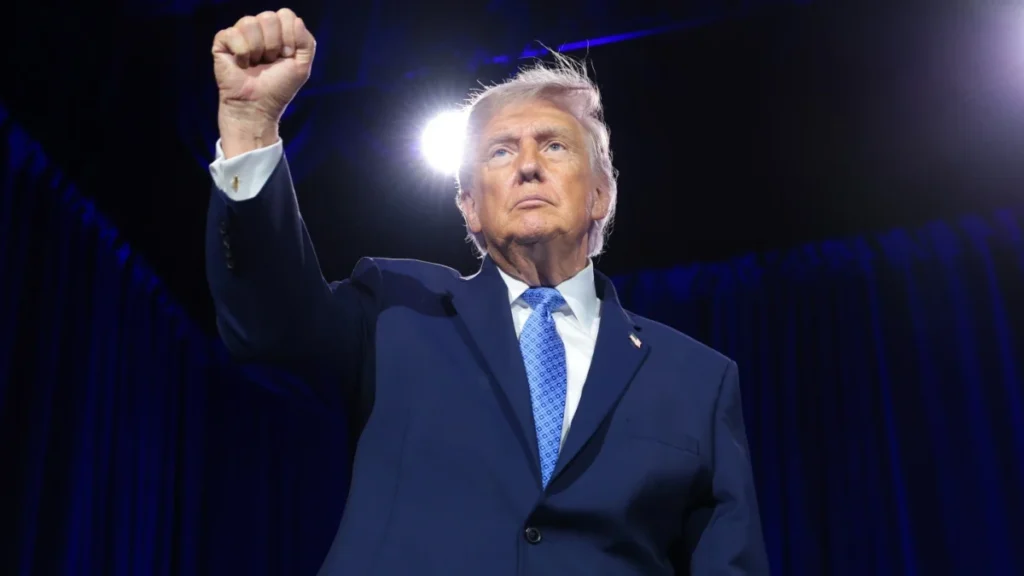
The event, which was officially inaugurated by President Donald Trump on Thursday, serves as a cornerstone of the Semiquincentennial celebrations. Spanning several blocks of the National Mall, the fair features a sprawling collection of temporary halls, cultural exhibits, and food vendors representing the 56 states and territories of the Union. While the lead-up to the event was marked by the withdrawal of several high-profile musical acts and concerns over the politicization of the National Mall, the initial days of the fair have presented a different narrative to those walking the grounds.
A Vision of National Unity Amidst Political Tension
The Great American State Fair was conceptualized as a "State Fair of all State Fairs," a vision promoted by the administration to centralize the nation’s 250th-anniversary festivities in the heart of the capital. The organization of the event was spearheaded by Freedom 250, a public-private partnership that operates independently of America250, the nonpartisan commission established by Congress in 2016 to oversee the Semiquincentennial.
The physical layout of the fair is dominated by several landmark structures. A massive Ferris wheel provides panoramic views of the Washington Monument and the U.S. Capitol, while a scaled-down replica of a "triumphal arch"—a project long championed by President Trump—anchors the site’s central plaza. Federal agencies have collaborated to transform the Mall into a series of themed zones, showcasing American innovation, agricultural history, and regional diversity.
For many visitors, the scale of the event and its focus on regional identity have overshadowed the political controversies that dominated the news cycle prior to the opening. Pamela L., a 59-year-old resident of Virginia Beach, noted that the event felt surprisingly inclusive. "It’s kind of neat, because here it’s just been all about America," she remarked, observing that the crowd appeared more interested in the cultural displays than in political debate. Her sentiment was echoed by 52-year-old Nicole Briggs, also from Virginia, who described the gathering as a "once-in-a-lifetime event for our generation," emphasizing the historical significance of the 250-year milestone.
Disrupted Expectations and Attendee Profiles
The divergence between public perception and the fair’s actual atmosphere has been a recurring theme among local attendees. Daniela Guerrero, 25, a resident of the District of Columbia, admitted to harboring reservations before visiting the Mall. Expecting the programming to lean heavily toward Republican-aligned themes, she found the experience to be "very much nonpartisan" upon arrival.
Similarly, Grace Guber, 27, noted that her initial apprehension—which included expectations of a "MAGA rally" atmosphere—was not met by the reality of the fairgrounds. Instead, the focus remained on the diverse food and culture booths that line the Mall, representing the specific traditions of various American regions. This disconnect highlights a significant gap between the political framing of the event by organizers and the actual consumer experience of the attendees.
However, the fair has not been entirely devoid of partisan friction. While the grounds may feel like a traditional fair to the public, the official programming has occasionally leaned into the very rhetoric that critics feared. During the opening ceremony on Thursday night, Transportation Secretary Sean Duffy delivered a speech that took direct aim at the musical performers who had withdrawn from the event. Duffy’s use of the term "libtards" to describe the departing acts served as a sharp contrast to the nonpartisan experience reported by visitors on the ground, illustrating the dual nature of the event: a festive public gathering underpinned by a combative administrative stance.
The Logistics of Participation and State Boycotts
The fair’s claim to represent all 56 states and territories has been complicated by the refusal of several state governments to participate. At least six states led by Democratic governors opted out of sending official delegations or funding booths, citing both the financial burden of the 16-day event and concerns over its partisan framing.
Oregon Governor Tina Kotek was among the most vocal critics, telling the Salem Statesman Journal that her administration was concerned the event would become a "more partisan affair" rather than a neutral celebration of American history. Other states cited the logistical challenges and high costs associated with transporting staff and exhibits to Washington, D.C., for a two-week period.
The absence of these states has not gone unnoticed by visitors. Lynn Frank, 52, a visitor from North Carolina, expressed disappointment that her state’s official leadership declined to participate. "A state fair shouldn’t be political," she said, reflecting a broader frustration among some citizens who believe that national milestones should be exempt from the polarized climate of modern governance. Despite the lack of official state backing in some cases, the fair has attempted to maintain representation through private vendors and regional organizations that stepped in to fill the void.
Historical Context and the Semiquincentennial Timeline
The 250th anniversary of the United States, or the Semiquincentennial, follows the precedent set by the 1976 Bicentennial. During that celebration, the National Mall was also a focal point, hosting the Smithsonian Folklife Festival and various historical reenactments. However, the current Great American State Fair represents a shift in how such milestones are celebrated, moving toward a model that blends federal resources with private-sector influence through entities like Freedom 250.
The timeline for the fair’s development was relatively compressed. While the America250 commission had been planning for years, the specific "Great American State Fair" concept was accelerated by the current administration within the last 18 months. This led to a scramble for logistics, including the construction of the temporary halls and the installation of the Ferris wheel, which required special permits from the National Park Service due to the sensitive nature of the Mall’s grounds.
The 16-day duration of the fair is also notable, making it one of the longest-running continuous events ever held on the National Mall. Typically, large-scale events in this space, such as the Presidential Inauguration or Independence Day celebrations, are shorter in duration. The extended timeframe was designed to allow for a rotating schedule of "State Days," where specific regions are highlighted through performances and specialized programming.
Broader Implications and the Future of National Celebrations
The success or failure of the Great American State Fair may influence how future national milestones are handled. The event serves as a case study in the challenges of organizing large-scale public celebrations in a deeply divided political climate. On one hand, the fair has successfully drawn large crowds and provided a platform for regional cultural expression. On the other hand, the boycotts by state leaders and the withdrawal of entertainers suggest that achieving true national unity in such a format remains an elusive goal.
From a sociological perspective, the reactions of attendees like Guerrero and Guber suggest that the public may have a higher threshold for separating political noise from cultural experiences than is often assumed. If the fair continues to operate with a focus on "people being people," as Pamela L. described it, it may achieve its goal of being a memorable historical marker despite the administrative controversies.
As the fair enters its second week, observers will be watching to see if the nonpartisan atmosphere holds or if the rhetoric from the opening ceremony begins to permeate the daily activities. With millions of visitors expected over the 16-day period, the event remains a significant logistical feat and a high-stakes experiment in national branding.
Conclusion: A Complex Tapestry of Celebration
The Great American State Fair stands as a complex symbol of the current American moment. It is simultaneously a grand celebration of a quarter-millennium of history and a flashpoint for the ideological battles of the present. While the halls of the National Mall are filled with the scents of regional fair food and the sounds of diverse musical traditions, the shadows of partisan disagreement remain visible in the empty spaces left by boycotting states and the heated rhetoric of official speeches.
Ultimately, the fair’s legacy will likely be determined by the memories of the citizens who walked its grounds. For those who found a sense of shared American identity amidst the Ferris wheels and state booths, the event has succeeded in its primary mission. For those who stayed away due to political concerns, it remains a reminder of the fractures that continue to define the American landscape at its 250-year mark. As the 16-day celebration continues, the National Mall remains a stage where the complexities of the American experiment are on full display, for better or for worse.