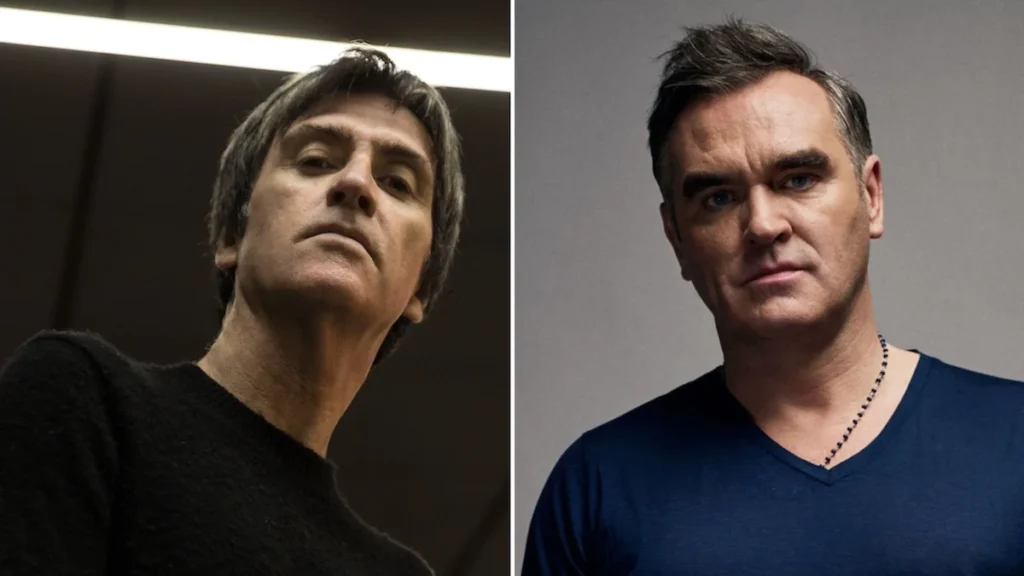

In the latest chapter of one of rock music’s most enduring and acrimonious feuds, iconic frontman Morrissey has launched a scathing attack on former Smiths bandmate Johnny Marr. The catalyst for this renewed public spat is an unannounced BBC documentary about The Smiths, which Morrissey claims is biased against him and unfairly lionizes Marr. The lengthy missive, titled "The Art Of Forgery," was initially posted on Morrissey Central, the singer’s official website, before being swiftly removed. However, its contents were preserved and widely circulated, detailing a litany of grievances that underscore the deep-seated animosity between the two principal architects of one of Britain’s most influential bands.
The Latest Salvo: "The Art Of Forgery"
Morrissey’s now-deleted statement, dated June 2026, directly targeted a forthcoming BBC radio program slated for July 13, which he asserts will trace the story of The Smiths. The singer claims to have been forewarned that the documentary would be "critical in nature towards Morrissey," and that he was not invited to participate in its production. He further alleges that the program is yet another instance of a "timeworn story" that positions Marr as "the unchanging face of discord," presenting a narrative where Marr is an "angel" and Morrissey an "executioner."
According to Morrissey, this recurring portrayal serves to "intentionally divided the Smiths audience into Marr or Morrissey factions." He expressed profound disappointment that, four decades after the band’s formation, Marr continues to "look back" and engage in what he terms a "predatory sport of ‘calling Morrissey names’." Morrissey’s letter also took aim at specific individuals involved in the documentary, expressing shock and dismay at the alleged "slanderous" words of Grant Showbiz, a producer/engineer who worked with The Smiths, whom Morrissey stated he had always held in "the highest regard."
A Feud For The Ages: The Smiths’ Tumultuous Legacy
The public animosity between Morrissey and Johnny Marr is not a new phenomenon; it has been a defining characteristic of their post-Smiths careers, overshadowing their individual achievements and coloring the legacy of their groundbreaking band. To understand the depth of this latest outburst, it is essential to revisit the historical context of their relationship, from the band’s meteoric rise to its bitter dissolution and the legal battles that ensued.
Formation and Dissolution
The Smiths formed in Manchester in 1982, quickly establishing a unique sound characterized by Marr’s intricate, jangling guitar work and Morrissey’s distinctive vocal delivery and poetic, often melancholic, lyrics. Their partnership produced four studio albums—The Smiths (1984), Meat Is Murder (1985), The Queen Is Dead (1986), and Strangeways, Here We Come (1987)—along with numerous singles and compilations that cemented their status as one of the most important bands of the 1980s. However, behind the creative brilliance lay increasing internal tensions. Marr, exhausted by the relentless touring and recording schedule and feeling creatively stifled by certain aspects of the band’s direction, left in July 1987. Morrissey’s subsequent declaration that "the Smiths are no more" brought an abrupt end to their five-year reign. The initial reasons for the split were cited as creative differences and Marr’s desire for a break, but the underlying resentments would fester for decades.
The Royalty Lawsuit of 1996
Perhaps the most significant event that cemented the chasm between Morrissey and Marr, and indeed with the other band members, was the 1996 High Court case. Drummer Mike Joyce and bassist Andy Rourke sued Morrissey and Marr for a larger share of the band’s earnings, claiming they were unfairly treated as mere session musicians rather than equal partners in a band. The court ultimately ruled in favor of Joyce, awarding him 25% of The Smiths’ recording and performance royalties from 1987 onwards, along with a substantial back payment. Rourke settled out of court for a lesser sum.
This landmark legal decision had profound implications. While Joyce and Rourke gained financial recompense, the trial exposed the raw nerves and differing perceptions of the band’s internal dynamics. Crucially, the court’s judgment solidified Morrissey and Marr as the primary creative and financial architects of The Smiths, inadvertently reinforcing the narrative of a two-person creative core at the expense of the rhythm section. For Morrissey, this outcome likely fueled his belief in his singular creative ownership, while for Marr, it confirmed a certain legal and artistic hierarchy. However, the trial also brought to light testimonies that painted both Morrissey and Marr in a less than flattering light regarding their treatment of their bandmates, creating a public perception of internal dysfunction that continues to haunt the band’s legacy. This legal battle became a foundational element in the ongoing "Marr or Morrissey factions" divide that Morrissey references, as it legally codified the unequal distribution of power and wealth within a band often presented as a unified entity.
Diverging Paths and Public Personas
Following The Smiths’ dissolution, both Morrissey and Marr embarked on successful, albeit very different, solo careers. Morrissey maintained a prominent profile, releasing critically acclaimed albums and cultivating a devoted fanbase, though his career has also been marked by frequent concert cancellations and increasingly controversial public statements on politics, race, and immigration. These pronouncements have alienated a significant portion of his audience and led to widespread criticism, complicating his artistic legacy.
Johnny Marr, by contrast, has largely focused on his musical output, collaborating with a diverse range of artists including The The, Electronic, Modest Mouse, and The Cribs, before establishing a well-received solo career. Marr has generally adopted a more measured public persona, often expressing pride in The Smiths’ musical achievements while sidestepping the personal drama. This divergence in public image—Morrissey as the provocative, often embattled figure, and Marr as the respected, prolific musician—has undoubtedly contributed to the "angel" versus "executioner" narrative that Morrissey so vehemently opposes.
Deconstructing Morrissey’s Accusations
Morrissey’s "The Art Of Forgery" letter is a multifaceted attack, delving into specific historical grievances and broader philosophical points about artistic ownership and legacy.
The BBC Documentary’s Alleged Bias
Morrissey’s primary concern revolves around the unannounced BBC documentary, which he believes is designed to be overtly critical of him. His claim of being excluded from the narrative and the alleged portrayal of Marr as an "angel" while he is depicted as an "executioner" speaks to a deep-seated feeling of being unfairly maligned and historically misrepresented. He sees this as a continuation of a "timeworn story," suggesting a pattern of media and Marr-aligned narratives that seek to diminish his contributions and vilify his character. The phrase "Bigmarr Strikes Again" indicates his perception of Marr’s ongoing influence in shaping the public’s understanding of The Smiths’ history.
Authorship and Ownership of The Smiths’ Identity
A central pillar of Morrissey’s argument is his emphatic assertion of sole creative vision for The Smiths’ identity: "The Smiths was my voice, my lyrics, my song-titles, my album titles, my single and album artwork, my vision, my vocal melodies, my emotions — nobody else’s." This statement directly challenges the widely held perception of The Smiths as a collaborative partnership between Morrissey’s lyrical genius and Marr’s musical prowess. While it is undeniable that Morrissey crafted the lyrics and much of the band’s visual aesthetic, his claim of exclusive ownership over "vocal melodies" and "emotions" seeks to reframe the entire creative output as singularly his own. This perspective highlights a fundamental disagreement over how artistic credit and ownership are apportioned within a band, particularly one where the lyrical and musical components were so intrinsically intertwined.
The Andy Rourke Firing Myth
Morrissey addresses a long-standing rumor regarding the firing of bassist Andy Rourke, stating, "The tired lie that I left a note on Andy Rourke’s car saying ‘you are fired’ lives on with sly determination." He denies authorship, suggesting the note was a mischievous prank by an unknown party. His clarification – "But I hadn’t hired Andy Rourke and I would have no place nor right to fire him" – offers insight into the band’s internal hierarchy and decision-making processes, implying that such a unilateral action would have been outside his authority. This detail, though seemingly minor, speaks to the persistence of narratives that have become part of The Smiths’ lore, regardless of their factual accuracy.
Media Scrutiny and The Guardian
Morrissey explicitly targets The Guardian newspaper, stating, "When The Guardian say that they love the Smiths but hate Morrissey, it is like saying ‘we hate David Bowie but we love the Spiders From Mars’." He views this as a "staged" and illogical position, asserting that it is impossible to appreciate The Smiths’ music while simultaneously rejecting his integral role. This criticism reflects his broader distrust of mainstream media, which he often perceives as biased against him, particularly since 2015, a period he marks as the beginning of The Guardian‘s "hourly malice." He suggests Marr may have actively encouraged such media narratives to portray The Smiths as "his project."
The "Haircut 100" Analogy
Morrissey quotes writer Gareth Roberts, who famously stated, "Remove Morrissey from the Smiths and you are left with Haircut 100." This analogy, while delivered with humor, underscores Morrissey’s conviction that his contribution was utterly indispensable to The Smiths’ distinctive sound and identity. Haircut 100 was a popular early 80s new wave band known for their catchy, pop-oriented sound, far removed from The Smiths’ introspective and often melancholic aesthetic. By citing this, Morrissey highlights the perceived uniqueness of his artistic voice and implies that without it, The Smiths would have been a generic, forgettable pop act.
Trademark Disputes and Marr’s Intentions
A particularly inflammatory accusation is Morrissey’s claim that Marr "has legally claimed the Smiths trade mark name as his — knowing full well that the name was devised by Morrissey." This links directly to the financial and legal battles of the past and suggests a continued effort by Marr to assert legal ownership over the band’s identity. Morrissey interprets this action as Marr "devoted his entire life to killing Morrissey in whatever way available," portraying his former bandmate as a relentless antagonist driven by a desire to erase Morrissey’s influence. This accusation is highly significant, touching upon issues of intellectual property, financial control, and the control of the band’s narrative.
Betrayal by Grant Showbiz
Morrissey expresses profound disappointment and shock at the alleged "slanderous" words of Grant Showbiz within the BBC program. Showbiz, a respected figure in the music industry who engineered and produced some of The Smiths’ early recordings, including their debut album, was part of the band’s inner circle. For Morrissey to feel betrayed by someone he "always held solidly in the highest regard" indicates a deeper wound, suggesting a perceived shift in loyalty that mirrors the crumbling of "Soviet Statues," a dramatic metaphor for the collapse of once-unquestioned allegiances.
Marr’s Musical Interpretation
In a deeply personal critique, Morrissey disparages Marr’s ability to interpret The Smiths’ material, particularly the iconic "How Soon Is Now?" He states that Marr "has not ever felt the lyrics… which is why he sings them with all of the romantic enchantment of Leslie Crowther." Leslie Crowther was a beloved, light-hearted British comedian and TV presenter, known for his affable, wholesome persona. Comparing Marr’s delivery to Crowther is a pointed insult, suggesting a complete lack of emotional depth and understanding of the song’s profound melancholic yearning—a direct attack on Marr’s artistic sensitivity and connection to the very music he co-created. Morrissey’s lament that "How fantastic life would have been if Marr had chosen four more studio albums with the Smiths instead of joining and then being thrown out of the Pretenders" reveals a persistent bitterness over the band’s premature end and Marr’s subsequent career choices.
A Chronology of Recent Contentious Episodes
The "Art Of Forgery" letter is merely the latest, albeit particularly detailed, entry in a long-running saga of public exchanges between Morrissey and Marr. Their feud has seen multiple escalations over the years, often initiated by Morrissey, with Marr typically responding with a mix of defiance and dismissal.
January 2022: The "Please Will You Stop Using My Name" Letter
In an open letter posted on Morrissey Central, titled "Johnny Marr, please stop using my name to promote your records," Morrissey pleaded with Marr to cease mentioning him in interviews. He accused Marr of generating "clickbait" by invoking his name and suggested Marr should "move on" from their shared past. Morrissey wrote, "You have a new album out – Fever Dreams Pts 1-4 – yet you spend your entire press-run discussing Morrissey. Please stop. It’s 2022. Is this ever going to end?" Marr responded by simply tweeting: "An ‘open letter’ hasn’t really been a thing since 1865, Morrissey. Please desist with this boring ‘attention seeking’ [expletive]." This exchange highlighted the stark contrast in their approaches to the feud, with Morrissey’s theatricality clashing with Marr’s terse, modern dismissal.
August 2024: The Fabled Reunion That Wasn’t
Morrissey publicly blamed Marr for scuttling a proposed 2025 Smiths reunion. While the specifics of this potential reunion were never officially detailed, the idea of The Smiths reforming has been a persistent fantasy for fans. Morrissey’s accusation placed the blame squarely on Marr, implying that his former bandmate’s intransigence was the sole barrier to what would undoubtedly be one of music’s most anticipated comebacks. This claim further fueled the narrative of Marr as the impediment to The Smiths’ future.
September 2024: Trademark and Management Turmoil
Morrissey claimed that Marr had "unilaterally acquired The Smiths’ trademark rights" and, even more controversially, implied that Marr was seeking a replacement vocalist for the band. These accusations suggested a calculated effort by Marr to control The Smiths’ intellectual property and potentially revive the band without its original singer. In the wake of these claims, Morrissey fired his management, suggesting significant internal turmoil and a breakdown in his professional relationships, potentially due to the ongoing disputes with Marr.
September 2024: The "Blocked" Greatest Hits Album
Further escalating the conflict, Morrissey alleged that Marr had "blocked" the release of a Smiths greatest hits album. While details surrounding this proposed compilation were scarce, the accusation painted Marr as actively hindering the dissemination of the band’s music, a move that would be seen as detrimental to both their legacy and potential earnings. This claim, combined with the trademark accusations, suggested a deep-seated battle for control over The Smiths’ commercial and artistic future.
January 2026: The "Deliberately Untrue" Rough Trade Narrative
Morrissey challenged a story Marr had told about how The Smiths’ demo tape was delivered to Rough Trade Records, calling Marr’s narrative "deliberately untrue." Marr’s account, which detailed him personally taking the demo to Rough Trade after being snubbed by other labels, is a foundational myth in The Smiths’ origin story. Morrissey’s direct refutation aimed to undermine Marr’s credibility and his role in the band’s early success, once again casting doubt on historical accounts that elevate Marr’s contributions.
June 2026: The BBC Documentary Controversy
This brings us to the present "Art Of Forgery" letter, a culmination of Morrissey’s persistent grievances, fueled by the prospect of a BBC documentary that he perceives as a continuation of Marr’s efforts to control and distort The Smiths’ narrative.
Johnny Marr’s Measured Responses and Enduring Stance
Throughout the decades of public sparring, Johnny Marr has largely maintained a more composed and forward-looking demeanor compared to Morrissey’s often volatile outbursts. While he has occasionally engaged directly, his overarching message has been one of focusing on the music’s enduring quality and his own ongoing career.
Marr has consistently stated that Morrissey’s words and actions would "never harm The Smiths’ legacy." This stance suggests a belief that the band’s musical output is robust enough to transcend the personal drama of its creators. He often emphasizes the timelessness and impact of their songs, choosing to celebrate the art rather than engage in the personal mudslinging. This approach allows him to protect his own peace of mind and maintain a professional image, while still acknowledging the band’s importance.
One notable instance where Marr delivered a pointed counter-jab was in 2021 when he declared Isaac Brock of Modest Mouse (a band he collaborated with) "the greatest lyricist I’ve ever worked with." This seemingly innocuous statement was widely interpreted as a direct slight against Morrissey, who often champions his own lyrical prowess as unparalleled. Such a comment, coming from Marr, would undoubtedly "cut deep" for Morrissey, challenging his self-proclaimed lyrical supremacy in a subtle yet devastating manner.
Marr’s focus on his solo career, which has seen him release several acclaimed albums like Call the Comet and Fever Dreams Pts 1-4, and his continued collaborations with other artists, demonstrates his commitment to moving forward musically. He often expresses satisfaction with his current creative endeavors, positioning himself as an artist who continues to evolve rather than dwelling on past glories or disputes. His public silence on many of Morrissey’s more extreme accusations further solidifies his image as someone who prioritizes his craft and personal well-being over engaging in a seemingly endless public feud.
Implications for The Smiths’ Legacy and Future Narratives
The ongoing, highly public feud between Morrissey and Johnny Marr carries significant implications for The Smiths’ enduring legacy, their fanbase, and the broader music industry’s understanding of artistic collaboration and ownership.
The Enduring Divide Among Fans
Morrissey’s explicit mention of Marr "intentionally divided the Smiths audience into Marr or Morrissey factions" highlights a tangible reality for the band’s followers. The constant public battles force fans to navigate conflicting narratives, often leading to polarized opinions and emotional investment in one side over the other. This division can detract from the pure enjoyment and appreciation of The Smiths’ music, as the personal drama threatens to overshadow the artistic output. For many, the feud is a source of sadness, marring the memory of a band that brought them so much joy and meaning.
Artistic Ownership vs. Collaboration
The core of Morrissey’s "The Art Of Forgery" letter revolves around the question of artistic ownership within a collaborative partnership. His forceful assertion of sole creative vision for lyrics, melodies, and overall identity challenges the conventional understanding of The Smiths as a true collaboration between a lyricist/vocalist and a composer/guitarist. This debate raises fundamental questions about how credit, legacy, and intellectual property are distributed in a band, especially when the personal relationship between the primary creators has irrevocably broken down. It underscores the complexities of separating the art from the artists and determining who ultimately "owns" a band’s creative output.
Impact on Solo Careers
While both artists have maintained careers post-Smiths, the feud inevitably casts a long shadow over their individual endeavors. For Morrissey, his frequent public outbursts and controversial political statements have increasingly alienated segments of his audience and media, potentially impacting his commercial viability and critical reception. The constant revisiting of old grievances can be perceived as repetitive and self-indulgent, diverting attention from his solo music. For Marr, while he has largely succeeded in carving out his own path, he is perpetually drawn back into The Smiths’ narrative, often having to address Morrissey’s attacks when promoting his own work. His more stoic approach, however, has generally allowed him to maintain a positive public image as a dedicated musician.
The BBC’s Role and Future Narratives
The unannounced BBC documentary is now thrust into the spotlight, facing scrutiny even before its release. If the documentary indeed presents a one-sided or heavily critical view of Morrissey, as he alleges, it risks being perceived as biased and may spark further controversy. The BBC, as a public broadcaster, would face pressure to address concerns about fairness and journalistic balance. This incident underscores how media portrayals of historical events can significantly influence public perception and reignite long-dormant disputes, shaping future narratives surrounding the band.
The Unlikely Reunion
The persistent "pie-fights," as Morrissey himself puts it, make any prospect of a Smiths reunion increasingly remote. Despite constant fan speculation and occasional rumors, the deep-seated personal animosity, coupled with legal and financial disputes, appears to be an insurmountable barrier. The ongoing public exchanges serve as a stark reminder that the creative magic that defined The Smiths in the 1980s is now inextricably linked to a bitter and seemingly unending personal conflict.
In conclusion, Morrissey’s latest missive against Johnny Marr is more than just another public spat; it is a comprehensive articulation of his long-held grievances regarding artistic ownership, media portrayal, and the historical narrative of The Smiths. The feud, rooted in the band’s tumultuous breakup and exacerbated by subsequent legal battles and diverging public personas, continues to define the post-Smiths careers of both artists. As Morrissey defiantly states, "I shall always be reborn. The only artistic beauty in this world is whatever we bring to it. On the other hand, you have those who obliterate for pay." The saga ensures that the legendary band’s legacy remains as complex and contentious as its brilliant, albeit brief, existence. The public awaits the BBC’s response and, inevitably, the next round in this enduring, deeply personal, and highly public battle for control over The Smiths’ story.