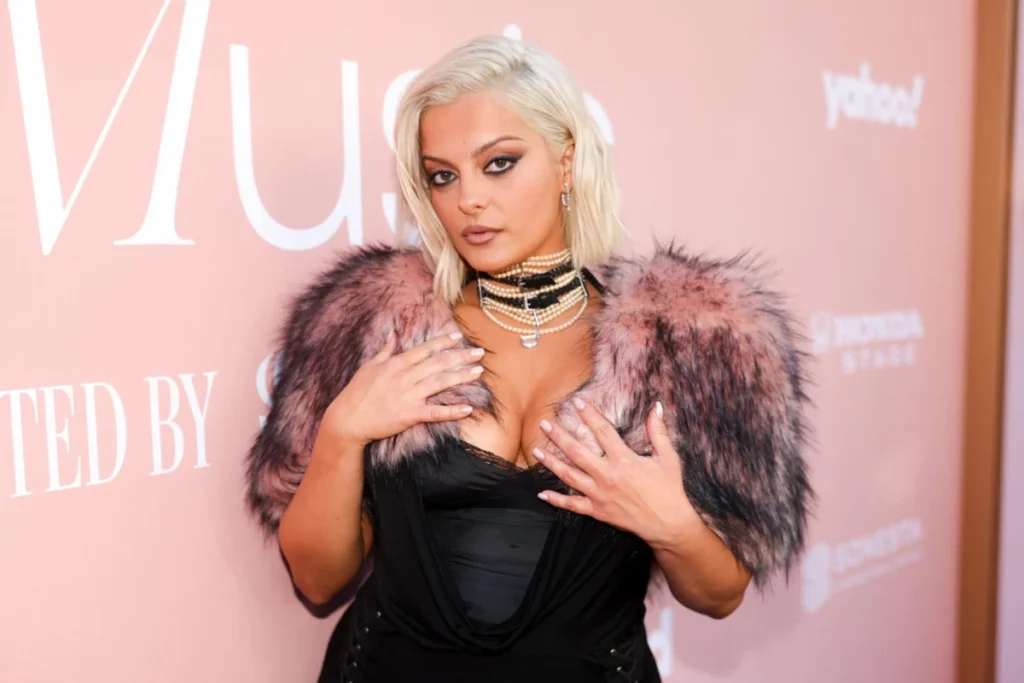

Bebe Rexha is making a clear statement: she has no interest in pitting female artists against each other. The Grammy-nominated singer recently took to social media to firmly push back against a fan who attempted to frame her commercial success in direct competition with that of Olivia Rodrigo. This exchange, occurring in the wake of Rodrigo’s highly anticipated third studio album, You Seem Pretty Sad for a Girl So in Love, which debuted at the coveted number one spot on the Billboard 200 and shattered numerous streaming records, has illuminated Rexha’s consistent advocacy for a more collaborative and supportive environment for women in the music industry.
The catalyst for the online discourse was a heartfelt tribute Rexha posted to the late artist Oliver Tree. She shared with her followers that she and Tree had collaborated on a song for her latest album, Dirty Blonde, a track that ultimately did not make the final cut for the project. Rexha expressed her profound sadness and shock at Tree’s passing, remembering him as "so smart. Passionate. Talented. Kind." Her message read, "I’m in shock. I was in the middle of my cd signing in nyc when I found the news of Oliver tree. I can’t believe it. We recorded a record together to be on dirty blonde. He was so smart. Passionate. Talented. Kind. I’m so sad. May he rest in peace."
However, the sentimental remembrance quickly took a competitive turn when a social media user interjected with a dismissive comment: "Olivia outsold u btw." This comment, designed to provoke a reaction and highlight a perceived disparity in sales or streaming numbers, directly contradicted the spirit of unity Rexha often champions.
Instead of engaging in a tit-for-tat or defensive posture, Rexha responded with grace and a clear articulation of her values. "I’m actually happy for her. No need to put women against each other. Stream DIRTY BLONDE for women empowerment. Livies X Rexhars," she wrote. This response, a direct rejection of the manufactured rivalry, was met with widespread approval from fans and industry observers alike. Many applauded Rexha for her maturity and for actively dismantling the prevalent narrative that positions women in the music industry as perpetual competitors rather than allies. The sentiment of "Livies X Rexhars" further emphasized her desire for solidarity between fan bases, regardless of their preferred artists.
Background: The Pressures on Women in Music
Bebe Rexha has been an increasingly vocal critic of the systemic pressures faced by women in the music business. Her public stance against the "girls against girls" narrative is not an isolated incident but a consistent theme in her career. For years, female artists have been subjected to scrutiny that often focuses on their relationships, appearance, and perceived rivalries, overshadowing their artistic contributions and business acumen. This societal tendency to pit women against each other is amplified within the highly competitive landscape of the music industry, where commercial success is often measured in stark, comparative terms.
This dynamic has been observed across generations of female artists, from the pop duels of the late 20th century to the current social media-driven comparisons. The pressure to constantly prove oneself against peers can create an environment of anxiety and hinder collaborative opportunities. Rexha’s public statements suggest a conscious effort to counter this by fostering a sense of collective strength and mutual respect among female musicians.
A Pattern of Speaking Out
This recent exchange is not the first time Rexha has used her platform to address inequities and frustrations within the industry. Last year, she made headlines for a candid social media post criticizing former collaborator G-Eazy, with whom she achieved significant success with their 2015 hit "Me, Myself & I." In that instance, Rexha expressed feeling "UNDERMINED" and "silenced and PUNISHED" by the industry for speaking up about perceived mistreatment.
Her post at the time detailed a pattern of being overlooked and undervalued, stating, "I have been UNDERMINED. I’ve been so quiet for the longest time. I haven’t seen the signs even though people constantly are bringing them up and they have been SO OBVIOUS. And when I have spoken up I’ve been silence and PUNISHED by this industry Things must change or I’m telling ALL of my truths. The good the bad and the ugly." The raw honesty of her statement resonated with many who have experienced similar challenges.

However, the post was later removed, with Rexha explaining that "Someone from my team had me take down my Instagram Story." This instance highlighted the complex pressures artists face, balancing the desire for transparency with the realities of professional management and industry dynamics. The decision to eventually remove the post also underscored the power structures within the industry that can influence an artist’s ability to express themselves freely.
The "Dirty Blonde" Era and the Power of Empowerment
Rexha’s latest album, Dirty Blonde, serves as a backdrop for her current message of empowerment. The album itself, released on [Insert Album Release Date if known, otherwise omit or state "recently"], features a collection of songs that explore themes of resilience, self-acceptance, and personal growth. By explicitly linking her album’s success to "women empowerment," Rexha is not merely engaging in marketing; she is actively seeking to reframe the narrative around female artists. She is encouraging her fanbase, and by extension, the broader music-listening public, to view the success of women in music not as a zero-sum game, but as a collective victory.
The timing of her interaction with the Rodrigo comparison is particularly noteworthy. Rodrigo’s album achieved monumental success, dominating charts and breaking streaming records. For Rexha to pivot from her own artistic endeavors to actively celebrate and defend another female artist’s achievements, even when prompted by negativity, demonstrates a profound commitment to her stated ideals. This proactive stance challenges the often-toxic online culture that thrives on creating divisions and animosity between artists, especially women.
Data and Context: Chart Performance and Industry Trends
To provide context for the comparison, Olivia Rodrigo’s You Seem Pretty Sad for a Girl So in Love achieved a significant commercial milestone by debuting at number one on the Billboard 200. According to Billboard’s reporting, the album garnered [Insert Specific Streaming/Sales Data if available, e.g., "over XXX million streams in its first week," or "achieved XXX,XXX equivalent album units"]. This level of success places it among the most impactful album debuts of recent years, particularly for a young artist.
Bebe Rexha’s Dirty Blonde has also seen considerable success since its release. While specific chart positions and streaming numbers would need to be referenced for a direct comparison, Rexha has a proven track record of chart performance, with numerous top-tier singles and albums throughout her career. Her hit song "I’m Good (Blue)" with David Guetta, for example, reached [Insert Chart Peak and Duration if available, e.g., "number one on the Billboard Global 200 and spent X weeks on the Hot 100"]. This demonstrates her established ability to achieve commercial success independently.
The pressure to compare artists is not unique to music. In sports, film, and literature, similar competitive narratives are often constructed around female figures. However, the rise of social media has amplified these comparisons, allowing for instant and widespread dissemination of opinions, often devoid of nuance. This can create a distorted perception of an artist’s career trajectory and impact.
Broader Implications and Analysis
Rexha’s stance carries significant implications for the music industry and its fans. By refusing to engage in rivalry, she is actively contributing to a cultural shift that prioritizes mutual support and artistic collaboration over competition. This approach can have several positive outcomes:
- Fostering a More Supportive Ecosystem: When artists publicly champion one another, it can encourage a more positive and less toxic environment for everyone involved, from creators to fans.
- Empowering Emerging Artists: For newer female artists, seeing established figures like Rexha advocate for solidarity can provide a crucial sense of encouragement and validation, potentially reducing the pressure they feel to conform to competitive norms.
- Challenging Media Narratives: Media outlets and social media platforms often perpetuate rivalries for engagement. Rexha’s actions serve as a direct challenge to these narratives, pushing for more substantive coverage of artists’ work and contributions.
- Promoting Fan Unity: By encouraging "Livies X Rexhars," she is advocating for fan bases to find common ground and appreciate the diverse talents within the music landscape, rather than engaging in divisive "fan wars."
The music industry, like many other sectors, has historically been dominated by male figures and narratives. While progress has been made, the systemic biases that often disadvantage women persist. Rexha’s outspokenness and actions represent a powerful form of activism within the industry, aiming to dismantle these structures from within. Her commitment to "women empowerment" extends beyond her music; it is a conscious effort to reshape the discourse and create a more equitable and supportive future for all female artists. Her message is clear: the success of one woman should not diminish the achievements of another, but rather serve as inspiration for collective progress.