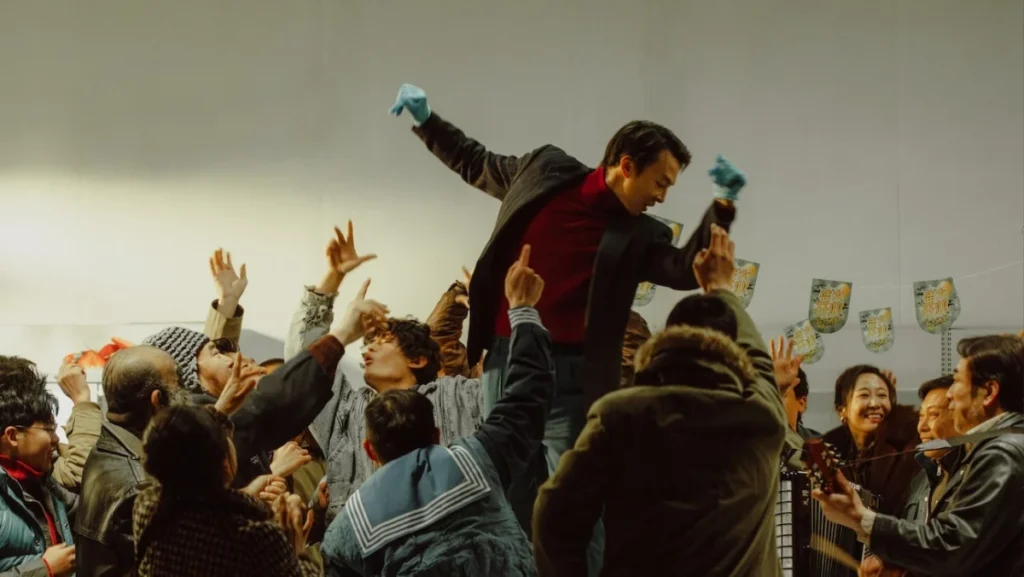

Chinese filmmaker Zhong Kaifeng formally introduced himself to the world at the Shanghai International Film Festival (SIFF) on Saturday night, picking up the main Golden Goblet award for his debut, Atlantic Rhapsody. The 29-year-old director’s triumph marked a significant moment for Chinese cinema, signaling the emergence of a fresh, experimental voice on the international stage and underscoring SIFF’s commitment to nurturing burgeoning talent. The festival, which concluded its 10-day run as one of Asia’s most prestigious cinematic events, distinguished itself by blending global cinematic showcases with a profound emphasis on the future of filmmaking, both in terms of new creators and evolving technologies like artificial intelligence.
A New Voice Takes the Golden Goblet: Zhong Kaifeng’s Atlantic Rhapsody
Zhong Kaifeng’s win for Atlantic Rhapsody was arguably the most talked-about moment of the festival’s closing ceremony. For the Golden Goblet jury, led by the iconic Hong Kong star Tony Leung Chiu-wai, the film was lauded as a "uniquely compelling visual experience." The jury further commended its "bold experimental approach [that] explores the absurdity of human life," highlighting a daring narrative style that resonated deeply with the seasoned panel. This accolade for a debut feature underscores a growing trend in Chinese cinema towards more introspective and stylistically adventurous storytelling, moving beyond conventional commercial fare.
Atlantic Rhapsody, a profound exploration of a young man from northern China grappling with the search for meaning in life, struck a chord with both critics and audiences. Zhong Kaifeng himself articulated the personal significance of the award, stating, "I want to say that Atlantic is not a definition, it does not provide answers — but today it seems to have given me an answer, and that answer is to persist, to love, to work hard, and then to believe." This heartfelt reflection speaks to the arduous journey often undertaken by independent filmmakers, with the Golden Goblet serving as a powerful validation of his perseverance and artistic vision. The recognition of such a distinct directorial voice by an A-list international festival like SIFF is crucial for opening doors to global distribution and wider critical acclaim, potentially positioning Zhong as a significant figure in the next generation of Chinese filmmakers.
SIFF’s Enduring Legacy: Nurturing Emerging Talent
The triumph of Zhong Kaifeng was not an isolated incident but rather a cornerstone of SIFF’s overarching mission this year: to place young talent front and center. The festival’s dedication to fostering emerging filmmakers was evident across multiple programs and awards. Another exciting revelation came in the Asian New Talent awards, where first-timer Gong Yiwen secured a win for her heartwarming coming-of-age drama, Her First Taste. This film, a poignant narrative exploring themes of young love and self-discovery, emerged directly from the SIFF Project initiative, a testament to the festival’s robust developmental ecosystem.
The Asian New Talent jury praised Her First Taste for its "patient observation and sensitivity to the textures of ordinary life," noting that it "announce[s] a new exciting voice in Asian cinema." They lauded the film as a "memorable work about young love and coming of age, balancing emotional restraint with deep resonance, and marking Gong Yiwen as a filmmaker of great promise." Such specific commendations not only elevate the winning films but also provide invaluable encouragement and visibility for their creators.
SIFF’s commitment extends beyond awards. The festival actively supports young filmmakers through various initiatives, including the SIFF ING Young Filmmakers Program and the SIFF YOUNG × Shanghai Young Filmmakers Support Program. These programs offer critical resources, mentorship, and platforms for development. Esteemed industry veterans like Oscar-nominated actress Joan Chen and acclaimed director Wen Muye lend their expertise as mentors, providing invaluable guidance to aspiring artists. This structured support system has a proven track record: the festival proudly reports that 78 productions nurtured through these programs in previous years have gone on to secure cinema releases, demonstrating the tangible impact of SIFF’s investment in new talent. This year’s lineup itself featured several titles that originated from the SIFF Project initiative, including Wan Bo’s suspense-filled drama Strangers in the Mountain, selected for the Asian New Talent competition, alongside Peng Chen and Xu Wei’s Desert Beneath the Ocean and Kangdrun’s Linka Linka. These initiatives are vital pipelines, transforming promising concepts into fully realized cinematic works and ensuring a vibrant future for Chinese and Asian cinema.
A Grand Spectacle: Festival Highlights and Global Reach
The 28th SIFF was a meticulously curated event, spanning ten days and offering a rich tapestry of cinematic experiences. The festival’s opening night set a glamorous tone, drawing a constellation of stars from both global and local cinema. Among the luminaries gracing the red carpet were Golden Goblet jury president Tony Leung and the formidable Michelle Yeoh. Yeoh’s presence was particularly significant, as she was promoting This Is My Time, her first Chinese-language production in nearly a decade, following her historic Best Actress Oscar win for Everything Everywhere All at Once. Her return to Chinese cinema after achieving such global recognition underscored the enduring connection between Hollywood and the burgeoning Asian film industry. Joining them were esteemed jury members Guan Hu and Xin Zhilei, adding further weight to the festival’s prestige.
The festival also dedicated heartfelt tributes to cinematic veterans, celebrating their indelible contributions to the industry. Lisa Lu, a venerable actress renowned for her roles in films like Crazy Rich Asians, was honored with a lifetime achievement award. At 100 years old by the local calendar, her radiant presence on the red carpet was a poignant reminder of enduring talent and grace. Similarly, master filmmaker Zhang Yimou, a towering figure in Chinese cinema, received an award for his "outstanding" contribution, recognizing a career that has consistently pushed artistic boundaries and brought Chinese stories to global audiences. These tributes served as crucial bridges between the past, present, and future of cinema, honoring the foundations upon which new talents build.
The 28th SIFF concluded with the world premiere of Zhang Disha’s The Decisive Moment as its closing film on Sunday. By the time the curtain fell, the festival had facilitated approximately 1,600 screenings of some 420 films across Shanghai and other cities in the surrounding Yangtze River Delta region, a remarkable logistical feat showcasing the festival’s extensive reach and popularity. Audiences were treated to a diverse selection of films, including sold-out screenings of hits from major international festivals like Cannes, such as Pawel Pawlikowski’s Fatherland. A palpable delight permeated among film fans of all ages, particularly for the meticulously curated retrospectives. Devoted to the works of cinematic legends like Ken Loach, Billy Wilder, and Marilyn Monroe, these retrospectives offered a rare and cherished opportunity to experience international classics on the big screen, often in stunning 4K-rendered glory, providing a vital cultural and educational experience for local cinephiles.
The festival’s international appeal was further highlighted by the recognition of Moroccan filmmaker Yassine El Idrissi, who earned the Golden Goblet for Best Director for his wonderfully humorous film, Halima. El Idrissi’s film, a charming narrative about a lady who refuses to succumb to age or circumstance, resonated with the international jury. His poignant acceptance speech, "It proves that we are all the same. We just need some translation," beautifully encapsulated the festival’s spirit of cultural exchange and the universal power of storytelling to bridge divides. This international recognition reinforced SIFF’s status as a truly global platform, celebrating diverse narratives from across the world.
Navigating the Future: Artificial Intelligence in Cinema
Beyond celebrating contemporary achievements and historical legacies, SIFF also positioned itself as a crucial forum for discussing the future of filmmaking, with artificial intelligence (AI) emerging as a dominant theme. The "lurking presence" of AI was undeniable, permeating discussions across numerous panels and industry sessions. This timely focus reflects the global industry’s ongoing reckoning with AI’s potential impacts, particularly in the wake of recent Hollywood labor disputes that highlighted concerns over AI’s role in creative processes.
SIFF hosted a series of panels bringing together industry heavyweights to dissect the multifaceted pros and cons of AI integration in film. Specific discussions included "Smart Tech, Immersive Worlds, the Next Film Revolution" and "When AI Learns to Create, What Grounds Cinema," delving into critical questions about creativity, ethics, job displacement, and the emergence of new artistic possibilities. These conversations were not merely theoretical; SIFF proactively sought to demystify AI through practical demonstrations. The innovative "AI Backlot" initiative paired traditional filmmakers with AI upstarts, challenging them to collaboratively create a short film within a month. This process was designed to be observable, set up "like gamers" for public viewing, offering transparent insights into the real-world application of AI tools in filmmaking. Chinese filmmaker Hou Zuxin, who participated in this program, enthusiastically remarked that it was "like I entered a whole new world," underscoring the transformative potential perceived by those directly engaging with the technology. This forward-thinking approach positions SIFF at the vanguard of exploring and shaping the dialogue around AI’s role in the cinematic landscape.
SIFF’s Vision for a Resilient and Connected Global Film Industry
As the 28th edition drew to a close, festival head Chen Guo, managing director of the Shanghai International Film & TV Events Center, reflected on its achievements. While expressing a natural reluctance "to see the festival come to an end," she affirmed that SIFF had successfully achieved its core mission of "aligning global and domestic resources" and "building industrial pathways to bring projects to fruition." This statement encapsulates SIFF’s dual role as both a cultural celebration and a crucial industry marketplace, facilitating co-productions, distribution deals, and talent exchange that transcend national borders.
Chen Guo further acknowledged the broader context of the global film industry, which she described as being in a "prolonged period of adjustment." In this challenging environment, she emphasized that "creators are in growing need of encouragement." As one of Asia’s most prominent film festivals, SIFF holds special significance by providing "spiritual support and renewed confidence for Chinese-language filmmakers." Here, they witness the dedication of their peers and the breakthroughs of emerging talents, sustaining their creative passion through diverse films and sincere exchanges. This sense of community and mutual encouragement is vital for fostering resilience and innovation within the industry.
The festival’s ambition extends beyond regional impact. Chen Guo expressed a profound hope that this year’s festival would offer the global industry a closer look at "what drives these filmmakers — their creative convictions and their long-term vision for Chinese films." This invitation for deeper understanding aims to foster more lasting, win-win partnerships across borders, encouraging international collaboration and broadening the global appeal of Chinese cinema. The 28th Shanghai International Film Festival thus concluded not merely as a showcase of cinematic excellence but as a dynamic platform committed to shaping the future of film, empowering new voices, and fostering a more interconnected and resilient global film industry.