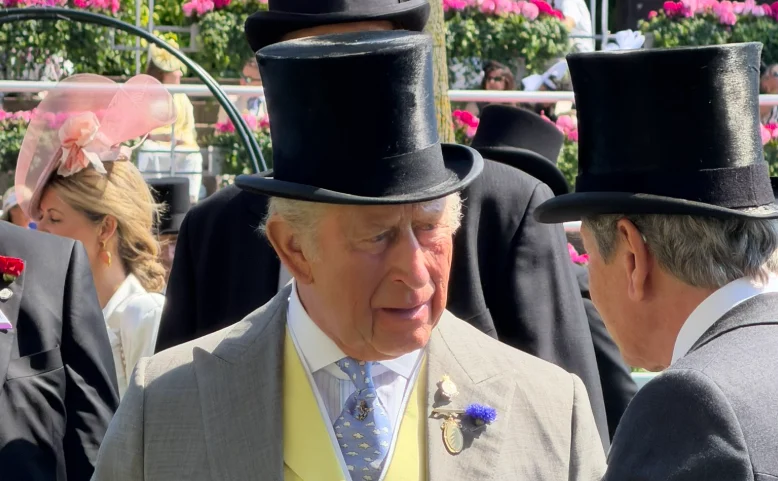

The prestigious Royal Ascot meeting, a cornerstone of the British sporting and social calendar, concluded on Friday with a wave of anticipation for Their Majesties, King Charles III and Queen Camilla, as their four-year-old gelding, Warrant Holder, came agonizingly close to securing a long-awaited victory in the Duke of Edinburgh Stakes. While a win remained elusive, the horse’s courageous second-place finish offered a moment of pride and a testament to the enduring spirit of royal participation in elite racing.
A Fleeting Glimpse of Royal Glory
For a significant portion of the 1m4f handicap, it appeared that the royal racing drought at Ascot would finally be broken. Warrant Holder, trained by the esteemed father-and-son duo John and Thady Gosden, and expertly ridden by William Buick, displayed a strong performance throughout the demanding race. Travelling with evident ease and power, the gelding surged to the front, seemingly poised to deliver the royal triumph that had been anticipated since Desert Hero’s memorable victory in 2023. The roar of the crowd, a mixture of expectation and hope, intensified as Warrant Holder appeared to have the race firmly in his grasp. However, in the final furlong, the tide turned. Another competitor, pushing with relentless determination, managed to overtake Warrant Holder in the closing stages, leaving Their Majesties and their supporters with a bittersweet sense of what might have been.
Despite the narrow defeat, the atmosphere in the winners’ enclosure was far from somber. The King and Queen, known for their genuine passion for horse racing, approached their gallant runner with warmth and affection. A formal guard of honour was formed as Their Majesties made their way to congratulate all those involved in Warrant Holder’s campaign. Notably, Zara Tindall, daughter of The Princess Royal and a keen equestrian herself, joined trainer John Gosden and jockey William Buick for a post-race discussion, reflecting the close-knit nature of the royal racing family.
Princess Anne’s daughter was later observed offering Warrant Holder an affectionate pat, a gesture that underscored the deep connection the royals share with their horses. King Charles III himself returned to the gelding on multiple occasions, a poignant scene of the monarch rubbing the horse’s nose and offering words of encouragement. This personal interaction highlighted not just the disappointment of a near-miss, but also the profound respect and affection the King holds for his equine athletes.
As Buick and Gosden conferred with the royal party, the prevailing mood remained one of optimism and pride. The narrative of the week at Royal Ascot had been one of near misses for the royal silks, and Warrant Holder’s performance, while not a victory, provided a fitting and spirited conclusion to their participation.
A Week of Near Misses and Glimmers of Hope
Warrant Holder’s valiant effort was the culmination of a week that had seen several royal contenders demonstrate promise, but ultimately fall short of claiming a coveted Royal Ascot win. The journey began on Tuesday with Reaching High, a heavily backed favourite in the Ascot Stakes. Despite considerable public support, the horse endured a disappointing afternoon, finishing at the rear of the field. However, the royal racing colours did find success elsewhere that evening, with Lorca’s Waltz securing a victory at Beverley, demonstrating the broader reach of the royal racing interests beyond the iconic Ascot track.
Wednesday brought renewed optimism with Point Of Law’s respectable fourth-place finish in the Queen’s Vase. This performance showcased the potential of another royal runner and provided a tangible sign of progress within the stable. The following day, Golden Orbit competed in the prestigious Ribblesdale Stakes, crossing the line in tenth position. While not a podium finish, participation in such high-caliber races is a testament to the quality of horses owned by the King and Queen and their commitment to competing at the highest level of the sport.
Earlier on Friday, the hopes of the royal racing syndicate rested on King’s Prize in the Albany Stakes. This exciting juvenile, however, faced formidable opposition from some of the season’s top two-year-olds and was unable to make a significant impact. This left Warrant Holder as the final contender to carry the royal hopes for the week, and his courageous display ensured that Their Majesties departed Ascot with heads held high, immensely proud of their horses’ efforts.
The Significance of Royal Ascot
Royal Ascot, held annually in June, is more than just a series of horse races; it is a quintessentially British event steeped in tradition, prestige, and pageantry. Founded by Queen Anne in 1711, the meeting has evolved into a global spectacle, attracting the finest equine talent from around the world. The five-day festival comprises 30 races, showcasing a range of disciplines from sprints to staying contests, with a collective prize fund of over £7 million.
The event is a highlight of the flat racing season and is renowned for its discerning dress code, with the Royal Enclosure setting a standard of elegance and sophistication. For owners, trainers, and jockeys, a victory at Royal Ascot is one of the pinnacles of their careers, conferring immense prestige and often leading to significant boosts in a horse’s breeding and racing value.
The presence of the monarch and the royal family at Royal Ascot is a deeply ingrained tradition that adds to the event’s unique character. Their participation as owners and patrons signifies their enduring support for the sport of horse racing, which is a significant contributor to the British economy and rural communities. The King and Queen’s continued engagement in racing, through their ownership and attendance, serves as a powerful endorsement of its cultural and economic importance.
Warrant Holder: A Profile in Courage
Warrant Holder, a four-year-old gelding, represents a significant investment of time, effort, and passion for Their Majesties. Bred for performance, his lineage likely holds considerable promise, a factor that would have influenced his acquisition and training. The decision to enter him in the Duke of Edinburgh Stakes, a competitive handicap race, suggests a belief in his ability to perform well against a field of capable rivals.
His trainer, John Gosden, is a legendary figure in British racing, with a career marked by numerous Classic victories and champion trainer titles. His son, Thady Gosden, has taken on an increasingly prominent role, and their partnership at Clarehaven Stables has continued to produce top-class performers. The choice of William Buick as jockey is also telling. Buick is one of the leading jockeys in the United Kingdom, known for his tactical acumen and ability to get the best out of his mounts. His partnership with the Gosden team is a formidable one.
The Duke of Edinburgh Stakes, named in honour of His Royal Highness Prince Philip, the Duke of Edinburgh, is a race that carries a particular resonance. Its history and the caliber of horses that contest it make it a highly sought-after prize. For Warrant Holder to have come so close to winning this particular race, under the royal colours, would have been a moment of immense national pride.
Data and Statistics: A Deeper Look at Royal Ascot and Racing
Royal Ascot’s economic impact is substantial. The event typically draws over 300,000 attendees across the five days, generating significant revenue for local businesses, hospitality providers, and the racing industry itself. The betting turnover associated with Royal Ascot is also among the highest of any sporting event in the UK.
Historically, royal-owned horses have enjoyed considerable success at Royal Ascot. While specific records for every monarch are extensive, the reign of Queen Elizabeth II, a lifelong and passionate racehorse owner, saw numerous victories at the prestigious meeting, including wins in major Classics like the Epsom Derby and the Oaks. Her Majesty’s racing colours – the blue, red, and gold silks – became synonymous with success and a familiar sight in the winners’ enclosure.
The performance of Warrant Holder, finishing second, can be statistically analyzed within the context of handicap racing. Handicap races are designed to level the playing field by assigning different weights to horses based on their past performance. A second-place finish in such a competitive race, especially one contested by a large field, indicates a horse of considerable ability. The margin of defeat, often measured in fractions of a second or a neck, highlights the fine margins that can separate victory from defeat at the highest level of racing.
Broader Implications and Future Prospects
The King and Queen’s continued involvement in horse racing is vital for the sport. Their patronage provides invaluable publicity and reinforces the image of racing as a noble pursuit, steeped in tradition and excellence. The near misses experienced at Royal Ascot this year, while perhaps disappointing in the short term, do not diminish the long-term commitment and passion that Their Majesties have for their equine athletes.
Warrant Holder’s performance is a strong indicator of his future potential. A horse that can run so well in a competitive Royal Ascot handicap is likely to be a contender in similar races throughout the season and beyond. The experience gained at such a high-profile meeting will undoubtedly contribute to his development and future success.
The royal racing team will undoubtedly be analyzing Warrant Holder’s performance, looking for any insights that can inform future training and race planning. The Gosden stable is renowned for its meticulous approach, and it is certain that every aspect of Warrant Holder’s campaign will be reviewed.
Looking ahead, the focus will inevitably shift to upcoming races, both for Warrant Holder and for other horses in the royal string. The breeding season also remains a crucial element of royal racing, with the potential for future champions to emerge from their stock. The King and Queen’s dedication to horse racing suggests a long-term vision, one that embraces the challenges and celebrates the triumphs, both big and small, that define this beloved sport. While the coveted Royal Ascot win eluded them this year, the spirit of competition and the love for the horse remain undimmed, promising continued engagement and the potential for future glories on the turf.