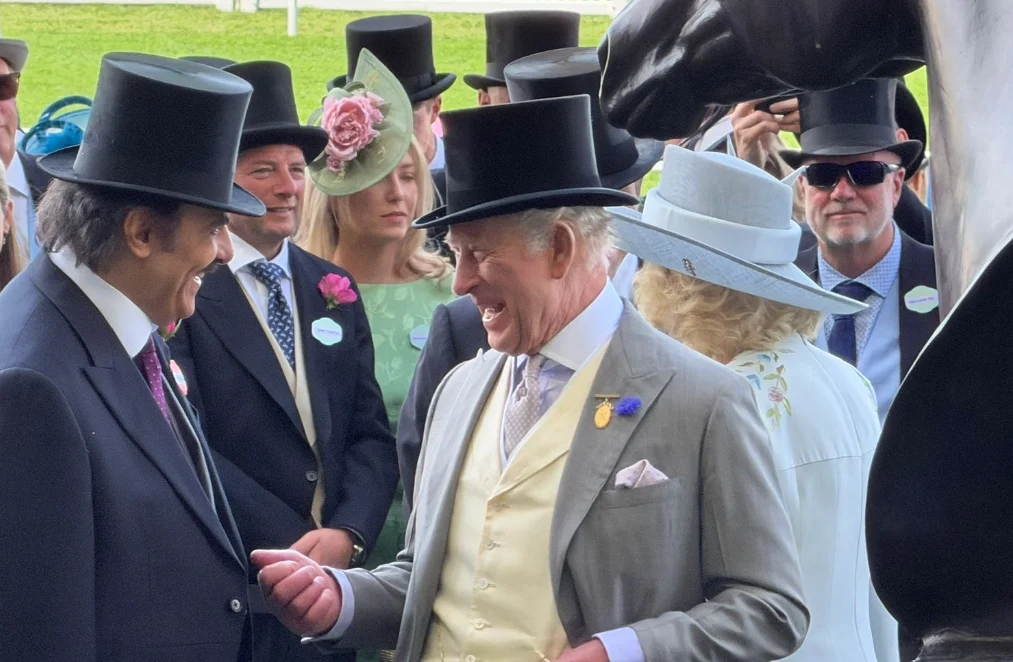

The opening day of Royal Ascot, a cornerstone of the British flat racing calendar, delivered a potent mix of exhilaration and disappointment for King Charles III and Queen Camilla, highlighting the unpredictable nature of thoroughbred horse racing. While royal hopes at the prestigious Berkshire track were dashed with the unexpected underperformance of their heavily backed contender, a distant victory at Beverley Racecourse provided a much-needed salve, showcasing the enduring legacy and active participation of the Royal Family in the sport.
The day’s narrative was sharply divided. At Royal Ascot, the King and Queen’s hopes for an early triumph were pinned on Reaching High, a gelding who had garnered significant support in the betting rings and started as the favourite for the competitive Ascot Stakes. However, in a dramatic turn of events, the Willie Mullins-trained runner, ridden by the esteemed jockey Ryan Moore, failed to deliver, fading dramatically in the latter stages of the race to finish last among the 20 competitors. This outcome meant the King and Queen were denied what would have been their first Royal Ascot winner since the memorable success of Desert Hero in the King George V Stakes in 2023, a significant milestone at their most prominent racing fixture.
Meanwhile, over 220 miles away in East Yorkshire, the royal racing operation experienced a moment of considerable triumph. Lorca’s Waltz, a homebred three-year-old colt, provided a welcome boost by clinching victory in the Connexin Ultrafast Maiden Stakes at Beverley. This win, secured under the expert guidance of trainer William Haggas and jockey Harry Davies, offered a poignant counterpoint to the day’s earlier setback and underscored the depth and breadth of the Royal Family’s involvement in racing.
A Tale of Two Races: Contrasting Fortunes Unfold
The day commenced with palpable anticipation surrounding Reaching High’s challenge in the Ascot Stakes. This 20-runner handicap race, known for its competitive nature and often serving as a barometer for form, had seen Reaching High emerge as a strong favourite. The gelding’s pedigree and previous performances had evidently impressed punters, leading to substantial backing. However, from the outset, the race did not unfold as anticipated for the royal contender. Despite the best efforts of Ryan Moore, Reaching High appeared to struggle, and as the field entered the crucial final furlongs, the horse’s challenge evaporated. The sight of the favourite trailing the pack and ultimately crossing the finish line in last place was a stark reminder of racing’s inherent uncertainties. The disappointment would have been amplified by the fact that this was a race the King and Queen would have keenly anticipated a strong performance in, given its stature and their long-standing association with the Royal Meeting.
The contrast could not have been more pronounced at Beverley Racecourse. Lorca’s Waltz, making only his second career start, demonstrated considerable promise and fighting spirit to secure his maiden victory. Trained by the highly respected William Haggas, who has enjoyed considerable success with royal horses, and ridden by the promising Harry Davies, the three-year-old gelding faced a competitive field in the seven-and-a-half-furlong maiden contest. The race was closely fought, with Lorca’s Waltz exhibiting bravery and determination. After tracking the leaders and racing prominently, he was switched left by Davies two furlongs from home. This tactical manoeuvre proved decisive, allowing the colt to make headway and ultimately snatch victory by the narrowest of margins, prevailing by a nose from his nearest rival, Race To The Edge. The win, though at a different venue and in a maiden race, provided a significant morale boost and validated the efforts of all involved in the horse’s development.
Lorca’s Waltz: A Promising Future on the Horizon
The victory of Lorca’s Waltz is particularly significant as the colt was bred by King Charles III and races under the joint ownership of The King and Queen. This homebred status often adds a layer of personal satisfaction for owners, representing the culmination of careful breeding programmes and investment in bloodstock. Lorca’s Waltz’s maiden win at the second attempt suggests he possesses the potential for further improvement and a step up in class.
Trainer William Haggas, a leading figure in British racing known for his meticulous approach and success with high-class horses, will undoubtedly be pleased with this promising start. For the royal racing operation, it signifies another positive step in their ongoing commitment to maintaining and building upon the significant legacy left by the late Queen Elizabeth II, a renowned patron of the sport. Lorca’s Waltz’s performance hints at a bright future, with potential targets likely to be assessed by Haggas and the royal racing advisors. A maiden win, especially one secured in a determined fashion, often opens doors to more prestigious races as a horse gains experience and confidence.
The Royal Racing Legacy: A Continuous Commitment
The Royal Family’s involvement in horse racing stretches back centuries, with the late Queen Elizabeth II being a particularly passionate and successful owner and breeder. Her Majesty’s deep knowledge and love for the sport were evident throughout her reign, and she amassed an impressive collection of racing and breeding stock. King Charles III and Queen Camilla have embraced this legacy, continuing to maintain a strong and active presence in British racing.
Their racing operation is managed with a strategic approach, focusing on quality bloodlines and capable trainers. The silks – a striking combination of scarlet, gold braid, and a crimson cap – are a familiar and respected sight on racecourses across the United Kingdom. The King and Queen have continued to invest in promising yearlings and nurture their own breeding stock, aiming to produce top-class performers that can compete at the highest levels, including at prestigious meetings like Royal Ascot.
The Royal Studs, a vital component of their racing endeavours, play a crucial role in the breeding programme. These studs are home to mares of proven quality and are strategically used to produce foals by leading sires. The development of a horse like Lorca’s Waltz, from a foal bred at the royal stud to a racecourse winner, exemplifies the long-term commitment and dedication involved in thoroughbred horse ownership and breeding.
Royal Ascot: More Than Just a Race Meeting
Royal Ascot is not merely a series of horse races; it is a social and sporting institution. Established in 1711 by Queen Anne, it is one of the most important race meetings in the world, attracting royalty, celebrities, and racing enthusiasts from across the globe. The meeting comprises five days of elite racing, featuring 18 Group One races, making it a significant test for the world’s best horses, trainers, and jockeys.
The event is steeped in tradition, from the daily Royal Procession, where members of the Royal Family parade along the racecourse in horse-drawn carriages, to the strict dress code. The King and Queen, as patrons, are central figures at the meeting, their presence adding to the event’s regal aura. For any owner, a winner at Royal Ascot carries immense prestige and is a career highlight. The anticipation leading up to the races, the vibrant atmosphere, and the sheer quality of the racing combine to create an unparalleled experience.
The economic impact of Royal Ascot is also substantial, drawing significant tourism and contributing to the local economy. The betting industry sees considerable activity, with millions of pounds wagered across the week. The fashion aspect, with Ladies’ Day particularly renowned for its elaborate hats and stylish outfits, adds another dimension to the event’s cultural significance.
Looking Ahead: The Season’s Implications
The contrasting fortunes on the opening day of Royal Ascot serve as a potent reminder of the inherent unpredictability and drama of horse racing. While the disappointment of Reaching High’s performance at Ascot will linger, the victory of Lorca’s Waltz at Beverley offers a promising glimpse into the future of the royal racing operation.
For trainer William Haggas, Lorca’s Waltz’s success is another feather in his cap and reinforces his strong relationship with the King and Queen. The colt’s maiden win is likely to be a stepping stone, and his progress will be closely monitored. Owners and trainers will now be evaluating potential races for Lorca’s Waltz, with the aim of building on this promising start and potentially targeting higher-calibre races later in the season or in subsequent years.
The Royal Family’s continued engagement with racing, through both investment in breeding and participation in races, is a testament to their enduring passion for the sport. Their presence not only lends prestige to racing events but also supports the entire ecosystem of the industry, from breeders and trainers to stable staff and jockeys. As the Royal Ascot meeting continues and the flat racing season unfolds, all eyes will remain on the royal silks, anticipating further successes and witnessing the evolution of promising talents like Lorca’s Waltz. The sport’s ability to deliver such dramatic swings of fortune, from the highs of a hard-fought victory to the lows of an unexpected defeat, is precisely what makes it such a captivating and enduring spectacle.