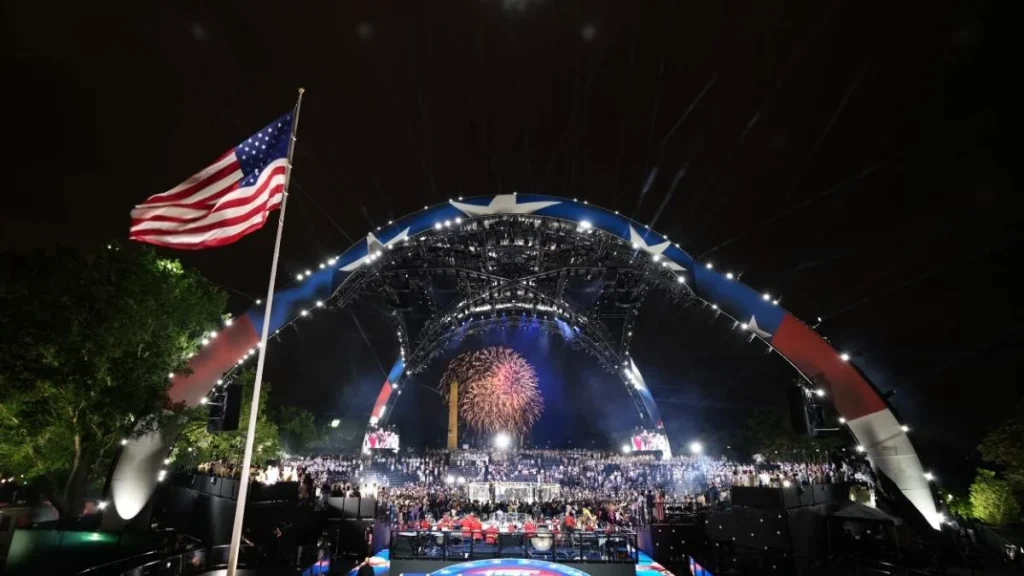

The Federal Bureau of Investigation (FBI) successfully intercepted and neutralized a sophisticated, multi-tiered terrorist plot aimed at the White House and its immediate surroundings during a high-profile sporting event held on the South Lawn. The planned assault was timed to coincide with a historic UFC event, dubbed "UFC Freedom 250," which served as a celebration for President Donald Trump’s 80th birthday. Federal officials confirmed that the disruption of the plot prevented what could have been one of the most significant security breaches in the history of the executive mansion, involving a coordinated effort to utilize unmanned aerial vehicles (UAVs) and ground-based sniper teams.
The investigation, which culminated in a series of arrests just days before the event, revealed a complex strategy designed to maximize casualties among government dignitaries, VIPs, and spectators. According to formal reports, the plotters intended to initiate the attack using explosive-laden drones to target specific structures near the South Lawn. The primary objective of this initial phase was to induce mass panic and force an immediate evacuation of the crowd. Law enforcement analysts noted that the evacuation route was the intended site of a "second wave" assault, where snipers positioned in the surrounding area would engage the fleeing populace. The final phase of the alleged strike involved a direct breach attempt at the White House gates.
Chronology of the Investigation and Discovery
The timeline of the disruption began on June 10, when FBI intelligence analysts flagged a series of suspicious communications and logistical movements originating from the Midwest. Over the following 72 hours, federal agents tracked a network of individuals coordinating the acquisition of high-grade explosives and specialized drone equipment. By the time the UFC event was scheduled to begin, the FBI had already moved to dismantle the primary operational cell.
The investigation identified a total of 23 individuals involved in various stages of the plot, ranging from logistical support to tactical execution. To date, law enforcement has apprehended a primary suspect in Cincinnati, Ohio, with five additional co-conspirators taken into custody shortly thereafter. The remaining suspects remain under active investigation as federal authorities work to determine the full extent of the network’s reach and potential international or domestic affiliations.
Tactical Analysis of the Planned Assault
The sophistication of the planned attack has raised concerns among counterterrorism experts regarding the evolving nature of threats against high-value targets. The use of explosive-laden drones represents a significant shift in domestic terror tactics, moving toward the "swarming" techniques seen in modern overseas conflicts. By utilizing drones to trigger an evacuation, the perpetrators sought to negate the physical security barriers of the White House, moving the target population into an "open kill zone" where traditional perimeter defenses would be less effective.
The "second wave" component of the plot—the deployment of snipers—indicated a high level of tactical training. Investigators believe the suspects had conducted reconnaissance of the areas surrounding the White House to identify optimal vantage points that would provide clear lines of sight to the South Lawn’s exit points. This "hammer and anvil" approach—using drones to push the crowd toward waiting gunmen—suggests a level of planning rarely seen in uncoordinated domestic extremist activity.
Law Enforcement Response and Official Statements
FBI Director Kash Patel praised the swift actions of his department, emphasizing that the successful intervention was a testament to the Bureau’s proactive intelligence capabilities. In a formal statement, Patel underscored the readiness of federal law enforcement to handle threats of this magnitude, particularly during large-scale public gatherings.
"While the result represented the best of investigative work, it was also nothing out of the ordinary for this law enforcement team," Director Patel stated. "We are built to detect, respond to, and bring to justice those who threaten the lives of American citizens—particularly during large gatherings like the historic UFC Freedom 250 fight. That’s exactly what we did here."
The coordination between the FBI, the Secret Service, and local Washington D.C. law enforcement was described as "seamless." The Secret Service reportedly enhanced its electronic countermeasure protocols during the event, deploying advanced signal-jamming technology to neutralize any unauthorized drone activity in the restricted airspace surrounding the White House.
Presidential Reaction and the Atmosphere of UFC Freedom 250
Despite the gravity of the threat, the event proceeded as planned, with many attendees—including the President—unaware of the immediate danger that had been neutralized just days prior. The South Lawn was transformed into a premier sporting venue, hosting a fight card that featured some of the most prominent names in mixed martial arts. The event was attended by a significant number of government officials, international dignitaries, and celebrities, making the security success even more critical.
President Donald Trump, when questioned about the foiled plot, appeared focused on the athletic performances of the evening rather than the security threat. "Interestingly, the president seemed oblivious to the threat and its disruption. I haven’t heard about it," Trump remarked during a post-event briefing. "The attack that I watched were the fighters. They were as good a fights as I’ve ever seen, the best. That last fight was brutal, and the two last—all of the fights were good. It was all good, it was a great evening, it was very different for the White House."
The centerpiece of the evening was a lightweight title unification bout between Justin Gaethje and Ilia Topuria. Gaethje secured a knockout victory in a performance that many analysts described as a career-defining moment. The juxtaposition of a brutal combat sports event taking place on the peaceful, historic grounds of the White House, while a real-world violent plot was being dismantled in the background, provided a stark contrast that defined the weekend’s events.
Broader Implications for National Security
The foiling of the June 10 plot has prompted a review of security protocols for public events held at federal landmarks. While the White House has long been one of the most secure locations in the world, the integration of large-scale public entertainment events presents unique challenges for the Secret Service and the FBI.
The Rise of Remote Threats
The use of drones in this plot highlights a growing vulnerability for open-air venues. Even with "No Fly Zones" in place, the ability of small, fast-moving UAVs to carry payloads over security fences requires a shift in defensive technology. Experts suggest that future events will likely see an increase in directed-energy weapons and sophisticated radio-frequency (RF) sensors designed to drop drones out of the sky before they can reach their targets.
Domestic Surveillance and Intelligence
The identification of 23 suspects across multiple states suggests that federal agencies are increasingly relying on signals intelligence and undercover operations to penetrate decentralized terror cells. The fact that the primary suspect was located in Cincinnati—hundreds of miles from the target—illustrates the geographic dispersion of modern threats. This requires constant coordination between regional FBI field offices and the National Counterterrorism Center.
Political and Social Impact
The decision to host a UFC event at the White House was already a subject of significant public discourse. The revelation of a terrorist plot targeting the event will likely intensify debates over the appropriateness of using the executive mansion for high-profile, high-density public gatherings. Supporters argue that the event’s success, despite the threat, demonstrates American resilience and the effectiveness of current security measures. Critics, however, may point to the incident as evidence that such events create unnecessary "soft targets" that strain federal resources.
Conclusion and Future Outlook
As the legal proceedings against the six individuals currently in custody move forward, the Department of Justice is expected to release further details regarding the motives and affiliations of the group. The FBI continues to pursue the remaining 17 individuals identified in the plot, with the investigation spanning several jurisdictions.
The UFC Freedom 250 event will be remembered not only for Justin Gaethje’s unification of the lightweight titles but also as a significant victory for the U.S. intelligence community. The ability to disrupt a multi-phased attack involving both aerial and ground elements without the public or the event’s attendees ever sensing danger is being hailed as a major success in the ongoing effort to secure the nation’s capital. For now, the White House returns to its standard operations, though with a renewed focus on the emerging technological threats that characterized this foiled June 10 assault.