
In a candid revelation that sheds light on the intricacies of celebrity image management and an actor’s commitment to their audience, Academy Award-nominated actress Amy Adams recently disclosed the reasons behind her rejection of a particularly "graphic" sketch during her 2008 hosting stint on NBC’s iconic late-night comedy show, Saturday Night Live. The decision, made just months after her career-defining, family-friendly fairytale comedy Enchanted captivated audiences worldwide, underscored Adams’ profound awareness of her burgeoning young fanbase and her dedication to preserving an image consistent with the beloved Disney princess she had portrayed.
The Context of Enchanted and a Rising Star
To fully appreciate Adams’ decision, it is crucial to understand her career trajectory leading up to and immediately following the release of Enchanted. Prior to 2007, Adams had already garnered critical acclaim, notably receiving an Oscar nomination for Best Supporting Actress for her poignant performance in the 2005 independent film Junebug. This role showcased her dramatic depth and versatility, establishing her as a serious actress. However, it was Enchanted, released in November 2007, that propelled her into global superstardom and cemented her image as a charismatic, charming, and wholesome figure, particularly among children.
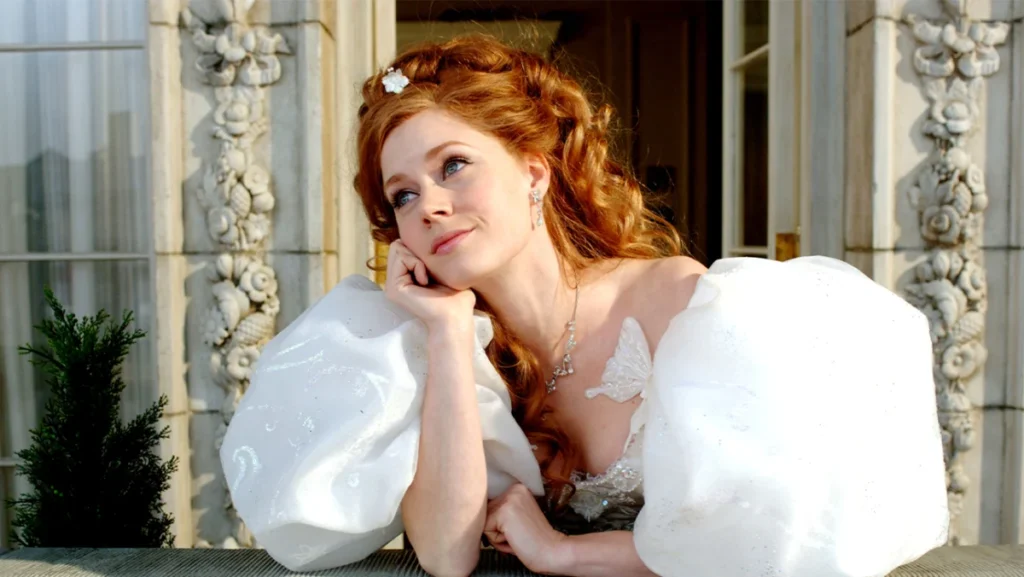
Enchanted, a clever blend of animation and live-action, saw Adams play Giselle, a quintessential fairytale princess who finds herself magically transported from her animated kingdom of Andalasia to the cynical reality of New York City. The film was a massive commercial success, grossing over $340 million worldwide, and a critical darling, praised for its humor, heart, and Adams’ enchanting performance. Her portrayal of Giselle, marked by innocence, optimism, and a penchant for breaking into song, resonated deeply with young girls who saw her as a real-life princess. The movie became a cultural phenomenon, inspiring countless Halloween costumes and solidifying Adams’ status as a role model for a generation of young viewers. This sudden and profound connection with a youthful demographic presented a unique challenge and responsibility for the actress.
The Saturday Night Live Opportunity and a Risqué Pitch
By March 2008, when Adams was invited to host Saturday Night Live, her star power was undeniable. SNL, known for its edgy humor, satirical commentary, and often provocative sketches, represented a different comedic landscape than the one Adams had navigated in Enchanted. Hosting the show is often seen as a rite of passage for celebrities, offering a platform to showcase comedic chops and demonstrate versatility.
During the creative process leading up to the live broadcast, SNL cast member and celebrated Digital Short pioneer, Andy Samberg, pitched a sketch idea to Adams. Samberg, known for his work with The Lonely Island, which had already produced viral hits like "Dick in a Box" and "Jizz in My Pants," often pushed the boundaries of comedic taste. Adams recounted the "graphic" nature of the proposed skit during a recent appearance on Late Night With Seth Meyers, offering a glimpse into its premise without divulging the explicit punchline.
"I’ll give you the gist without telling you the punchline," Adams told Meyers. "It was this couple [and] he got bit by a spider in the park, and she’s like, ‘Honey, I love you so much, and now that you’re dying, is there any last wish?’ And he’s like, ‘Yes, I never got a chance to…’ And then said what could only be described as the most graphic thing that he wanted to do with me." The implication was clear: the sketch involved Adams, in character, being asked to perform an extremely explicit act as a dying man’s final request.
Adams’ Principled Refusal and the "Princess" Dilemma
Adams’ immediate reaction was one of polite but firm refusal. Her decision was not born out of a lack of appreciation for the humor – Samberg himself later confirmed that Adams found the sketch "really funny." Instead, her rejection stemmed from a deep sense of responsibility to her newly acquired, impressionable fanbase. "I was so keenly aware of all the young girls that were watching Enchanted," Adams explained to Seth Meyers. "And I didn’t want to be the princess singing about that particular act, you know?"
This statement encapsulates the core of her ethical dilemma. For millions of children, Amy Adams was Giselle. To participate in a sketch that so starkly contrasted with the innocent, virtuous image of a Disney princess would not only be jarring but, in her view, potentially damaging or "scarring" for her young admirers. It was a conscious decision to protect the magic and integrity of the character she had brought to life, and by extension, the innocence of the children who adored her. Her choice highlighted the often-overlooked burden that comes with embodying beloved characters, particularly those in family entertainment.
Andy Samberg’s Revelation and Enduring Respect
Andy Samberg, who discussed the incident on The Lonely Island and Seth Meyers Podcast last year, confirmed Adams’ account and revealed his profound respect for her decision. He recalled the sketch would have featured a "very dirty" duet. While he initially found the concept humorous, Adams’ polite explanation left a lasting impression. She articulated her concern clearly: "Little girls are so obsessed with Enchanted right now they will find this and it will be scarring for them."
The true moment of epiphany for Samberg, however, came shortly after Adams’ refusal. While filming another Digital Short for that SNL episode, the "Hero Song," Samberg witnessed firsthand the powerful connection Adams had forged with her young audience. "Within five minutes, a mother and her little girl walked up and the look on the little girl’s face upon seeing Amy Adams, I was like, ‘Oh, she was so right,’" Samberg recounted. "And it was very instructive for me. It’s not something I even ever thought about in our line of work, you know what I mean? Like, she actually has an obligation and a responsibility to those kids, and she took it really seriously. And I remember being really impressed by that."
This anecdote is telling, illustrating the stark difference in perspective between a comedian focused on pushing boundaries and an actress keenly aware of the impact of her image on a specific demographic. Samberg’s admission reflects a valuable lesson learned about the multifaceted responsibilities of public figures and the considerations that extend beyond purely comedic potential.
The Creative Process at Saturday Night Live and Host Agency
The interaction between Adams and Samberg also offers a window into the collaborative yet often intense creative environment of Saturday Night Live. The show’s writers and cast typically generate hundreds of sketch ideas each week, which are then whittled down and pitched to the host and executive producer Lorne Michaels. While SNL has a long history of provocative and boundary-pushing comedy, the host’s comfort and approval are paramount. Hosts are not merely performers; they are active participants in shaping the week’s show, and their ability to exercise agency over the material is a crucial aspect of the production process.
Adams’ refusal was not an isolated incident in SNL‘s history, though it highlights a specific type of ethical consideration. Over the decades, various hosts have either embraced or rejected material based on their personal brand, comfort levels, or even political stances. This dynamic ensures that while SNL maintains its distinctive voice, it also adapts to the sensibilities and public image of its weekly guest, fostering a unique creative tension that often results in memorable television. In Adams’ case, her firm but gracious stance demonstrated a professional maturity that resonated even with a seasoned comedic veteran like Samberg.
Navigating a Diverse Career: The Amy Adams Trajectory
Adams’ decision to reject the SNL sketch in 2008 perfectly encapsulates her thoughtful approach to her career. While Enchanted launched her into the mainstream as a "wholesome" star, she has consistently demonstrated a remarkable ability to balance diverse roles, showcasing her incredible range. Following Enchanted, Adams continued to appear in family-friendly films like Night at the Museum: Battle of the Smithsonian (2009) and The Muppets (2011), further endearing her to younger audiences.
Simultaneously, she actively pursued more mature and challenging roles that allowed her to explore complex characters. She earned further Oscar nominations for films like Doubt (2008), The Fighter (2010), The Master (2012), American Hustle (2013), and Arrival (2016), solidifying her status as one of Hollywood’s most respected dramatic actresses. Her work in critically acclaimed television series like Sharp Objects (2018) further showcased her willingness to delve into darker, more psychologically intense material.
This careful curation of her filmography illustrates that Adams is not defined by a single role or image. Her rejection of the SNL sketch was not a move to permanently pigeonhole herself into "princess" roles but rather a strategic and principled decision at a specific moment in her career when the cultural impact of Enchanted was at its peak. It demonstrated an understanding that different projects serve different purposes and cater to different audiences, and that maintaining a degree of consistency for a particular demographic is sometimes a necessary professional choice.
Broader Implications: Actor Agency and Brand Management
Amy Adams’ candid revelation carries broader implications for the entertainment industry, particularly concerning actor agency, celebrity brand management, and the perceived responsibilities of public figures. In an era where social media amplifies every action and utterance, maintaining a coherent public image is more challenging than ever. For actors, especially those who portray characters beloved by children, the line between their professional work and their personal brand can blur significantly.
This incident highlights the power of an actor to assert creative control and to make decisions that align with their personal values and professional responsibilities. It underscores that while writers and directors craft the material, performers ultimately embody it, and their comfort and conviction are essential. Adams’ choice served as a testament to the importance of an actor’s voice in the collaborative process, particularly when it intersects with their public persona and perceived obligations.
Furthermore, it offers a valuable lesson in brand management. Adams’ proactive decision to safeguard her "princess" image, even in a comedic context, demonstrated foresight and a keen understanding of her audience. It reinforced her authenticity and commitment to the values associated with the characters she portrays for younger viewers, ultimately strengthening her long-term appeal across diverse demographics. This strategic move likely contributed to her enduring popularity and respect within the industry.
Conclusion: A Legacy of Thoughtful Professionalism
Amy Adams’ 2008 Saturday Night Live decision, now openly discussed more than a decade later, stands as a quiet but powerful example of thoughtful professionalism. It illustrates a celebrity’s conscientious effort to navigate the complex landscape of public perception, especially when a breakout role creates a unique bond with a vulnerable audience. Her principled stand, not born of prudishness but of genuine care and responsibility, earned her the respect of her comedic peers and reinforced her image as an actress of integrity. In a world often eager to sensationalize, Adams’ story reminds us that sometimes, the most impactful decisions are made with quiet conviction, prioritizing responsibility and the enduring magic of a princess for the very young.