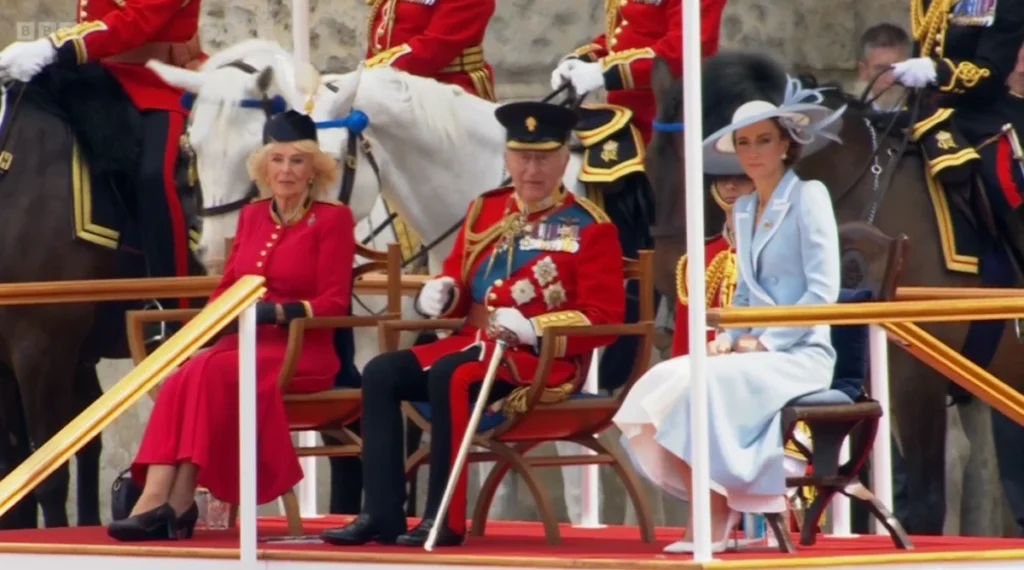

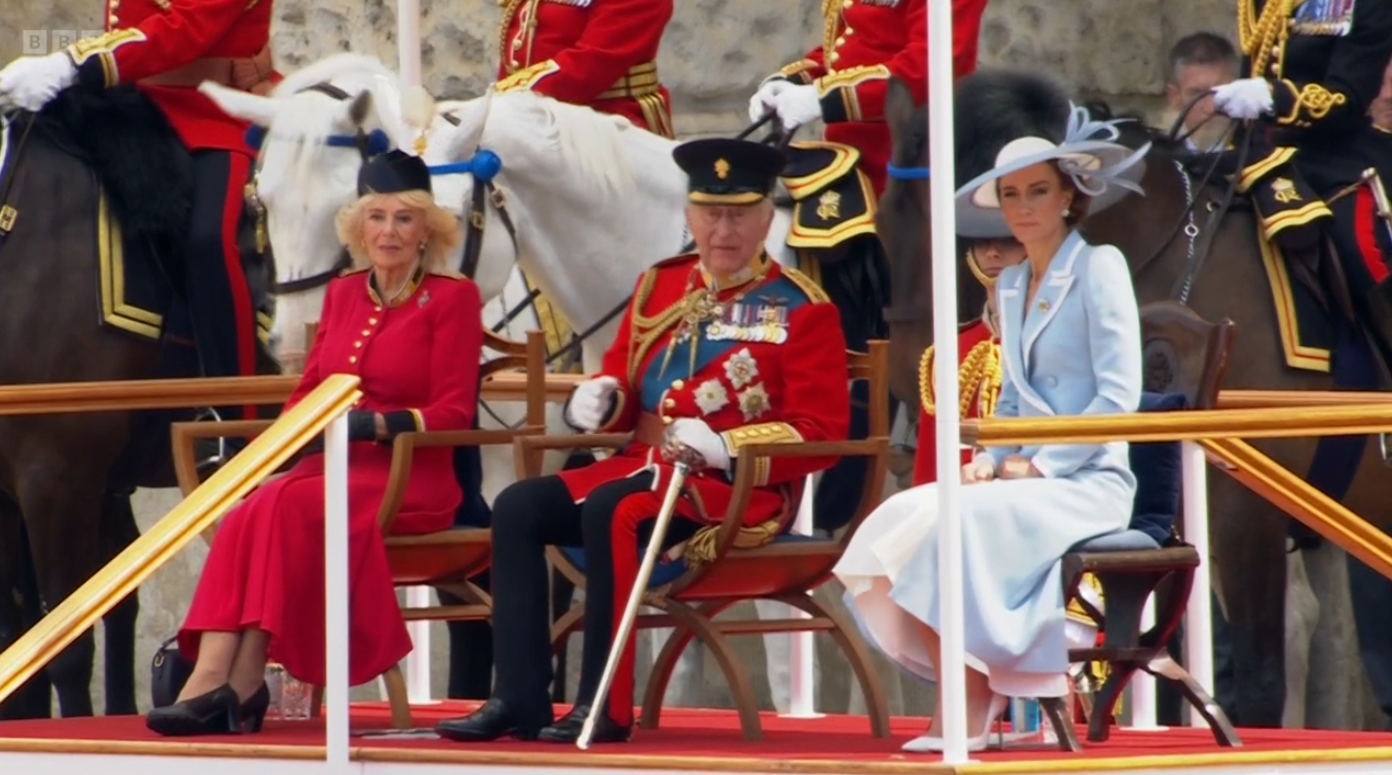
King Charles III marked his official birthday with the traditional Trooping the Colour ceremony, a magnificent display of military precision and royal pageantry that saw the Royal Family assemble in full force on Horse Guards Parade. Thousands of spectators lined the iconic The Mall and the surrounding areas, eager to witness one of the most significant events in the British royal calendar. The King, alongside Queen Camilla, arrived in a carriage drawn by Windsor Greys, their procession accompanied by the stirring strains of the National Anthem, setting a solemn yet celebratory tone for the day’s proceedings.
The King’s presence at the helm of the ceremony underscored its importance, particularly following his recent diagnosis and treatment for cancer. His participation, albeit in a slightly modified capacity for the King’s Troop, Royal Horse Artillery, reflected his ongoing commitment to his duties and his resilience. While traditionally the monarch would ride on horseback, King Charles III, following medical advice, travelled by carriage. This adjustment, however, did little to diminish the grandeur of the occasion, with other senior royals continuing the tradition of mounted attendance.
A Royal Procession of Dignity and Tradition
Riding alongside His Majesty on horseback were key members of the Royal Family, demonstrating continuity and strength within the institution. The Prince of Wales, a seasoned rider, was mounted on Darby, a distinguished horse gifted to the Royal Family by the Royal Canadian Mounted Police in 2019 to commemorate the 80th anniversary of their breeding programme. The Princess Royal, known for her equestrian prowess, rode Noble, a horse that had previously carried King Charles III during his Birthday Parade in 2023. The Duke of Edinburgh was astride Sir John, another significant gift from the Royal Canadian Mounted Police, presented in 2016 to honour Queen Elizabeth II’s 90th birthday. Their presence on horseback, a tradition stretching back centuries, added a powerful visual element to the ceremony, symbolising the enduring link between the monarchy and the armed forces.
The younger generation of royals also played a visible role, drawing smiles from the assembled crowds. The Princess of Wales, accompanied by Prince George, Princess Charlotte, and Prince Louis, travelled in a carriage. The young royals, with characteristic enthusiasm, waved to the spectators lining The Mall, their joyful presence a reminder of the future of the monarchy. This public appearance by the Princess of Wales, following her own period of treatment for cancer, was particularly poignant and widely welcomed, signalling a gradual return to public duties.
Other prominent members of the Royal Family present included the Duchess of Edinburgh and Sir Tim Laurence, as well as the Duke and Duchess of Gloucester. Their collective attendance highlighted the deep importance placed on Trooping the Colour, not just as a ceremonial event, but as a cornerstone of the Royal Family’s annual schedule of public engagements and a testament to their continued support for the armed forces. The sheer number of senior royals present served to reinforce the institution’s unity and its unwavering commitment to public service.
The Grandeur of the Military Spectacle
The ceremony itself was a breathtaking display of military might and discipline, featuring over 1,300 soldiers from the Household Division, hundreds of musicians, and scores of military horses. The precision of the drills, honed over generations, was evident in every movement, a testament to the rigorous training undertaken by the participants. The Household Division, comprising the Foot Guards and the Household Cavalry, represents some of the oldest and most distinguished regiments in the British Army, tasked with the ceremonial duties of guarding the Sovereign.
A particular highlight was the appearance of the Mounted Band of the Household Cavalry, their resplendent uniforms gleaming under the summer sun. The procession was majestically led by the Drum Horses, Apollo and Perseus, their powerful presence setting a formidable rhythm. The Massed Bands and Corps of Drums delivered a performance of unparalleled skill, culminating in the intricate and famous "spin-wheel" manoeuvre. This display, a complex choreography of movement and timing, is recognised globally as one of the most challenging and impressive feats of military precision. The synchronised movements and the powerful musical arrangements created an atmosphere of awe and admiration, captivating both the on-site spectators and the millions watching worldwide.
Historical Context and Evolution of Trooping the Colour
Trooping the Colour is a centuries-old tradition, dating back to the reign of King George II in 1748. Originally, the event was established to ensure that soldiers could recognise their regiment’s colours on the battlefield. The practice of "trooping" the colours – marching them down the ranks of assembled troops – allowed soldiers to become familiar with the flags and insignia, which were vital for identification and cohesion in the chaos of battle. Over time, it evolved into the grand ceremonial parade it is today, serving as both a celebration of the Sovereign’s official birthday and a significant military event.
The modern ceremony typically involves the Sovereign inspecting the troops, followed by the parade of the Colour by a chosen regiment. The chosen regiment for 2026 was the 1st Battalion, Irish Guards. The King’s Troop, Royal Horse Artillery, also participate, firing a gun salute in Hyde Park. The procession from Buckingham Palace to Horse Guards Parade via The Mall is a visual feast, with the Royal Family travelling in carriages and on horseback, escorted by the Household Cavalry. The event culminates with the Royal Family gathering on the balcony of Buckingham Palace to watch an RAF flypast, a tradition that never fails to enthral.
The evolution of the ceremony reflects broader changes in military practice and royal tradition. While the core elements of military precision and royal patronage remain, adjustments have been made over the years to accommodate modern sensibilities and the changing roles of the monarchy. For instance, the inclusion of female members of the Royal Family in prominent roles, and the adaptation of the Sovereign’s participation based on health, are indicative of this ongoing evolution.
Supporting Data and Significance
The scale of Trooping the Colour is substantial, underscoring the logistical and organisational effort involved. Over 1,400 officers and soldiers, 200 horses, and over 200 musicians are typically involved in the parade. The ceremony is watched by an estimated one billion people worldwide, making it one of the most-viewed annual events globally. This widespread viewership highlights the enduring international fascination with the British monarchy and its associated traditions.
The event also serves as a crucial platform for showcasing the capabilities of the British armed forces. The meticulous performance of the soldiers and musicians not only entertains but also demonstrates the discipline, training, and esprit de corps that are fundamental to military effectiveness. For the regiments involved, participating in Trooping the Colour is a prestigious honour, representing the pinnacle of ceremonial duty.
Official Responses and Public Sentiment
While official statements from Buckingham Palace typically focus on the ceremonial aspects of the event, the visible presence and participation of senior royals, particularly following periods of personal health challenges, are often interpreted as powerful messages of reassurance and continuity. The public’s reaction, observed through the thousands who gather along The Mall and the widespread media coverage, consistently reflects a deep affection and respect for the Royal Family and their dedication to public duty.
The sight of King Charles III, Queen Camilla, and the Prince and Princess of Wales, along with their children, participating in this cherished tradition is often met with widespread approval. It signifies a return to normalcy and a steadfast commitment to the nation, even in the face of personal adversity. Social media buzz and public commentary often highlight the resilience and grace displayed by the royals, further solidifying their connection with the populace.
Broader Impact and Implications
Trooping the Colour is more than just a birthday celebration; it is a potent symbol of national identity and continuity. In an era of rapid social and political change, such traditions offer a sense of stability and historical connection. The ceremony reinforces the unique relationship between the Crown and the armed forces, a bond that has been central to British history for centuries.
Furthermore, the global visibility of the event contributes significantly to the United Kingdom’s soft power and international image. The pageantry and tradition associated with Trooping the Colour attract tourism and foster a positive perception of the country on the world stage. It serves as a reminder of Britain’s rich heritage and its enduring cultural influence.
The participation of the younger royals, such as Prince George, Princess Charlotte, and Prince Louis, is also strategically important. It offers a glimpse into the future of the monarchy and helps to foster a sense of connection with younger generations, ensuring the enduring relevance of the institution. Their presence, waving to the crowds, humanises the royal family and makes them more relatable to the public.
In conclusion, Trooping the Colour remains a profoundly significant event, embodying military excellence, royal tradition, and national pride. King Charles III’s participation, adapted to his current circumstances, underscored his unwavering dedication, while the collective presence of the Royal Family reaffirmed the enduring strength and unity of the institution. The spectacle, steeped in history and executed with unparalleled precision, continues to captivate audiences at home and abroad, serving as a powerful symbol of continuity and service for the United Kingdom.