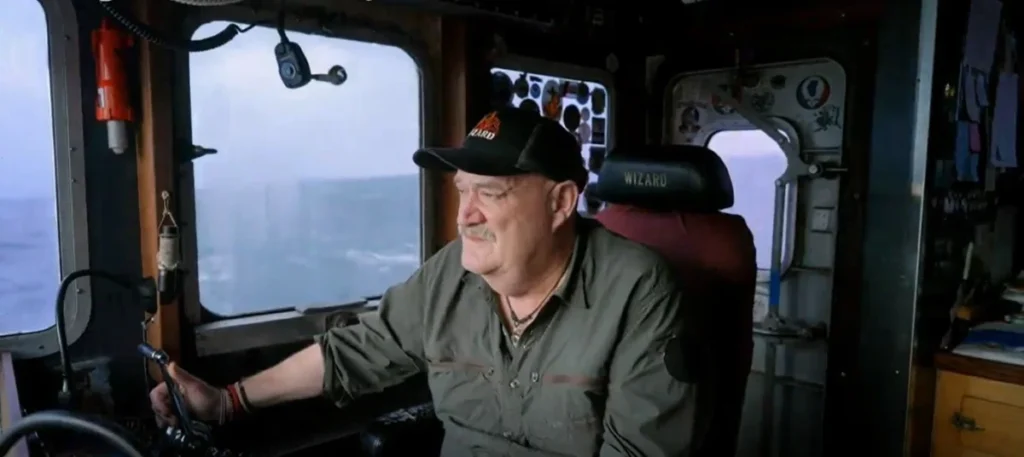

The unforgiving waters of the Bering Sea once again tested the mettle of the Deadliest Catch captains in the June 5th episode of the acclaimed Discovery Channel series. This installment saw Captain Johnathan Hillstrand of the Time Bandit grapple with the encroaching threat of a trawler, Captain Sig Hansen of the Northwestern facing internal pressures and external challenges, and Captain Keith Colburn of The Wizard battling both the brutal elements and critical vessel malfunctions. The episode painted a stark picture of the constant high-stakes gamble these fishermen undertake, where a single miscalculation or mechanical failure can lead to catastrophic financial losses and jeopardize the entire season.
A Vision of Bounty and the Specter of Destruction
Captain Johnathan Hillstrand, a seasoned veteran of the Alaskan crab fishery, embarked on the episode with a potent vision: a prime crab hotspot, a bounty waiting to be harvested. This dream, however, quickly collided with the harsh reality of commercial fishing. As Hillstrand meticulously prepared to haul 40 pots, a stark warning emerged – a dragger, a vessel known for its destructive trawling practices, was encroaching upon his carefully selected grounds. These trawlers, by dragging massive nets across the seafloor, pose a significant risk to the crab pots meticulously set by the Time Bandit and other crabbers, potentially destroying weeks of labor and valuable gear. The sheer scale of the operation, with nets reportedly spanning the length of two football fields, underscored the immense destructive potential.
Hillstrand’s initial attempts to communicate with the dragger proved futile. The captain of the encroaching vessel offered a dismissive warning that one of his gear sets might have been snagged, a statement that was met with incredulity and frustration by Hillstrand, who was already facing substantial financial setbacks. At this juncture, the Time Bandit had already incurred an estimated $40,000 in lost gear. The prospect of losing an additional six-figure haul was a devastating blow to the financial viability of his operation. The sheer audacity of the dragger’s presence, coupled with the potential for immense financial ruin, prompted Hillstrand to seek an unlikely ally.

The Northwestern Joins the Fray: A Tactical Alliance Against a Common Foe
Recognizing the shared threat and the potential for devastating losses if the dragger persisted, Hillstrand radioed Captain Sig Hansen of the Northwestern. Hansen, operating in a similar shallow canyon, was also under immense pressure to deliver. His strategy involved deploying a staggering 120 pots, a testament to his relentless pursuit of a successful season. The intensity of his operation had already led to internal friction, with his son-in-law, Clark Pederson, being caught in a precarious situation with a crane, leaving the Northwestern a man down.
By the time Hillstrand contacted Hansen, the dragger had already caused the loss of 11 pots, demonstrating a clear disregard for established fishing territories and gear. Hillstrand’s assessment of the situation was blunt: "It doesn’t seem like this guy wants to play nice." He then presented Hansen with a proposition – a united front against the encroaching Goliath. The stakes were astronomical, with a combined $150,000 in gear at risk and the potential for millions in lost catches hanging in the balance.
The two captains devised a bold strategy: they would strategically deploy their remaining pots and supplement them with an abundance of buoys, creating a seemingly impenetrable blockade. This visual deterrent, designed to signal a unified and determined opposition, aimed to force the dragger to reconsider its aggressive territorial encroachment. The plan proved remarkably effective. Faced with the prospect of a protracted and potentially damaging confrontation, the dragger ultimately relented and turned away. The successful maneuver not only protected their valuable gear but also paved the way for lucrative hauls as both captains began to retrieve their pots, a testament to their tactical acumen and collaborative spirit in the face of adversity.
The Wizard’s Battle Against the Elements and Mechanical Failure

Meanwhile, Captain Keith Colburn of The Wizard found himself locked in a desperate struggle against two formidable adversaries: the relentless fury of the Bering Sea and a critical mechanical failure aboard his vessel. The episode opened with Colburn issuing a stern warning to his crew: "get ready for battle" as Mother Nature unleashed her full force. The harsh weather conditions were not merely an inconvenience; they were a direct threat to the safety of his crew and the integrity of his operation. With only three weeks remaining in the fall season and a significant quota of 380,000 pounds of Bairdi crab to catch, the pressure was immense.
The initial deployment of 200 pots yielded disappointing results, with no Bairdi crab appearing in their traps. This already precarious situation was compounded by a dire discovery: water was inundating the engine room of The Wizard. The vessel’s engineer, Joe Serpas, and his team worked with feverish intensity to locate the source of the leak. Their makeshift repairs, employing tarps and duct tape, proved insufficient as the water continued to pour in, described by Serpas as akin to "Niagara Falls." The potential consequences of this unchecked ingress were dire, with the specter of a complete loss of power and being stranded in the unforgiving environment looming large.
Colburn’s immediate priority became securing enough time to navigate The Wizard out of the treacherous, crowded waters. He implored Serpas to buy them an additional 12 hours to achieve this objective. While the crew continued to set gear and pull up deck boards in a desperate attempt to locate and repair the leak, the threat to the vessel’s fuel system was a paramount concern. The water intrusion could have catastrophic consequences, potentially crippling the engine and rendering the vessel immobile. Despite the mounting challenges, the crabs began to fill the pots, offering a glimmer of hope. However, the unyielding waves continued to batter the vessel, and Colburn recognized that any further deterioration in conditions would necessitate a complete halt to their operations. "We just need to keep grinding away," Colburn stated, adding a familiar mantra of the crab fishing world, "Crabs cure all wounds."
Yet, in this particular instance, the adage proved insufficient. Serpas’s assessment indicated a leak of unmanageable proportions, suggesting a significant breach in the hull. Frustration mounted for Colburn, who was finally seeing positive crab numbers emerge from his pots, only to be confronted with the undeniable reality of his vessel’s compromised state. The decision was agonizing, but he had no alternative but to cease operations and make the perilous journey back to port. The immediate impact of this setback on The Wizard‘s season remains uncertain, with the full ramifications to be revealed in subsequent episodes.
Broader Implications: The Enduring Peril of the Bering Sea Fishery

The events of this episode of Deadliest Catch serve as a potent reminder of the multifaceted dangers inherent in the Alaskan crab fishery. The inherent risks are not confined to the unpredictable nature of the sea; they extend to the complex interplay of human activity and the ever-present threat of mechanical failure. The confrontation with the dragger highlights the ongoing tensions and territorial disputes that can arise in these highly contested fishing grounds, where valuable resources are at stake. The collaboration between Hillstrand and Hansen underscores the importance of community and mutual support in an industry that often demands individual resilience.
Furthermore, Keith Colburn’s predicament with The Wizard underscores the critical importance of vessel maintenance and the unforgiving consequences of even minor mechanical issues in such an extreme environment. The fishing industry, particularly in Alaska, operates on razor-thin margins, and a single catastrophic event can have devastating financial repercussions for captains, crews, and the broader coastal communities that depend on this vital industry. The continued pursuit of crab, despite these immense challenges, speaks to the enduring allure of the fishery and the deep-seated dedication of the men and women who brave its perils. The ongoing saga of these captains and their crews promises to continue captivating audiences as they navigate the treacherous waters and strive to bring in their valuable catch, season after season.
Deadliest Catch airs Fridays at 8/7c on the Discovery Channel.