
Thanasis Neofotistos, the acclaimed Greek writer-director, is poised to make a significant international impact with the world premiere of his debut feature film, The Boy With the Light-Blue Eyes, at SXSW London 2026. Scheduled for Thursday, June 4, as part of the festival’s prestigious Screen Festival, the film promises a genre-bending cinematic experience that delves into profound themes of exclusion, the universal yearning for love, and the pursuit of freedom. Set in an unspecified, yet visually evocative past, the movie presents a compelling allegory that also functions as a queer coming-of-age narrative, marking a notable entry into contemporary European cinema.
A Deep Dive into Thematic Resonance
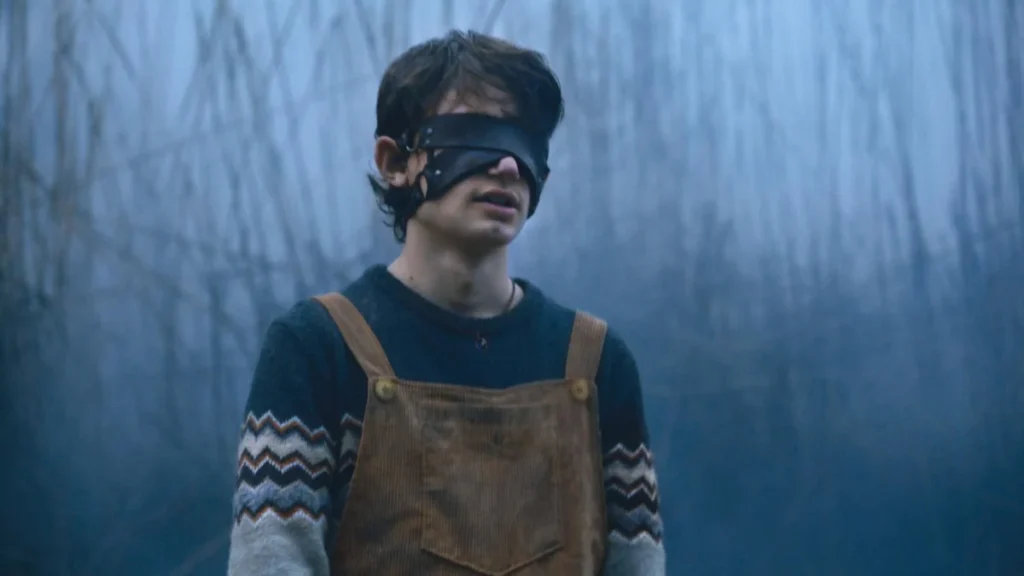
The Boy With the Light-Blue Eyes introduces audiences to Petros, portrayed by Giorgos Karydis, a young boy compelled to conceal his light-blue eyes behind a mask. This enforced concealment is dictated by the strictures of his grandmother and the village mayor in their remote mountain community, where blue eyes are viewed as a source of deep-seated fear and superstition. The narrative immediately establishes a potent allegory for "otherness" and the societal pressures to conform.
The film’s exploration of exclusion resonates broadly, touching upon the psychological and social ramifications of being perceived as different. In a world often grappling with issues of identity and acceptance, Petros’s struggle to hide a fundamental aspect of himself speaks to universal experiences of marginalization. Furthermore, its classification as a queer coming-of-age story adds another layer of depth, hinting at the challenges faced by individuals navigating their identities in environments that may not be fully accepting. This thematic richness positions The Boy With the Light-Blue Eyes not merely as a local Greek story but as a commentary on global societal dynamics, inviting audiences to reflect on their own biases and definitions of normalcy. The desire for love and freedom, central to Petros’s journey, forms the emotional core of the film, providing a poignant counterpoint to the village’s rigid traditions and fears.
Thanasis Neofotistos: An Emerging Voice in Greek Cinema
Thanasis Neofotistos arrives at SXSW London as an exciting new talent. While The Boy With the Light-Blue Eyes marks his feature film debut, Neofotistos has garnered attention for his previous short films, which often showcase a distinctive visual style and thematic ambition. His transition to feature filmmaking is a pivotal moment, signaling the potential for a fresh perspective within the vibrant landscape of Greek cinema. The selection for a world premiere at SXSW London, a festival renowned for its convergence of film, music, and technology, underscores the industry’s confidence in Neofotistos’s vision and the film’s potential to captivate international audiences and critics alike.
Co-written by Neofotistos and Grigoris Skarakis, the screenplay is brought to life through the lens of cinematographer Djordje Arambasic, with Panagiotis Angelopoulos handling the editing. The collaboration of these talents aims to create a cohesive and immersive world for Petros’s story. US sales for the film are being handled by Gersh, a testament to the project’s perceived marketability and potential for broader distribution beyond the festival circuit. This strategic partnership with an established sales agent suggests an early and confident push for the film’s international reach, indicating that the creative team and producers, Argonauts, anticipate a strong reception.
Inspirations: From Spielberg’s Dinosaurs to Greek Masters
Ahead of the premiere, Neofotistos offered insights into his formative cinematic influences, revealing a surprising yet profound connection to "good old-school cinema." He cited Steven Spielberg’s iconic 1993 blockbuster, Jurassic Park, as a foundational inspiration. "My biggest role model, my inspiration, is what I call ‘good old-school cinema,’ for example, Jurassic Park by Steven Spielberg," Neofotistos shared with The Hollywood Reporter. "That was the first film I ever saw in the cinema, and I got fascinated with dinosaurs because of it. I felt that dinosaurs really existed in real life when I was less than 10 years old. This was my main inspiration to be a filmmaker."
The enduring legacy of Jurassic Park on a generation of filmmakers is well-documented. Spielberg’s pioneering use of animatronics and early CGI set new benchmarks for cinematic realism, blurring the lines between the tangible and the digitally created. Neofotistos, in particular, was captivated by the practical effects. "He used animatronics, he used materials that they handmade, handcrafted," he elaborated, emphasizing the tactile quality that distinguished it from purely digital creations. "It was not VFX, or AI now. It felt so real. The story felt so unique, and I got into this universe. That’s why I wanted to be a storyteller." This appreciation for tangible, handcrafted filmmaking forms a cornerstone of Neofotistos’s own artistic philosophy, a sentiment that stands in deliberate contrast to the increasing reliance on advanced visual effects and artificial intelligence in contemporary cinema.

Beyond this Hollywood spectacle, Neofotistos also draws inspiration from the rich tradition of Greek cinema. He cited two luminaries whose works have shaped his creative approach: Theo Angelopoulos and Yorgos Lanthimos. Angelopoulos’s 1970 debut, The Reconstruction (Anaparastasi), holds particular significance for Neofotistos, partly due to its geographical proximity to his hometown. "For example, the first film of [Theo] Angelopoulos, The Reconstruction, which was made close to my hometown and gives a great representation of societies," he noted. Angelopoulos, a titan of Greek art-house cinema, was celebrated for his long takes, meticulous compositions, and profound explorations of Greek history, memory, and society. His influence often manifests in a nuanced, critical portrayal of human conditions within specific cultural contexts, a trait Neofotistos appears keen to adopt in his own work.
The more contemporary figure of Yorgos Lanthimos, an internationally acclaimed director known for films like Dogtooth, The Lobster, and Poor Things, also serves as a touchstone. Lanthimos’s distinctive style, often characterized as "magical realism" or part of the "Greek Weird Wave," has propelled Greek cinema onto the global stage. Neofotistos acknowledges this impact, stating, "And Yorgos Lanthimos, a case of a Greek filmmaker who became huge – the magical realism that he uses is something that I’m inspired by." Lanthimos’s ability to blend the absurd with the deeply human, creating unsettling yet resonant narratives, offers a template for genre-bending storytelling that Neofotistos seeks to emulate in his own unique way.
Crafting a Unique, Handcrafted Cinematic Universe
Neofotistos’s admiration for the practical artistry of Jurassic Park directly translates into his filmmaking ethos for The Boy With the Light-Blue Eyes. In an era increasingly dominated by sophisticated computer-generated imagery (CGI) and the burgeoning use of artificial intelligence (AI) in film production, Neofotistos consciously opted for a more traditional, "handcrafted" approach. "I really love to create universes," he told THR. "So, my goal here was to create something unique and very handcrafted. We didn’t use any AI. We used minimal VFX. Everything was made in the shooting [process]."
This commitment to in-camera effects and practical artistry reflects a broader artistic statement. It speaks to a desire for tangible realism, where the physical presence of props, sets, and makeup effects contributes to the authenticity of the cinematic world. This method often fosters a more immersive experience for both the actors and the audience, grounding the fantastical or allegorical elements in a believable reality. By minimizing post-production digital enhancements, Neofotistos aims to evoke the same sense of wonder and belief that he experienced watching Jurassic Park as a child, where the creatures felt genuinely alive within the frame. This philosophical choice may also appeal to a segment of the film community and audience that yearns for a return to practical filmmaking techniques, viewing it as a testament to pure craft and ingenuity.
A charming and personal homage to Neofotistos’s childhood inspiration can be found within the film itself. "There are some dinosaurs in Petros’s room, because of my inspiration from Jurassic Park," he revealed. This subtle yet significant detail not only serves as a tribute to Spielberg’s masterpiece but also offers a window into the character of Petros, perhaps suggesting an inner world of imagination and escapism that contrasts with his restrictive reality. Such deliberate visual cues add layers of interpretation and invite eagle-eyed viewers to connect with the filmmaker’s personal journey.
The Road to SXSW London 2026 and Broader Implications
SXSW London, an offshoot of the renowned South by Southwest festival in Austin, Texas, has rapidly established itself as a pivotal platform for innovation across film, music, technology, and interactive media. Its "Screen Festival" is particularly competitive, attracting a diverse array of international premieres and emerging talents. For The Boy With the Light-Blue Eyes to secure a world premiere slot is a significant achievement, guaranteeing international exposure and critical attention from industry professionals, distributors, and cinephiles. The festival’s integrated approach means that the film will be screened to a broad audience, including those from tech and music backgrounds, potentially expanding its reach beyond traditional film festival demographics.
The premiere of Neofotistos’s debut feature carries broader implications for Greek cinema. In recent decades, Greek filmmakers have garnered increasing international recognition, notably through the "Greek Weird Wave" movement, which, while not a unified school, describes a distinctive style characterized by deadpan humor, surrealism, and often bleak social commentary. Directors like Yorgos Lanthimos, Athina Rachel Tsangari, and others have paved the way for a new generation. The Boy With the Light-Blue Eyes, with its genre-bending nature, allegorical depth, and handcrafted aesthetic, appears poised to continue this tradition of innovative and thought-provoking storytelling. Its exploration of universal themes through a distinctively Greek lens could further cement Greece’s reputation as a hotbed of cinematic creativity.
The film’s journey will begin with its crucial screening on June 4, where early reactions will shape its trajectory. A strong showing at SXSW London could lead to further festival appearances, robust distribution deals, and critical acclaim, launching Neofotistos’s career onto the international stage. The industry will be closely watching how this unique blend of personal inspiration, classical craft, and contemporary thematic relevance resonates with audiences, potentially marking a new chapter for both the director and Greek cinema at large.