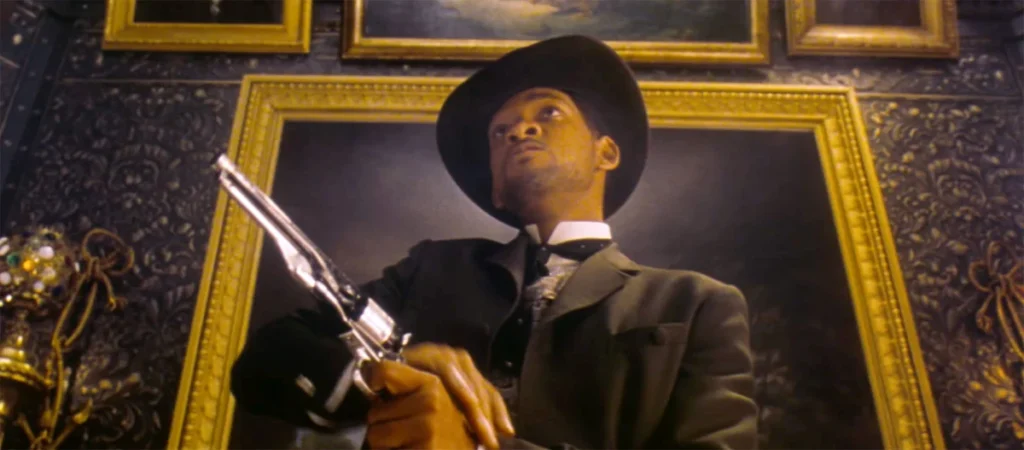

The year 1999, a period often characterized by burgeoning internet culture and a surge in blockbuster cinema, also witnessed the release of Wild Wild West, a film that has since become a notable footnote in Hollywood history for its significant box office underperformance and critical reception. Directed by Barry Sonnenfeld, the film, a steampunk-infused Western action-comedy, starred Will Smith as a formidable government agent tasked with protecting President Ulysses S. Grant. Despite a star-studded cast and the directorial pedigree of Sonnenfeld, who had previously helmed the successful Men in Black franchise, Wild Wild West failed to capture the public’s imagination, resulting in a considerable financial disappointment for its studio.
Genesis and Production: A High-Concept Gamble
The conceptualization of Wild Wild West emerged from the fertile ground of late 1990s Hollywood, a time when studios were eager to capitalize on established intellectual property and explore genre fusions. The film was a cinematic adaptation of the classic 1960s CBS television series of the same name, created by Michael Garrison. The original series, which ran from 1965 to 1969, was lauded for its unique blend of Western tropes with science fiction elements, featuring agents James West and Artemus Gordon navigating the American frontier with advanced gadgets and facing off against eccentric villains.
The decision to bring Wild Wild West to the big screen was a significant undertaking. Will Smith, fresh off the monumental success of Men in Black (1997), was a natural choice for the suave and action-oriented lead role. His charisma and proven box office appeal made him a considerable draw. Barry Sonnenfeld, the director behind Men in Black‘s distinctive visual style and comedic timing, was again enlisted to helm the project, suggesting a desire to replicate that successful formula within a new setting.
The screenplay, credited to S. S. Wilson, Brent Maddock, Jeffrey Price, and Peter S. Seaman, with a story by Jim Thomas and John Thomas, aimed to translate the episodic adventures of the TV series into a feature-length narrative. The plot centered on Special Agents James West (Will Smith) and Artemus Gordon (Kevin Kline) as they are brought together to thwart the nefarious schemes of Dr. Arliss Loveless (Kenneth Branagh), a brilliant but vengeful Confederate scientist who lost his legs during the Civil War and operates from a custom-built, steam-powered wheelchair. Loveless’s ultimate goal was to destabilize the United States, leading the agents on a globe-trotting adventure filled with period-appropriate technology and fantastical inventions.

The film’s production was characterized by ambitious visual effects and a distinctive aesthetic, leaning heavily into the steampunk subgenre. This involved the creation of elaborate mechanical contraptions, most notably the colossal, eight-story mechanical spider that became one of the film’s most memorable—and often derided—visual elements. This specific element is often cited in anecdotes, such as those shared by filmmaker Kevin Smith, who recounted a story about a producer’s insistence on including a giant mechanical spider in a film, a concept that was reportedly rejected until it found its way into Wild Wild West. The production budget reportedly soared, reflecting the scale of the visual effects and the ensemble cast.
The Marketing Blitz and Release: High Hopes Dashed
Leading up to its release, Wild Wild West was positioned as a major summer blockbuster. The marketing campaign leaned heavily on the star power of Will Smith and the visual spectacle promised by the steampunk setting. Trailers showcased the film’s action sequences, its comedic banter, and the elaborate gadgets. The inclusion of a rap song by Will Smith, often referred to as "Big Willie’s WWW rap song," further amplified the film’s presence in popular culture, a common practice for tentpole releases of that era.
The film premiered on June 30th, 1999, opening in the competitive summer movie season. Expectations were high, given the previous success of Smith and Sonnenfeld. However, critical reviews were largely negative, with many critics pointing to a convoluted plot, uneven humor, and a perceived lack of coherence in the film’s ambitious concept. The visual effects, while extensive, were also a point of contention, with some finding them dated or over-the-top.
Box Office Performance: A Significant Underperformer
The box office results for Wild Wild West were a stark disappointment. The film grossed approximately $222 million worldwide against an estimated production budget that ranged from $170 million to $190 million, not including extensive marketing costs. This figure, while seemingly substantial in isolation, was considered a significant underperformance for a film with such a large budget and the backing of a major studio and a star of Will Smith’s caliber. In the context of 1999’s box office landscape, which saw films like Star Wars: Episode I – The Phantom Menace and The Sixth Sense achieve astronomical success, Wild Wild West‘s performance was notably lackluster. It failed to recoup its considerable production and marketing expenses, marking it as a commercial failure.
Critical Reception and Legacy: A Cult Following?
The critical consensus surrounding Wild Wild West has remained largely unfavorable. Review aggregators and film critics often cite it as one of the weaker entries in the careers of its principal figures. Common criticisms include:

- Pacing and Plot: The narrative was often described as disjointed and lacking clear direction, struggling to balance its comedic, action, and steampunk elements.
- Humor: While intended as a comedy, the humor was frequently found to be hit-or-miss, with some jokes falling flat and the overall tone feeling inconsistent.
- Visuals: Despite the visual ambition, the execution of the steampunk elements and special effects were often deemed excessive or lacking in polish by contemporary standards.
- Character Development: While the cast delivered performances, the characters were often seen as archetypal rather than fully developed, particularly the antagonist, Dr. Loveless.
Despite the overwhelmingly negative critical reception at the time of its release, Wild Wild West has, over time, garnered a certain cult following. This phenomenon is not uncommon for films that are perceived as "so bad they’re good." For some viewers, the film’s sheer ambition, its over-the-top nature, and its earnest attempt at a unique blend of genres make it a campy and entertaining watch. The iconic mechanical spider, the outlandish gadgets, and the spirited performances from the cast, particularly Kenneth Branagh’s committed portrayal of the villain, have become points of discussion and amusement for those who appreciate its unique, albeit flawed, vision. The re-emergence of the original trailers, scanned from 35mm prints and uploaded to platforms like YouTube, has also contributed to a renewed interest and appreciation for the film’s nostalgic qualities, allowing a new generation to experience its distinct brand of 90s blockbuster spectacle.
Post-Release Analysis and Broader Impact
The failure of Wild Wild West had several implications for the industry and the careers involved:
- Studio Caution: For studios, the film served as a cautionary tale about the risks associated with high-budget genre fusions, particularly when the source material is not universally recognized and the creative execution falters. It highlighted the importance of a cohesive vision and a strong narrative foundation, even in visually ambitious projects.
- Career Trajectories: While Wild Wild West was a significant setback, it did not derail the careers of its principal players. Will Smith continued his reign as one of Hollywood’s biggest stars, diversifying his roles and achieving further critical and commercial success. Barry Sonnenfeld went on to direct other films, though perhaps with a more tempered approach to large-scale genre experiments. Kenneth Branagh, already an established Shakespearean actor and director, continued his prolific career in both acting and directing, achieving significant acclaim with projects like the Marvel Cinematic Universe’s Thor. Kevin Kline and Salma Hayek also maintained successful careers in film.
- The Steampunk Genre: While Wild Wild West did not propel steampunk into mainstream cinematic dominance as perhaps intended, its distinct visual identity contributed to the broader cultural awareness of the genre. It remains a significant, albeit flawed, example of early mainstream attempts to translate steampunk aesthetics to the big screen.
The film’s enduring presence in discussions about cinematic failures, coupled with the occasional reappraisal by those who find enjoyment in its eccentricities, ensures that Wild Wild West remains a fascinating case study in Hollywood’s ambition, its risks, and the often unpredictable nature of audience reception. The re-release of its classic trailers offers a window into the promotional strategies of the late 1990s and serves as a nostalgic reminder of a film that, despite its commercial shortcomings, carved out a unique, if infamous, niche in cinema history. The film’s legacy is one of a bold, albeit miscalculated, swing for the fences, a testament to the era’s appetite for spectacle and genre experimentation, even when the execution fell short of its grand aspirations.