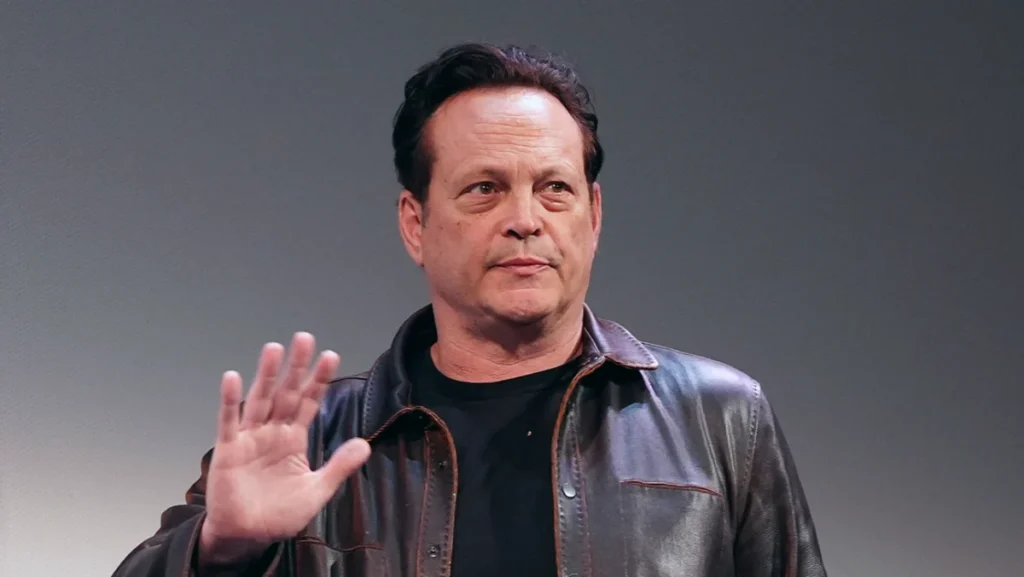

Actor and producer Vince Vaughn has publicly voiced his dissatisfaction with the trajectory of late-night talk shows in recent years, specifically their increasing immersion in political discourse. During an appearance on Theo Von’s "This Past Weekend" podcast, Vaughn articulated a critique that resonates with a growing segment of the audience and industry observers: that these programs have become "the same show," heavily "agenda-based," and lacking the authenticity that once defined the genre. His comments reignite a long-standing debate within entertainment circles about the role of comedy in a politically charged landscape and the impact of overt partisanship on audience engagement.
Vaughn’s Critique: A Shift from Humor to Evangelism
Vaughn, known for his roles in films such as "Wedding Crashers" and "Couples Retreat," did not explicitly name individual hosts or shows, but his remarks clearly targeted the dominant figures in the late-night landscape. Hosts like Jimmy Kimmel, Stephen Colbert, Seth Meyers, and Jimmy Fallon have become notable for their consistent political commentary, often directing criticism towards figures such as former President Donald Trump. This approach, according to Vaughn, has transformed these shows from sources of entertainment into platforms for "evangelizing people to what they thought."
The conversation on Von’s podcast began with Von noting the struggles faced by late-night shows, attributing it partially to a narrowing scope of comedic targets. Vaughn concurred, drawing a sharp contrast between the perceived decline of traditional late-night and the surging popularity of podcasts. "The podcasts have gotten so much more popular with less production, less writers [and] less staff, because people want authenticity," Vaughn stated. He argued that late-night talk shows, conversely, have become so "agenda-based" that they feel inauthentic and didactic. "It stopped being funny, and it started feeling like I was in a fing class I didn’t want to take," he elaborated, emphasizing the discomfort and alienation such an approach fosters among viewers. He humorously likened the experience to being stuck on a plane next to someone constantly pontificating about politics: "Imagine sitting next to someone like that on a fing plane. You’d be like, how do I get out of this f***ing seat?"
The Erosion of Late-Night Viewership: A Broader Trend
Vaughn’s observations align with observable trends in late-night television viewership, which has seen significant declines over the past decade. While he attributes this primarily to the shows’ political homogeneity and "agenda-based" nature, a confluence of factors is at play. Traditional television, in general, has grappled with an evolving media landscape. The rise of streaming services, on-demand content, and digital platforms has fragmented audiences, offering viewers an unprecedented array of choices that transcend linear broadcast schedules.
According to Nielsen data, average viewership for major late-night programs has steadily eroded. For instance, while "The Late Show with Stephen Colbert" occasionally led its rivals, overall late-night viewership across all networks has seen substantial drops from its peaks in prior decades. In the 2010s, average weekly viewership for the top late-night shows could easily exceed 2-3 million for individual programs, but by the early 2020s, many struggled to consistently maintain those numbers, with significant dips in the younger demographic. This decline predates the most intense political polarization of recent years but has arguably been exacerbated by it. Viewers now have the option to curate their media consumption, often gravitating towards content that aligns with their existing viewpoints or offers a complete escape from political discourse.
The shift in viewing habits means that audiences are no longer captive to appointment television. A segment of the audience seeking purely comedic relief might opt for stand-up specials on streaming platforms, viral comedy sketches online, or podcasts, which often offer a more diverse range of voices and less constrained formats. The "all becoming the same show" criticism, therefore, touches upon both content homogeneity and the competitive pressure from a fragmented media ecosystem.
A Historical Perspective on Late-Night and Politics
The integration of politics into late-night comedy is not a new phenomenon. Legendary hosts like Johnny Carson would occasionally touch on political events, but often with a more detached, observational wit that generally avoided explicit partisan endorsements. The "Tonight Show" under Carson was largely a common ground, aiming for broad appeal. This began to shift with figures like David Letterman, who, while often apolitical, could be sharply critical.
The real inflection point arguably arrived with "The Daily Show with Jon Stewart," which pioneered a format of news satire that blended humor with incisive political commentary. Stewart’s success demonstrated a hunger for intelligent, humorous engagement with current events. This paved the way for "The Colbert Report," which satirized cable news pundits, and subsequently influenced the current crop of hosts. Stephen Colbert, upon taking over "The Late Show," carried forward a more overtly political and often partisan tone, especially during the Trump administration. Other hosts like Jimmy Kimmel and Seth Meyers followed suit, often dedicating significant portions of their monologues to political critiques.
This evolution can be contextualized within the broader American political landscape. The 2016 election and the subsequent years under the Trump presidency intensified political polarization to an unprecedented degree. For many late-night hosts and their writers, the political climate provided an inexhaustible wellspring of material and, for some, a perceived moral imperative to speak out. The argument from these shows often is that in times of perceived crisis or significant political upheaval, silence or apolitical comedy would be irresponsible or disingenuous. However, Vaughn’s comments, and those of others, suggest that this approach, while perhaps satisfying a segment of the audience, has alienated another.
Conan O’Brien’s Shared Sentiment: Anger vs. Comedy
Vaughn’s critique is not isolated within Hollywood. Earlier this year, late-night veteran Conan O’Brien articulated a similar sentiment, cautioning comedians against allowing anger to supersede comedy, particularly in their anti-Trump material. Speaking at an Oxford Union event, O’Brien, known for his unique brand of absurdist humor, warned against the trap of becoming "co-opted" by anger.
"I think some comics go the route of, ‘I’m going to just say, "F Trump" all the time,’ or that’s their comedy," O’Brien stated. "Well, now a little bit you’re being co-opted because you’re so angry. You’ve been lulled into just saying ‘F Trump. F Trump. F Trump. Screw this guy.’ And I think you’ve now put down your best weapon, which is being funny, and you’ve exchanged it for anger."
O’Brien’s perspective highlights a crucial distinction: while political comedy can be powerful, it loses its effectiveness if it devolves into mere partisan outrage. He argued that even in serious times, a comedian’s primary duty is to be funny. "Any person like that would say, ‘Well, things are too serious now. I don’t need to be funny.’ And I think, well, if you’re a comedian, you always need to be funny," he added. He emphasized that "good art will always be a perfect weapon against power," but this weapon is blunted if the comedian sacrifices humor for unchanneled anger. O’Brien’s comments, coming from a revered figure in late-night, lend significant weight to Vaughn’s less specific criticisms, suggesting a deeper industry concern about the efficacy and artistic integrity of current political comedy.
Implications for the Future of Late-Night Television
The criticisms from figures like Vaughn and O’Brien, coupled with the undeniable decline in traditional viewership, present significant challenges for late-night television. The format is at a crossroads, needing to adapt to changing audience preferences and a hyper-polarized environment.
- Audience Fragmentation and Polarization: The current approach of many late-night shows risks further polarizing their audience, solidifying support among those who agree with their political stance while alienating those who do not. In a world where viewers can easily find content that aligns with their political views, late-night might be inadvertently contributing to echo chambers rather than fostering broad communal entertainment.
- The Rise of Authentic Voices: Vaughn’s praise for podcasts underscores a desire for authenticity and less curated content. Podcasts often feature unfiltered conversations, diverse viewpoints, and a sense of genuine human connection that can feel absent from highly produced network television. This phenomenon suggests that late-night might need to re-evaluate its production model and content strategy to reconnect with a broader audience seeking sincerity.
- Redefining Comedy’s Role: The debate over political comedy’s role will likely continue. Is the purpose of comedy to challenge power, provide escapism, or both? The answer may vary depending on the comedian and the audience, but the current state of late-night suggests a potential imbalance that has favored commentary over broad comedic appeal.
- Network Strategy: Networks and advertisers are undoubtedly monitoring these trends. Sustained viewership declines could lead to pressure on hosts and producers to diversify their content, moderate their political commentary, or experiment with new formats. The economic realities of television production demand viewership, and if political engagement is consistently driving audiences away, a strategic shift may become inevitable.
- Innovation and Adaptation: Some late-night shows have already begun experimenting with digital-first content, shorter segments optimized for social media, and more diverse comedic voices to attract younger audiences. However, the core format of the monologue-desk interview-musical guest remains largely intact. The long-term viability of late-night may hinge on its ability to innovate more radically, perhaps by embracing a wider spectrum of comedic approaches or by genuinely engaging with varied perspectives rather than primarily catering to one political leaning.
Vince Vaughn’s candid remarks on "This Past Weekend" serve as a potent reminder that the entertainment landscape is in constant flux. His observations, echoed by a respected veteran like Conan O’Brien, highlight a growing disconnect between traditional late-night’s current direction and a significant portion of the audience’s desire for genuine, unburdened entertainment. As media consumption continues to evolve, the future of late-night television may well depend on its capacity to rediscover its comedic core and offer a more broadly appealing, less agenda-driven experience.