

As the first quarter of 2026 draws to a close, the South Korean television industry is facing a notable shift in audience engagement, with several high-profile series experiencing significant drop rates among domestic and international viewers. While the early months of the year were marked by intense marketing campaigns and the return of A-list stars to the small screen, March 2026 has proven to be a critical juncture where initial hype met the reality of narrative execution. Data aggregated from social media discourse, international streaming platforms, and community forums like Reddit indicate that five specific dramas—Boyfriend On Demand, Idol I, Our Universe, Siren’s Kiss, and Still Shining—have struggled to retain their audiences, leading to a surge in "Did Not Finish" (DNF) reports from the global K-drama fandom.
The phenomenon of "dropping" a series—once a quiet personal choice—has evolved into a significant metric for production houses and streaming giants like Netflix and ENA. In an era where content is abundant and viewer attention spans are increasingly contested, the first four episodes of a drama are now considered the "make-or-break" window. For the shows identified in the March 2026 cycle, the reasons for abandonment range from perceived "narrative stagnation" and "lack of lead chemistry" to a failure to meet the high expectations set by star-studded casting.

The High Cost of Conceptual Missteps: Boyfriend On Demand
Perhaps the most surprising entry on the list of dropped dramas is the Netflix original series Boyfriend On Demand. Starring BLACKPINK’s Jisoo and the versatile Seo In Guk, the project was one of the most anticipated releases of the 2026 season. The plot follows a burnt-out webtoon producer who seeks solace in a virtual reality dating service, only to find the boundaries between her digital romance and her professional reality becoming dangerously thin.
Despite the star power of Jisoo, whose global influence usually guarantees high completion rates, the series has seen a sharp decline in viewership following its fifth episode. Industry analysts suggest that while the high-concept VR premise was visually stunning, the execution felt lackluster to a demographic that has become increasingly critical of "tech-gimmick" plots. Viewers noted that the emotional stakes felt artificial, and the pacing struggled to balance the digital world-building with real-world character development. On community platforms, many fans expressed that while the aesthetic was polished, the script lacked the narrative "hook" required to sustain a multi-episode arc. The decline of Boyfriend On Demand highlights a growing trend: even global idols cannot always insulate a production against the repercussions of a weak screenplay.
Genre Fatigue and Narrative Pacing: Idol I and Our Universe
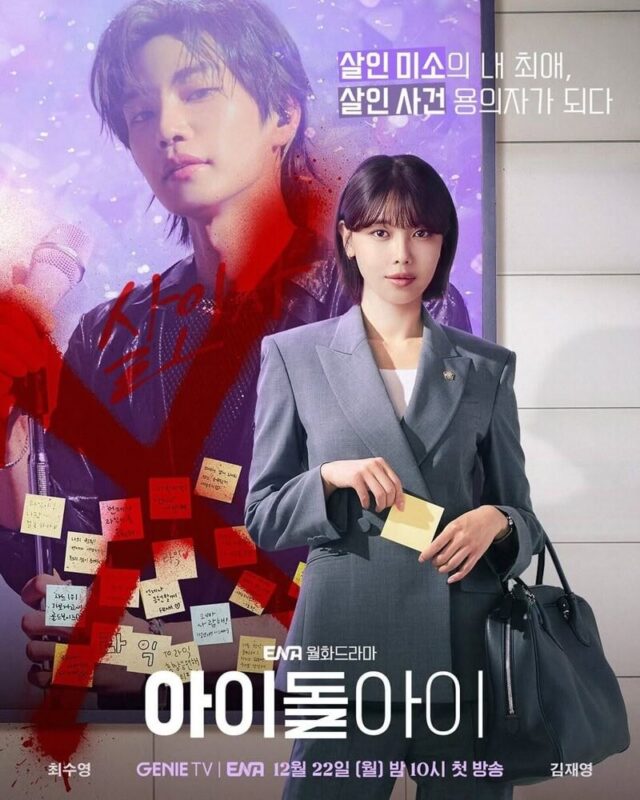
The ENA series Idol I attempted to blend the high-stakes world of legal drama with the fervent culture of K-pop fandom. The story centers on a lawyer who specializes in unusual cases and must defend her own "bias" (favorite idol) when he becomes a primary suspect in a murder investigation. On paper, the fusion of a procedural mystery with fan culture seemed designed for viral success. However, by mid-March, the "drop rate" for Idol I spiked.

Viewers reported that the series became "really boring" as it progressed, with the legal proceedings often feeling repetitive and the "fangirl" subplots occasionally bordering on caricature. The initial novelty of the lawyer-by-day, fan-by-night premise was not enough to overcome what many described as a sluggish middle act. This suggests that ENA, a network that has seen massive success with unconventional hits like Extraordinary Attorney Woo, may have missed the mark on balancing tone and tension in this instance.
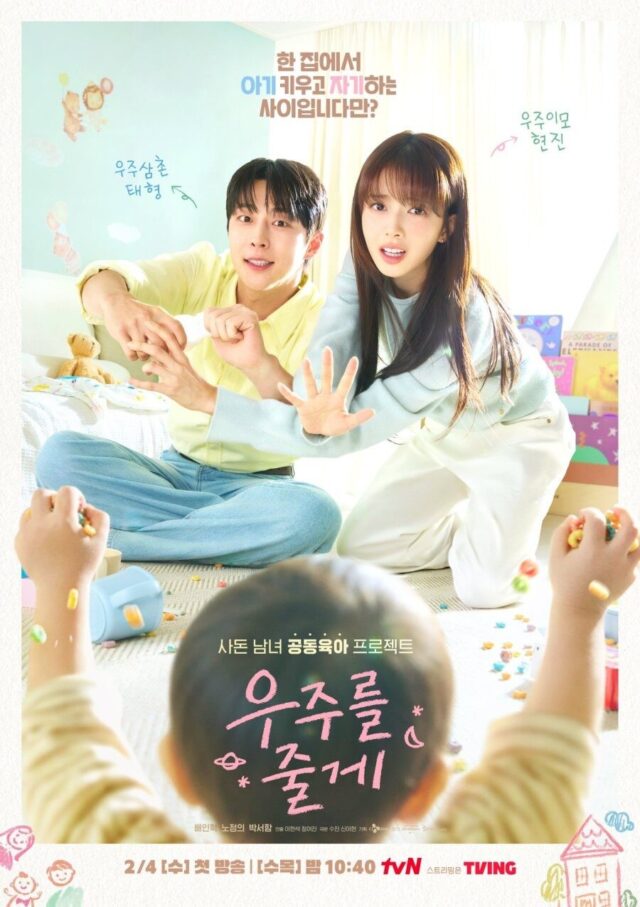
Similarly, the coming-of-age romantic comedy Our Universe faced its own set of challenges. Focusing on two in-laws forced to cohabitate while raising their orphaned nephew, the show relied heavily on the "enemies-to-lovers" trope. While the "forced proximity" setup is a staple of the genre, viewers in March 2026 appeared to have lost patience with the slow-burn development. Supporting data indicates that many viewers stopped watching because their expectations for a more dynamic "found family" story were not met, with some citing a lack of meaningful progression in the relationship between the two leads.
The Chemistry Crisis: Siren’s Kiss
On the more prestige-oriented end of the spectrum, tvN’s Siren’s Kiss was expected to be a seasonal heavyweight. Boasting a powerhouse cast including Park Min Young, Wi Ha Joon, and Kim Jung Hyun, the romantic thriller followed an elite insurance investigator entangled with a mysterious art auctioneer. Given Park Min Young’s reputation as the "Queen of Rom-Coms" and Wi Ha Joon’s global standing following his roles in high-octane thrillers, the expectations were monumental.

However, the discourse surrounding Siren’s Kiss in March has been dominated by criticisms of lead chemistry. In a genre described as a "romantic thriller," the tension between the protagonists is the primary engine of the plot. When that tension fails to translate on screen, the entire structure of the show begins to crumble. Audience feedback suggested that the romance felt forced and the pacing of the investigation was inconsistent. Despite the high production value and the pedigree of the actors involved, the series failed to capture the "lightning in a bottle" required to keep viewers committed to its 16-episode run.
The Downhill Trajectory of Still Shining
Finally, the JTBC and Netflix co-production Still Shining serves as a cautionary tale for the "second-chance romance" subgenre. The drama follows high school sweethearts who reunite in their thirties, questioning if their love can survive the complexities of adulthood. While the series started with promising ratings, it has been cited by fans as a show that went "downhill" rapidly.
The frustration expressed by viewers centered on the "noble idiocy" trope—where characters make illogical sacrifices or withhold information to create artificial drama. In the modern K-drama landscape, where audiences are increasingly favoring proactive characters and healthy communication, the regressive character choices in Still Shining led to a mass exodus of viewers. By the end of March, the sentiment shifted from anticipation to frustration, with many fans opting to drop the show rather than see the story through to its conclusion.
Chronology of the March 2026 "Drop Culture" Trend
The trend of dropping these specific shows did not happen in a vacuum. A timeline of the first quarter of 2026 reveals a pattern of shifting viewer habits:
- January 2026: High-budget trailers for Boyfriend On Demand and Siren’s Kiss dominate social media, leading to record-breaking "Watch List" additions on streaming platforms.
- February 2026: The premier episodes of these series see strong initial ratings, fueled by the "star power" of Jisoo and Park Min Young.
- Early March 2026: As the shows reach their midpoint (Episodes 6–8), engagement begins to plateau. Discussion threads on Reddit and Twitter (X) shift from praise to critiques of pacing and plot holes.
- Late March 2026: A measurable spike in "DNF" tags occurs. Streaming data suggests a 20% to 35% drop-off in viewership for the identified shows compared to their premiere numbers.
Industry Analysis: Implications for Future Productions
The high drop rates observed in March 2026 offer several critical insights for the South Korean entertainment industry. First, the reliance on "star casting" is no longer a guaranteed safety net. Global icons like Jisoo and established veterans like Park Min Young can draw an audience for the first few episodes, but they cannot sustain a series if the writing fails to engage.
Second, the "3-episode rule" has become a reality. With the rise of short-form content and the sheer volume of competing series, viewers are quicker to abandon a show that does not provide a compelling narrative hook within the first three hours of airtime. This has led to discussions among production companies about the necessity of tighter scripts and the potential move toward shorter, 8-to-12 episode formats to prevent the "middle-act slump."
Official responses from production representatives have been guarded, though some insiders at JTBC and ENA have hinted at a shift in strategy for the second half of 2026. "We are closely monitoring viewer feedback regarding narrative pacing," stated an anonymous source from a major production house. "The modern viewer is highly sophisticated; they value internal logic and emotional resonance over traditional tropes."
Broader Impact and the Path Forward
The "March Slump" of 2026 serves as a reminder that the K-drama industry is in a state of transition. As international audiences become more entrenched in the medium, their tastes are diversifying, and their tolerance for "filler" content is decreasing. The failure of high-profile projects like Siren’s Kiss and Boyfriend On Demand to maintain their momentum suggests that the market is reaching a saturation point where quality must take precedence over quantity and star power.
For the remainder of 2026, industry watchers expect a pivot toward more experimental storytelling and a move away from overused tropes. The dramas that survived the March cull were those that offered consistent character development and innovative plot structures. As production houses look toward the Q3 and Q4 releases, the lessons learned from the "dropped" dramas of March will likely influence the next wave of Hallyu content, ensuring that the "completion rate" becomes as vital a metric as the initial rating.