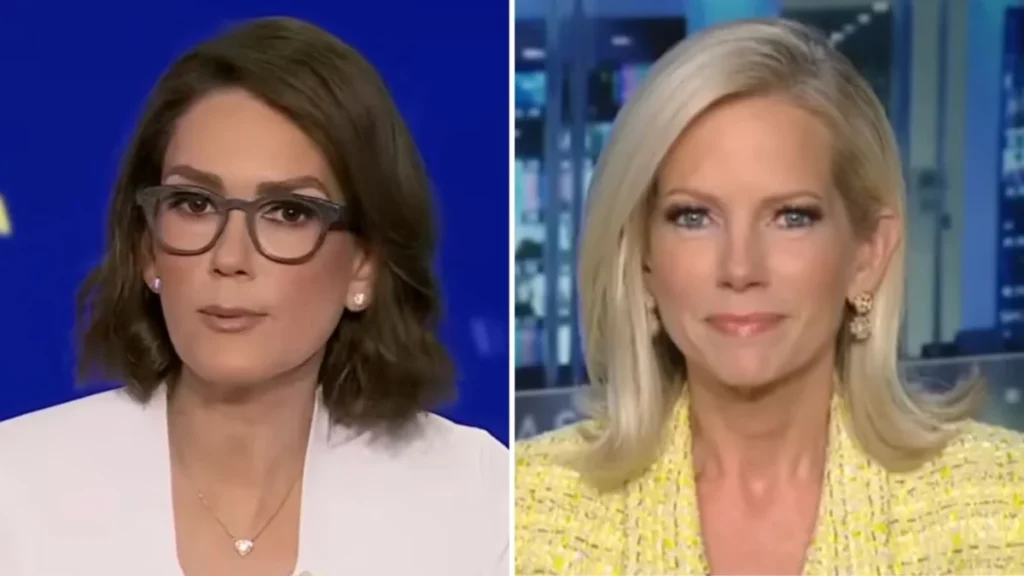

President Donald Trump, while reportedly managing international affairs including a "war with Iran," directed public criticism toward two Fox News personalities, liberal commentator Jessica Tarlov and anchor Shannon Bream, on Monday evening, April 6. The broadside, issued via a post on his Truth Social platform, marked a notable instance of a prominent political figure publicly calling for the dismissal of television hosts and questioning journalistic practices.
Presidential Critique of Fox News Talent
In his Truth Social post, President Trump explicitly called for the termination of Jessica Tarlov’s role at Fox News. He stated, "For Fox executives only, take Jessica Tarlov off the air. She is, from her voice, to her lies, and everything else about her, one of the worst ‘personalities’ on television, a real loser! People cannot stand watching her. Thank you for your attention to this matter!" This statement was amplified by a link to the Truth Social post itself, indicating a deliberate effort to disseminate his dissatisfaction.
Jessica Tarlov serves as a liberal voice on the Fox News program The Five, a panel discussion show known for its often-contentious political debates. Her frequent critiques of the Trump administration have evidently drawn the president’s attention and ire. This is not the first time Trump has publicly addressed Tarlov’s on-air presence. In a prior incident last month, he called into The Five during an episode when Tarlov was not present. During that appearance, he informed the panel that he was "not a fan" of the Democratic Party strategist, adding, "I think your show would be better without her, but who am I to say that? I think it would be a lot better."
Tarlov, in response to the president’s earlier remarks and now his latest public call for her dismissal, took to the social media platform X (formerly Twitter). She quipped, "Was so bummed to miss the show today! But I definitely would’ve said he’s even inflating his numbers to 42%!" This retort alluded to Trump’s approval ratings, suggesting that he was preoccupied with public perception and political metrics.
The president’s criticism extended beyond Tarlov to Shannon Bream, the host of Fox News Sunday. Trump addressed Bream directly in his post, stating, "Tell Shannon Bream of FoxNews that it’s not the Save Act, it’s the Save America Act, a big difference!" This comment suggests a perceived inaccuracy in Bream’s reporting or commentary regarding legislative naming conventions.
Furthermore, Trump criticized Bream’s interview choices and perceived leniency with guests. He elaborated, "Also, when she insists on having lightweight Democrat Congressmen, such as Jake Auchincloss, on her not very hard hitting show, she should correct them when they spew out Democrat propaganda and lies. She never does! I always close deals, unlike the Dems, and did great with China in every way, also, unlike the Dems!" This assertion implies a belief that Bream failed to adequately challenge Democratic politicians during interviews, allowing what Trump termed "propaganda and lies" to go unchecked. He contrasted this with his own perceived successes in deal-making, particularly concerning China.
Context and Background of the Criticisms
The timing of President Trump’s remarks, occurring amidst what the original report described as his "war with Iran," raises questions about his priorities and the strategic use of his public platform. While geopolitical events often command presidential attention, the decision to publicly engage with media personalities on this particular evening suggests a deeply felt grievance or a calculated political maneuver.
Jessica Tarlov’s role as a liberal commentator on a network that broadly leans conservative places her in a position to offer dissenting viewpoints. Her engagement on The Five often involves challenging the perspectives of her more conservative colleagues, which naturally leads to friction with those who hold similar political ideologies to the president. Her consistent opposition to the Trump administration’s policies and rhetoric has made her a frequent target of conservative criticism, but this public call for her termination from the former president marks a significant escalation.
Shannon Bream, as the anchor of Fox News Sunday, is tasked with conducting interviews and moderating discussions on a range of political issues. The president’s critique of her interview with Congressman Jake Auchincloss, and his broader dissatisfaction with her questioning of Democratic guests, points to his expectation that media figures should actively confront and debunk political opponents. His assertion that Bream "never does" implies a standard of journalistic engagement that aligns with his own political objectives.
The "Save Act" versus "Save America Act" comment is a specific instance of Trump taking issue with factual reporting. Legislative titles can sometimes be a point of contention, and Trump’s insistence on the correct name suggests a meticulousness in his own political branding and a sensitivity to how his initiatives are presented. The "Save America Act" likely refers to legislation or policy initiatives framed under Trump’s broader "America First" agenda.
Public Reaction and Broader Implications
The reactions on social media platforms, as reflected in the original report, indicate a significant segment of the public finds President Trump’s intervention in media staffing and journalistic practices to be extraordinary and even concerning. Users on X expressed sentiments such as Tarlov "lives rent free in his head," and that Fox News "needs more people like her" to offer diverse perspectives. Another user described the situation as "bizzaro world," emphasizing the perceived abnormality of a former president dictating personnel decisions to a media organization. Comments like "He’s such a baby. This is his priority? Unglued," and "Give Jessica a raise actually. The amount of bs she deal with from her coworkers is ridiculous," highlight a perception of pettiness and misplaced focus. One user’s comment, "Trump wants to bomb everything & control everything. He truly thinks he’s a king. And his enablers let him do it," suggests a broader critique of Trump’s leadership style and perceived authoritarian tendencies.
This pattern of Trump publicly criticizing female reporters and commentators is not new. The original article references a February incident where he attacked CNN’s Kaitlan Collins, calling her "so bad," "the worst reporter," and remarking on her perceived lack of smiling, attributing it to her allegedly not telling the truth. He also broadly condemned CNN as a "very dishonest organization."
At the time of those earlier criticisms, White House spokesperson Abigail Jackson offered a defense, stating that Trump’s attacks "have nothing to do with gender" and "everything to do with the fact that the President’s and the public’s trust in the media is at all time lows." This defense suggests a strategy of framing such criticisms as responses to perceived media bias and untrustworthiness, rather than personal animus or gendered attacks. However, the repeated targeting of women, and the specific nature of the criticisms (e.g., voice, perceived dishonesty, lack of smiling), have led many observers to question this assertion.
Analysis of Implications
President Trump’s direct appeals to media executives to remove specific commentators raise significant questions about the relationship between political power, media institutions, and journalistic independence. While politicians have always engaged with the media, and often expressed displeasure with coverage, direct public calls for firings from a former president are a potent form of pressure.
- Influence on Media Operations: Such public pronouncements can create an environment of fear or pressure within media organizations. Executives might feel compelled to respond to such high-profile criticism, potentially impacting editorial decisions or talent management. This can undermine the perception of editorial autonomy and create a chilling effect on critical reporting.
- Erosion of Trust: When political figures appear to dictate who should or should not be on air, it can further erode public trust in the media’s objectivity. Audiences may question whether hosts are able to speak freely or if their positions are influenced by political pressure.
- Political Strategy: For Trump, these public attacks can serve multiple purposes. They can rally his base, who often view mainstream media and critical commentators with suspicion. They can also be seen as a tactic to control the narrative and punish perceived disloyalty or dissent within the media landscape, even on networks that are generally considered sympathetic to his politics.
- The Role of "Personalities": Trump’s framing of Tarlov as a "personality" rather than a commentator or journalist might be a deliberate attempt to diminish her professional standing and frame her as a mere entertainer whose performance is unsatisfactory. This aligns with a broader trend of political discourse that often blurs the lines between substantive policy debate and entertainment value.
- Precedent and Norms: The repeated nature of these criticisms, and the directness of the appeals, set a potential precedent for future political engagement with the media. It challenges established norms of media criticism, which typically involve public commentary on reporting or editorial stances, rather than direct demands for personnel changes.
The "war with Iran" mention in the original text, though brief, provides a stark contrast. The fact that a former president, reportedly engaged in managing international crises, dedicates public energy to critiquing specific television personalities suggests a significant allocation of his focus and communicative bandwidth. This juxtaposition highlights the unique communication style and priorities that have defined Trump’s political career. The "Save America Act" comment, in particular, underscores his engagement with legislative details and his desire for accurate representation of his policy initiatives, even as he critiques the perceived failings of journalists in accurately reporting or challenging opposing viewpoints.
The broader implications of these actions extend to the health of democratic discourse. A robust and independent media is often considered a cornerstone of a functioning democracy, providing checks and balances on political power. When that relationship becomes fraught with direct intervention and public condemnation of individual journalists, it raises concerns about the future of open and critical public debate. The reactions from social media users indicate that a significant portion of the public recognizes the unusual nature of these presidential pronouncements and expresses concern over the potential impact on journalistic integrity and political norms.