
The quiet, pastoral landscape of the Italian countryside near Parma serves as the unlikely setting for one of the most significant art crimes of the decade. The Magnani-Rocca Foundation, a private museum housed in the historic "Villa dei Capolavori" (Villa of Masterpieces), was the target of a surgical strike on the night of March 22, 2026. In a heist lasting approximately 180 seconds, a group of thieves breached the museum’s front entrance and stripped three invaluable works from the walls: Pierre-Auguste Renoir’s Les Poissons, Paul Cézanne’s Still Life With Cherries, and Henri Matisse’s Odalisque on the Terrace. A fourth masterpiece was abandoned on the floor after the facility’s security system finally triggered an alarm.
The estimated market value of the stolen trio exceeds $10 million, with the Renoir alone accounting for roughly $7 million of that figure. However, the true cost to cultural heritage is incalculable. For over a week following the theft, the foundation’s leadership maintained a facade of normalcy, keeping the museum open to the public while investigators worked in the shadows. The silence was only broken when Rai, Italy’s national broadcaster, leaked the details of the security breach. This incident is not an isolated anomaly; it is part of a disturbing trend of increasingly sophisticated art heists targeting underfunded institutions.

The Modern Landscape of Art Crime
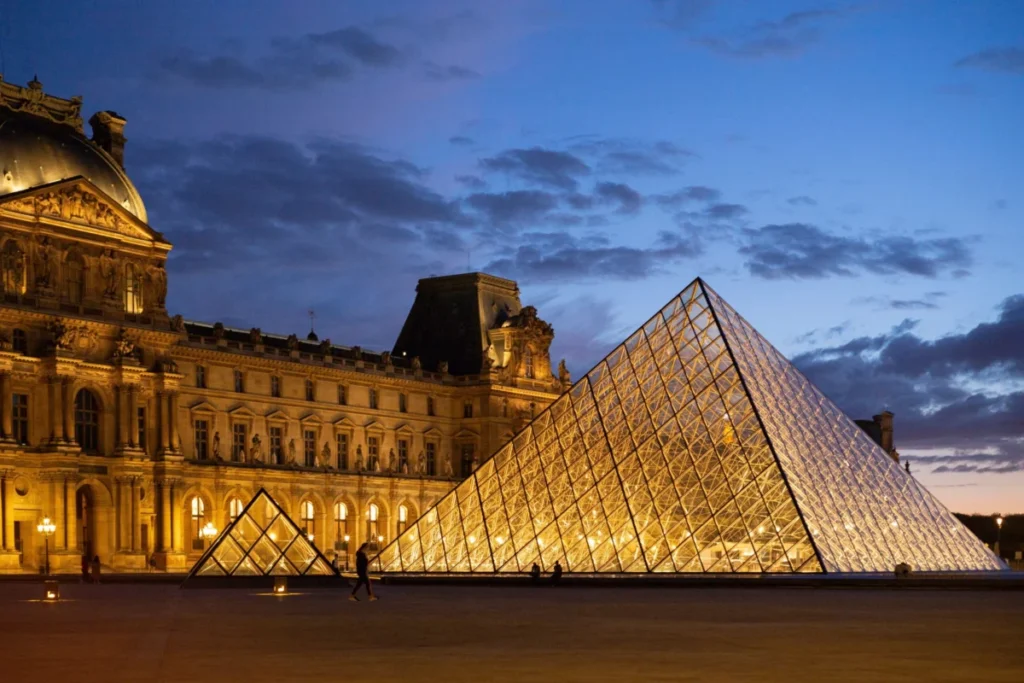
The Parma theft followed closely on the heels of a spectacular robbery at the Louvre in Paris. On October 19, 2025, four individuals disguised as construction workers utilized a truck-mounted mechanical lift to access the second-story windows of the Galerie d’Apollon. During public visiting hours, the group smashed through the glass and used industrial angle grinders to bypass display cases containing the French Crown Jewels. In less than eight minutes, they seized eight pieces of royal history, including Empress Marie-Louise’s emerald necklace and Queen Marie-Amélie’s sapphire set.
Security experts suggest that the rise in such brazen acts is fueled by a "new generation" of criminals who leverage decentralized technologies. While high-profile masterpieces are nearly impossible to sell on the open market, the advent of cryptocurrency and private, encrypted communication channels has simplified the process of laundering stolen assets or securing ransoms from insurance companies and private collectors. Furthermore, many museums, grappling with post-pandemic budget cuts and staffing shortages, find themselves ill-equipped to defend against professional-grade incursions.
A History of Audacity: The Mona Lisa, 1911
The modern era of art theft traces its roots back to a crime that inadvertently created a global icon. In August 1911, Vincenzo Peruggia, an Italian handyman who had been hired by the Louvre to install protective glass, hid in an art-supply closet overnight. On a Monday morning, while the museum was closed for maintenance, Peruggia removed Leonardo da Vinci’s Mona Lisa from its hooks, concealed the 18-pound wooden panel under his smock, and exited the building.

The theft went unnoticed for 28 hours. The ensuing media firestorm was unprecedented, catapulting the Mona Lisa from a respected scholarly work to the most famous painting in the world. The investigation was so desperate that it led to the arrest of poet Guillaume Apollinaire and the interrogation of a young Pablo Picasso. Peruggia kept the painting in his apartment for two years before attempting to sell it to an art dealer in Florence, claiming he wished to return the work to its "rightful" Italian home. He was sentenced to a mere eight months in prison, but the painting’s celebrity was permanently cemented.
The Mystery of the Gardner Museum, 1990
On March 18, 1990, the Isabella Stewart Gardner Museum in Boston became the site of the most expensive art heist in history. Two men dressed as police officers gained entry by claiming to respond to a disturbance. Once inside, they overpowered the two young security guards, binding them with duct tape in the basement.
Over the next 81 minutes, the thieves systematically—if inconsistently—selected 13 works of art. Their haul included Vermeer’s The Concert, one of only 34 known works by the artist and currently the most valuable missing painting in existence. They also cut Rembrandt’s The Storm on the Sea of Galilee from its frame. Despite the precision of the entry, the thieves bypassed far more valuable works in the same rooms, leading to decades of speculation regarding their motives and expertise. Today, the museum maintains empty frames on its walls, honoring the founder’s will that the collection remains unchanged. The FBI estimates the value of the missing works at $500 million, yet the trail has remained cold for over 34 years.

Organized Crime and the Van Gogh Museum, 2002
Not all heists require elaborate disguises or insider knowledge. In 2002, Octave Durham and an accomplice used a simple ladder to scale the roof of the Van Gogh Museum in Amsterdam. After breaking a skylight, they rappelled into the gallery and stole View of the Sea at Scheveningen and Congregation Leaving the Reformed Church in Nuenen. Together, the works were valued at $30 million.
Durham was eventually captured, but the paintings remained missing for 14 years. It was only in 2016 that Italian anti-mafia police, investigating the Camorra crime syndicate, discovered the canvases in a farmhouse near Naples. The recovery highlighted the symbiotic relationship between art theft and organized crime, where masterpieces are often used as collateral in drug deals or as "get out of jail free" cards during plea negotiations.
The "Spider-Man" of Paris, 2010
Vjeran Tomic, known as "Spider-Man" for his climbing prowess, executed one of the most significant heists in French history at the Musée d’Art Moderne de la Ville de Paris. On May 19, 2010, Tomic entered the museum through a window with a faulty security sensor—a maintenance issue that had been neglected for weeks.

Tomic had been hired to steal a single work by Fernand Léger, but upon finding the security systems unresponsive, he decided to take four additional masterpieces by Picasso, Matisse, Braque, and Modigliani. The total value reached $123 million. While Tomic and his conspirators were eventually caught, the paintings were never recovered. One accomplice claimed he panicked and threw the works into a trash compactor. If true, these irreplaceable fragments of the modernist movement are now lost to a Parisian landfill.
The Tragic Ashes of the Kunsthal Heist, 2012
The 2012 robbery of the Kunsthal Museum in Rotterdam remains one of the most heartbreaking chapters in art history. In a lightning-fast raid, thieves took seven paintings, including works by Monet, Gauguin, and Lucian Freud, which were on loan from the Triton Foundation.
The suspects, a group of Romanian nationals, were arrested within months. However, the mother of one of the thieves, Olga Dogaru, claimed she had burned the paintings in her wood-burning stove to protect her son from prosecution. Forensic analysts later found lead, zinc, and copper-based pigments—consistent with 19th-century oil paints—among the ashes in her home. While she later recanted the story, the paintings have never resurfaced, leaving a grim possibility that millions of dollars of cultural history were reduced to soot in a rural kitchen.

Analysis of Implications and Future Security
The recurring theme across these heists is the failure of basic security protocols. In the 2025 Louvre heist, it was revealed that only 39 percent of the museum’s rooms were monitored by functional cameras, and the surveillance system’s password was allegedly the word "Louvre." Such lapses suggest a dangerous complacency within the world’s most prestigious institutions.
The recovery rate for stolen art remains dismal, estimated by some experts at less than 10 percent. As thieves become more adept at using technology to hide their tracks, museums must pivot toward advanced biometric security, GPS-embedded frames, and AI-driven behavioral monitoring to detect threats before they manifest.
The Magnani-Rocca theft serves as a final warning. When private institutions in quiet towns can be stripped of their treasures in minutes, the entire global collection of human achievement is at risk. Without a coordinated international effort to tighten security and disrupt the black-market pipelines for cultural goods, the empty frames seen in Boston may become a common sight in galleries across the globe. The preservation of art is not merely a matter of insurance and aesthetics; it is the protection of the collective memory of civilization.