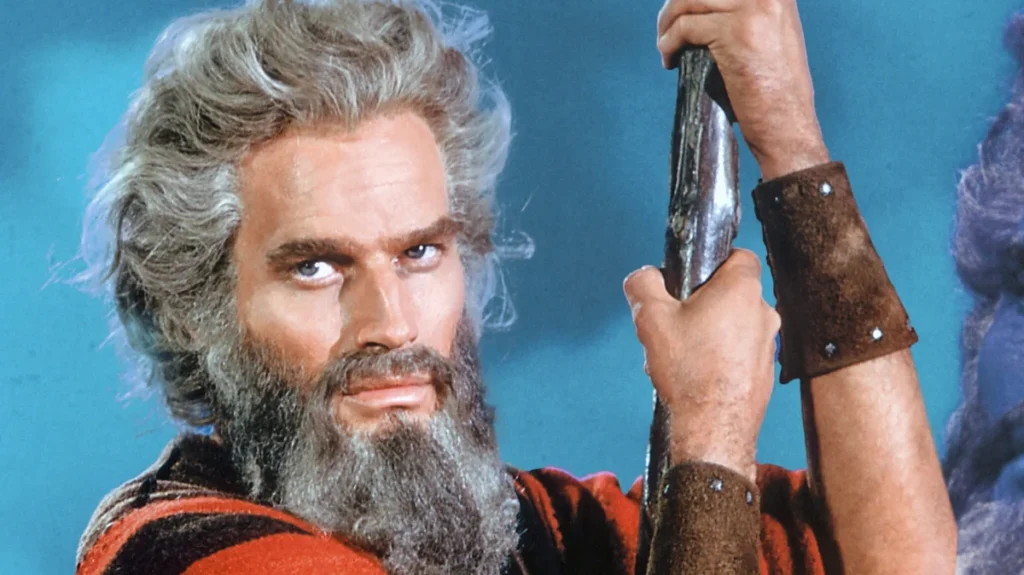

The enduring legacy of Cecil B. DeMille’s 1956 religious epic, The Ten Commandments, continues to captivate audiences as it maintains its perennial presence on television, particularly around the Easter season. While ABC has long been the traditional broadcaster of this nearly four-hour masterpiece, this year marks a notable shift with UPtv, a cable and satellite network dedicated to uplifting entertainment, scheduling the film ahead of ABC’s annual broadcast. This strategic programming highlights the film’s sustained cultural relevance and its deep connection to religious observances.
UPtv will feature The Ten Commandments on Palm Sunday, March 29, at 9/8c, followed by another airing on Good Friday, April 3, at 4/3c. In contrast, ABC has slated its traditional broadcast for Saturday, April 4, at 7/6c. This dual presence across different platforms underscores the film’s broad appeal, reaching both those who follow traditional network broadcasts and viewers seeking out specific thematic content on specialized channels.
A Broadcast Phenomenon Begins
ABC’s relationship with The Ten Commandments dates back to February 18, 1973, when the film was first aired on the network. The initial broadcast drew an impressive 24 million viewers, a testament to its powerful storytelling and the star-studded cast led by Charlton Heston as Moses. The film, a monumental undertaking by director Cecil B. DeMille, also featured Yul Brynner as the formidable Rameses, Yvonne De Carlo as Sephora, and Edward G. Robinson as Dathan. DeMille, renowned for his lavish productions and epic scale, meticulously recreated the biblical narrative, bringing to life the story of Moses, the Exodus, and the divine revelation of the Ten Commandments.
From 1973 onward, the film’s airing became an annual ritual for ABC, a cornerstone of its Easter programming. This tradition continued uninterrupted for decades, solidifying its place in the collective consciousness of American television viewers. The only significant break in this long-standing tradition occurred in 1999, a year when the film was not broadcast. This deviation from the norm reportedly elicited a substantial response from viewers, who, accustomed to the annual viewing, expressed their disappointment and eagerness for the film’s return. The absence of the film for that single year only served to underscore its deep-rooted significance in the holiday viewing schedule, prompting a swift return to the established pattern in subsequent years.
The Enduring Appeal of DeMille’s Masterpiece
Cecil B. DeMille’s The Ten Commandments is not merely a film; it is a cinematic event. Released in 1956, it was a colossal production that pushed the boundaries of filmmaking technology and storytelling for its era. Filmed in VistaVision and Technicolor, the movie boasts breathtaking cinematography, grand set designs, and crowd scenes involving thousands of extras, particularly in its iconic depictions of the parting of the Red Sea and the delivery of the commandments on Mount Sinai. The film’s budget was reportedly around $12 million, a staggering sum at the time, making it one of the most expensive films ever made up to that point. Its immense scale and biblical grandeur were designed to awe and inspire, themes that resonate powerfully with religious and secular audiences alike.
Charlton Heston’s portrayal of Moses is widely considered one of his most iconic roles. His commanding presence, gravitas, and ability to convey profound emotion were perfectly suited to the character’s journey from a prince of Egypt to a reluctant prophet leading his people to freedom. Yul Brynner’s portrayal of Rameses provided a compelling antagonist, embodying the tyrannical power and stubborn pride that stood in opposition to Moses’ divine mission. The supporting cast, featuring seasoned actors like Anne Baxter as the temptress Nefretiri and Vincent Price as the foreman Baka, further enriched the narrative with their compelling performances.
The film’s narrative closely follows the biblical account of Moses, from his miraculous survival as an infant, his upbringing in the Egyptian royal court, his flight into the wilderness, his encounter with the burning bush, and his monumental task of leading the Israelites out of slavery in Egypt. The Exodus narrative, with its themes of liberation, faith, and divine intervention, has a timeless quality that continues to speak to audiences across generations. The film meticulously depicts the plagues of Egypt, the parting of the Red Sea, and the subsequent journey through the wilderness, culminating in the revelation of the Ten Commandments, a foundational moral and ethical code for Western civilization.
Supporting Data and Broadcast Trends
The consistent programming of The Ten Commandments around Easter is indicative of a broader trend in television viewership: the reliance on established, holiday-themed content. During major religious holidays, networks often turn to films and miniseries that align with the spirit of the season, drawing on a shared cultural heritage. This strategy is particularly effective for films that have become synonymous with these observances.
For instance, the broadcast of The Ten Commandments on ABC has historically been a significant ratings event. While specific ratings for each annual airing are not always publicly detailed, the film’s sustained presence suggests it consistently performs well, especially when compared to regular programming. The fact that ABC chose to air it for over 50 years, and that its absence in 1999 caused a stir, points to a loyal and substantial viewership.
The decision by UPtv to also feature the film indicates a growing market for faith-based and inspirational content. UPtv’s target demographic often seeks programming that aligns with their values and beliefs, and The Ten Commandments fits this niche perfectly. By scheduling it on Palm Sunday and Good Friday, UPtv is directly engaging with audiences observing these pivotal days in the Christian calendar, potentially drawing viewers who might otherwise be consuming traditional network broadcasts or seeking alternative viewing options.
The shift in programming also reflects the evolving landscape of media consumption. While traditional broadcast television remains a significant force, cable channels and streaming services have carved out distinct niches, catering to specific audience interests. The dual broadcast of The Ten Commandments allows for wider accessibility and caters to different viewing habits.
Broader Impact and Implications
The enduring popularity of The Ten Commandments can be attributed to several factors. Firstly, its epic scale and visual splendor remain impressive, even by contemporary filmmaking standards. The sheer ambition of DeMille’s vision, coupled with the groundbreaking special effects of its time, creates a cinematic experience that is both grand and immersive.
Secondly, the film’s narrative is deeply rooted in a foundational religious and moral text. The story of Moses and the Exodus is a cornerstone of Judeo-Christian tradition, offering themes of faith, perseverance, redemption, and the struggle against oppression. These themes resonate universally and are particularly poignant during the Easter season, which commemorates the crucifixion and resurrection of Jesus Christ, a narrative that shares common threads of sacrifice and salvation.
Thirdly, the film’s cast, featuring some of Hollywood’s most recognizable and respected actors, brings a level of gravitas and performance quality that elevates the material. Charlton Heston, in particular, became inextricably linked with the role of Moses, embodying the character’s strength, conviction, and humanity.
The broadcast of The Ten Commandments also serves as a cultural touchstone, a shared experience that connects generations of viewers. For many, watching the film around Easter has become a family tradition, passed down from parents to children. This generational continuity reinforces the film’s status as a cultural artifact, as much as a religious epic.
The decision by UPtv to program The Ten Commandments ahead of ABC’s annual broadcast might also be seen as a strategic move to capture audience attention during a highly competitive viewing period. By offering the film on key religious holidays, UPtv positions itself as a destination for culturally relevant and spiritually resonant content. This could potentially draw new viewers to the network and strengthen its brand as a purveyor of uplifting entertainment.
Furthermore, the continued broadcast of such films raises questions about the role of religious epics in contemporary media. In an era of diverse storytelling and evolving audience preferences, the sustained appeal of The Ten Commandments suggests that there remains a significant appetite for narratives that explore faith, history, and moral principles on a grand scale. These films not only entertain but also provide an opportunity for reflection and connection to timeless stories that have shaped Western civilization.
The film’s legacy is also intertwined with the broader history of Hollywood’s engagement with religious themes. Cecil B. DeMille was a pioneer in this genre, and his films often aimed to blend entertainment with moral instruction. The Ten Commandments stands as a prime example of this philosophy, delivering a powerful narrative that is both historically significant and spiritually inspiring. Its continued presence on television screens is a testament to its enduring power and its ability to transcend time, speaking to audiences with its message of liberation, divine guidance, and the fundamental tenets of moral living.