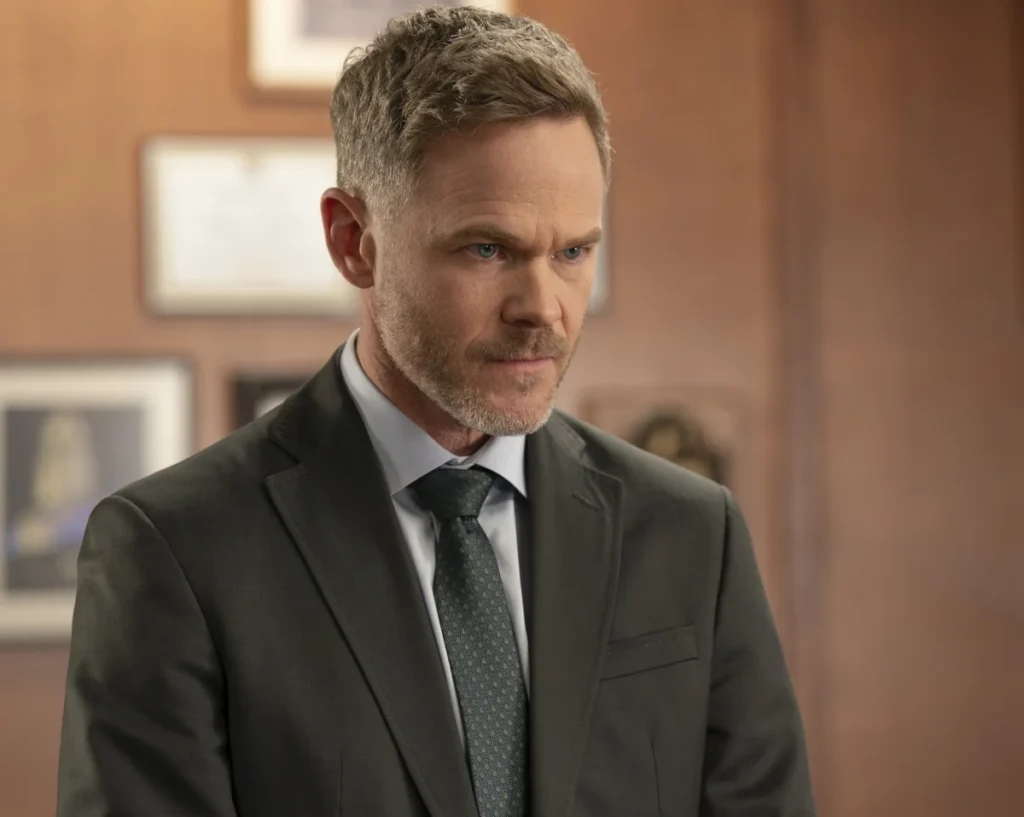

The latest installment of ABC’s hit procedural drama, The Rookie, delivered a significant shake-up for its dedicated fanbase with Season 8 Episode 14, airing on Monday, April 6th. The episode, which saw the return of Michael Trucco as Sean, lived up to his promise of a "fun twist," primarily centered around a pivotal and surprising development for Deputy District Attorney Wesley Evers, portrayed by Shawn Ashmore. Beyond the dramatic shifts in the DA’s office, the episode also introduced a new, albeit troubled, paternal figure to the precinct’s orbit, adding layers of complexity to an ongoing investigation.
Wesley Evers’ Abrupt Exit and a New Legal Alliance
The narrative trajectory for Wesley Evers took a sharp turn as he walked into the District Attorney’s office, bracing for what he believed would be his final day. Having recently lost a hard-fought election to Vivian Harmon (Necar Zadegan), Wesley was poised to return to his roots as a defense attorney. This decision was not made lightly; he had already taken steps to secure his professional future by contacting his former landlord, indicating a clear intention to re-establish his private practice. His colleagues, Detective Angela Lopez (Alyssa Diaz) and Detective Nyla Harper (Mekia Cox), expressed their concern, focusing on ensuring a smooth handover of their ongoing cases, a testament to the trust and professional respect they held for Wesley.
However, Vivian Harmon, upon Wesley’s arrival, immediately presented a different vision. She proposed a collaborative approach, aiming to steer the DA’s office in a more positive and effective direction. This overture, while seemingly an olive branch, was met with skepticism by Sean, who cautioned Wesley against being swayed by Vivian’s rhetoric. Sean, aware of Vivian’s political maneuvering and the fact that she could not simply accept his resignation with three other attorneys already having departed the office, understood the delicate political dance at play. He also offered a personal apology to Wesley for not being the one to challenge Vivian in the election, a detail that subtly revealed a personal stake in the ongoing political landscape, likely tied to his son’s four-month sobriety.
Sean’s perspective on remaining within the DA’s office was rooted in a desire for systemic change. He reminded Wesley of their shared initial objective: to reform the culture from within, shifting the focus from punitive measures to a more justice-oriented approach. Wesley, however, harbored significant doubts, particularly given Vivian’s campaign platform, which was heavily centered on a tough-on-crime stance. The inherent tension between their ideologies created a palpable friction. Despite Wesley’s reservations, Sean urged him to consider staying, at least for one more day, to allow him the opportunity to prove that their efforts to effect change could still yield results.
The situation escalated when Vivian presented Wesley and Sean with a daunting backlog of 27 felony arrests awaiting prosecution, cases that were deemed unmanageable for immediate trial. Wesley’s pointed question, "Why? Did you lose some ADAs or something?" underscored the apparent strain on the office’s resources. Vivian’s directive was clear: secure plea deals for all these cases. The severity of the charges, however, proved to be a significant obstacle. Wesley and Sean, in their subsequent meetings with the defendants, made it unequivocally clear that they would not endorse plea deals under such harsh conditions. When they ultimately informed Vivian that no one had signed the agreements, the stalemate reached its breaking point.
In a decisive move, Wesley submitted his resignation once more, this time with a stark pronouncement wishing Vivian spectacular failure. Sean, mirroring Wesley’s action, also resigned. The episode then delivered a compelling twist as Sean proposed a new venture: "The Law Firm of Del Monte & Evers." Wesley, with a touch of wry humor, pointed out that since he had never officially practiced as a defense attorney, the firm should logically be named "Evers & Del Monte." This unexpected partnership has generated considerable buzz among viewers, who expressed eagerness to see this new legal duo in action, hinting at a compelling new narrative thread for the series. The formation of this firm signifies a potential shift in the legal landscape of the show, moving away from the prosecution side and into the adversarial arena of defense, offering a fresh perspective on the justice system.
Introduction of a Dysfunctional Father Figure and a Teen in Peril
Parallel to the dramatic events unfolding in the DA’s office, the episode also delved into a separate investigation led by Officers Nolan (Nathan Fillion) and Chen (Melissa O’Neil). They were tasked with investigating the murder of a teacher at Dash’s school. This investigation brought them face-to-face with Dash’s father, a character whose introduction was as chaotic as his described persona. Dash himself had painted a vivid, albeit unflattering, portrait of his father, referring to him as someone who "lurks in the background like the Babadook," a specialist in "bad decisions and hot cougars," and who makes an appearance every six to eight months to remind everyone why his mother was granted sole custody.
This colorful description proved to be remarkably accurate, with the role of Dash’s father being filled by Freddie Stroma, known for his role in Peacemaker. The character’s questionable ventures included the creation of a "breakfast soup" and a unique alcoholic beverage, a blend of whiskey and tequila. It was this latter endeavor that had landed him in significant financial trouble, owing money to unsavory individuals. Adding to his unreliability, Dash’s father demonstrated a profound lack of attentiveness, failing to even grasp the gravity of his son’s teacher’s murder, nor acknowledging that Dash had witnessed the body.
The consequences of the father’s irresponsibility directly impacted Dash, whose life was put in danger due to his father’s mounting debts. Officer Nolan intervened, stepping in to protect the teenager. In a moment of rare self-awareness, Dash’s father acknowledged his shortcomings as a parent, recognizing his son’s need for a positive role model. However, Dash, clearly scarred by years of neglect and disappointment, firmly rejected his father, declaring their relationship over. He articulated his pain, stating that his father had never done anything fatherly for him and that his father’s sole concern appeared to be himself.
Nolan, observing this fraught interaction, offered Dash a crucial piece of advice: to listen to his father only if he was willing to change. More importantly, Nolan assured Dash that he would be there for him, providing a stable and supportive presence that had been conspicuously absent from his life. This storyline highlights the broader theme of mentorship and support systems within the show, emphasizing the impact of positive adult figures on vulnerable youth, especially when family structures are compromised. The introduction of Dash’s father also serves to explore the multifaceted nature of crime and its ripple effects, extending beyond immediate perpetrators to encompass the collateral damage inflicted upon families.
Analysis and Broader Implications
The narrative threads woven into Season 8 Episode 14 of The Rookie suggest a deliberate expansion of the show’s thematic scope. The introduction of Vivian Harmon as a new antagonist within the DA’s office presents an opportunity to explore the complexities of institutional politics and the challenges of enacting genuine reform within established systems. Her tough-on-crime stance, while a common political platform, can be examined through the lens of its impact on individuals and the broader justice system, particularly concerning plea deals and prosecutorial discretion. The departure of Wesley and Sean from prosecution, and their formation of a defense firm, signifies a potential pivot for the series, allowing for deeper exploration of the defense attorney’s role, the nuances of legal strategy, and the ethical considerations inherent in representing clients accused of crimes. This shift could provide a fresh dynamic and introduce new storytelling possibilities.
Furthermore, the storyline involving Dash and his father delves into themes of parental responsibility, neglect, and the enduring impact of familial relationships on a child’s development. Freddie Stroma’s portrayal of a self-absorbed and irresponsible father provides a stark contrast to the dedication and mentorship displayed by characters like Nolan. This subplot underscores the show’s commitment to exploring the human element behind criminal activity, demonstrating how personal failings and difficult family dynamics can contribute to a cycle of hardship. The intervention of Nolan and his assurance of support for Dash highlight the importance of community and surrogate family structures for young people facing adversity.
The ensemble nature of The Rookie has always been a strength, allowing for interwoven storylines that explore various facets of law enforcement and its impact on the community. The dual focus of this episode—the political machinations within the legal system and the personal struggles of a young individual—demonstrates the show’s ability to balance procedural elements with compelling character-driven narratives. As the season progresses, the implications of Wesley and Sean’s new legal partnership, the evolving dynamics within the DA’s office under Vivian Harmon, and the potential for Dash to find a stable support system will undoubtedly be key areas of focus, promising continued engagement for viewers. The introduction of new characters and the evolution of existing relationships are crucial for maintaining narrative momentum and exploring the multifaceted realities of the justice system and the lives it touches.