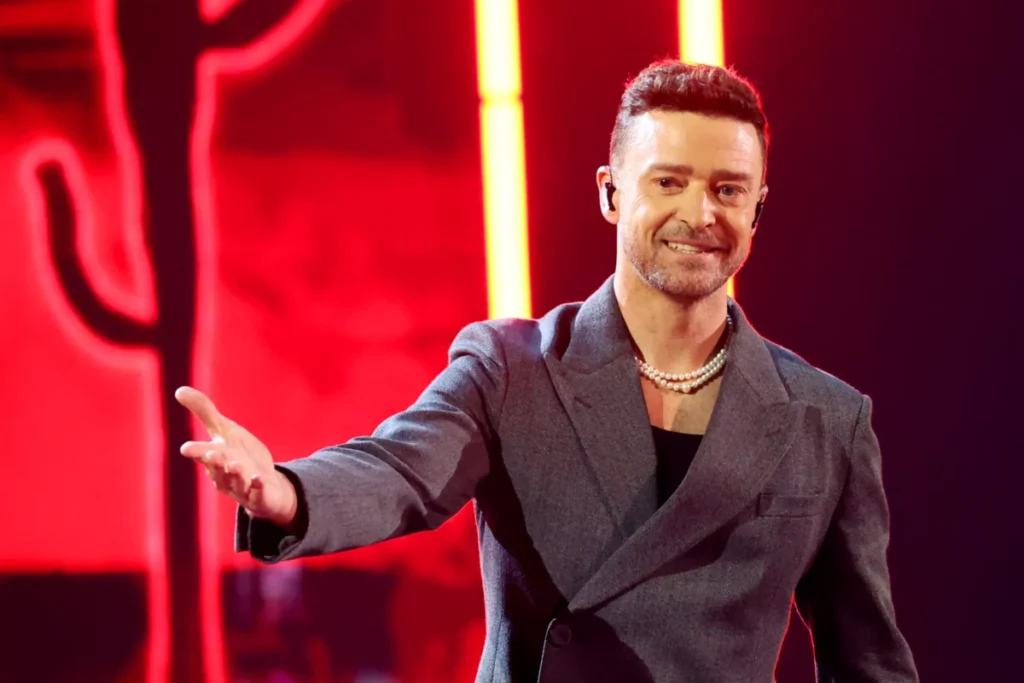

The controversial and highly memeable police body-camera footage depicting pop superstar Justin Timberlake’s June 2024 arrest for driving under the influence in Sag Harbor, a prominent eastern Long Island community, was finally made public late last week, culminating a protracted legal skirmish initiated by the singer against the small former whaling town to suppress the "embarrassing" material. This intense legal dispute ultimately led to a negotiated release, featuring strategic redactions of specific moments that Timberlake’s legal counsel argued were so sensitive they constituted a significant breach of the multi-Grammy winner’s personal privacy.
Chronology of an Incident: From Sag Harbor Streets to Global Headlines
The incident unfolded in June 2024, when Timberlake, known globally for his music and acting career, was visiting the affluent beach town of Sag Harbor, a jewel in the Hamptons’ crown. His evening took an unexpected turn when he was pulled over by local law enforcement officers following a series of observed traffic infractions. These infractions swiftly escalated into a DUI charge, leading to his arrest. The standard procedure for such an offense saw Timberlake asked to perform a series of sobriety tests on the roadside, subsequently questioned by officers while handcuffed at the small town’s precinct, and ultimately placed in a holding cell alone for the remainder of the night. Footage capturing all these critical moments, amounting to approximately eight hours of material, was released by the Sag Harbor Police Department on a Friday in March 2025, a full 21 months after initial requests were lodged by various news outlets under the Freedom of Information Act (FOIA).
The period following the arrest saw Timberlake’s legal team working diligently to manage the fallout. In the summer of 2024, a Suffolk County judge accepted Timberlake’s guilty plea as part of a pre-arranged deal. This agreement significantly lessened his potential punishment, allowing the pop star to circumvent further jail time. As stipulated by the plea deal, Timberlake committed to completing 25 to 40 hours of community service and remitting an associated fine. This resolution, while addressing the legal ramifications of the DUI, did not, however, preclude the possibility of the arrest footage eventually seeing the light of day.
The Legal Battle for Transparency: FOIA vs. Privacy
The prospect of eight hours of footage related to the Grammy-winning artist’s arrest becoming publicly accessible was, predictably, a development neither the former boy band frontman nor his extensive public relations team desired. As soon as the Sag Harbor Police Department announced its intention to release the footage in early March 2025, Timberlake’s legal representatives swiftly filed for a temporary restraining order (TRO) and a preliminary injunction. Their objective was clear: to prevent the town from making the potentially damaging footage public.
The legal arguments unfolded the following Monday, when Timberlake’s attorneys met with a Sag Harbor judge. Their core contention was that releasing the unedited footage would constitute an egregious invasion of privacy. They presented two primary requests: either a complete block on the release of the material or, alternatively, a private judicial review of the potentially embarrassing content. From a strictly legal perspective, the attorneys argued, such a review would ensure that any content not explicitly subject to disclosure under New York’s Freedom of Information Law (FOIL) would be appropriately excluded.
Attorney Edward Burke Jr., representing Timberlake, articulated the gravity of their concerns, asserting that the unredacted release would "devastate" Timberlake’s privacy by revealing "intimate, highly personal and sensitive details." He further warned that such a release would inflict "severe and irreparable harm" to the singer’s meticulously cultivated reputation, exposing him to "public ridicule and harassment." The legal back-and-forth between Timberlake’s legal team and the village proved intense, but ultimately led to a crucial agreement. The footage was finally released on Friday, but only after both parties consented to a partially redacted version, a compromise that aimed to balance public transparency with the singer’s privacy claims.
In a statement provided to The Hollywood Reporter, the law firm of Vincent Toomey, representing the Village and Police Department, affirmed their position: "Since Justin Timberlake’s arrest, the Village and Police Department have attempted to comply with the mandates of the Freedom of Information Law. We are pleased the litigation regarding the release of video footage related to Mr. Timberlake has been resolved and the Village is able to comply with its statutory obligation to release the material that is subject to disclosure under FOIL." Attempts by THR to obtain further comments from Timberlake’s attorneys on the Monday following the release were unsuccessful.
Key Moments from the Footage: A Digital Sensation
The release of the redacted footage immediately ignited the internet over the subsequent weekend, transforming several moments into viral sensations, widespread memes, and fodder for intense public debate. One significant point of contention revolved around the perceived treatment of the pop star by the police. In one particularly striking clip, Timberlake is seen handcuffed to a table while being questioned, a sight that many found unsettling given his celebrity status. The footage captures Timberlake himself questioning the officers, who, in turn, reassure a seemingly baffled singer that this is standard procedure for any member of the public accused of the serious risk associated with drunk driving.
A pivotal exchange quickly went viral: "You boys treat me like a criminal," Timberlake is heard telling two officers. Earlier, during his initial interaction with law enforcement, he had attempted to assert his identity and circumstances, stating, "I’m on a world tour." An officer’s deadpan response, "A what?" was met with Timberlake’s more direct revelation: "A world tour… I’m Justin Timberlake." This particular moment has since become emblematic of the entire incident, generating widespread online discussion and fueling a renewed public examination of the singer’s past controversies, from the fallout of the Super Bowl XXXVIII halftime show incident with Janet Jackson to the intense scrutiny following Britney Spears’ bestselling memoir, which significantly reshaped public perceptions of their past relationship.
Beyond the identity revelation, other clips from the redacted, Timberlake-approved footage also captivated millions and spread rapidly across digital platforms. In one instance, an unidentified woman accompanying Timberlake rushes towards officers after he is placed in the squad car. Expressing profound shock, she adamantly insists that Timberlake be given his cell phone. Her disbelief is palpable as she exclaims, "Stop it. No way. Don’t say it. You’re arresting Justin Timberlake right now? Stop it. Why?" She then attempts to leverage his fame, appealing to the officers: "Can you guys please just do me a favor, because you loved ‘Bye Bye Bye’ or ‘SexyBack’?" This interaction underscored the surreal nature of the situation for those close to the celebrity.
The footage also clearly depicts Timberlake’s state during the roadside sobriety test. After being pulled over for drifting into oncoming traffic and failing to stop at a stop sign, he appears visibly inebriated, though not entirely incapacitated. A crucial moment that likely sealed his fate that night shows him struggling and ultimately failing to complete a simple heel-to-toe, nine-step walk, a standard component of field sobriety assessments.
A brief, albeit awkward, moment of levity occurs when Timberlake is handed a booking form. After reviewing it, he turns to an officer and, with apparent surprise, exclaims, referring to his listed race: "White?!" This moment inadvertently highlighted the disparity in experiences with law enforcement, particularly for many people of color who navigate such interactions far more frequently and with different implications.
However, the footage’s most poignant and perhaps "darkest" moment, as described by some viewers, arrives when Timberlake is placed in a holding cell at the local police station. As the heavy door begins its final swing to close, he is heard asking officers if they would "keep the light on." This vulnerable request offered a stark glimpse into the isolation and disorientation of the situation, even for a global celebrity.
Broader Implications: Celebrity, Transparency, and Public Safety
The release of this footage transcends the immediate narrative of a celebrity’s brush with the law; it ignites broader discussions about public transparency, the role of body-worn cameras, and the persistent issue of driving under the influence. New York’s Freedom of Information Law, like similar statutes nationwide, is designed to ensure government accountability and public access to official records. The legal battle waged by Timberlake underscores the tension between this public right to know and an individual’s right to privacy, especially when that individual is a public figure whose image is a significant part of their livelihood. The Sag Harbor Village’s eventual compliance, albeit with redactions, reaffirms the power of FOIL requests in an era of increased demand for police accountability.
Beyond the legal and privacy debates, the incident serves as a stark reminder of the serious consequences of impaired driving. According to reports, during the first quarter of 2025, an average of 37 people were tragically killed each day in drunk-driving crashes across the United States. This statistic highlights the critical public safety imperative behind DUI enforcement, irrespective of the individual involved. While the memeification of Timberlake’s arrest moments provides comedic relief for some, it inadvertently brings renewed attention to the grave dangers of intoxicated driving.
The incident and the subsequent public reaction also offer a compelling case study in modern celebrity culture and the digital age. In an era dominated by social media, a single moment captured on camera can be dissected, recontextualized, and amplified globally within minutes. Timberlake’s "world tour" and "White?!" comments, along with the sobriety test footage, quickly transformed into internet lore, demonstrating how celebrities are no longer immune to the immediate and often unforgiving judgment of the online populace. This digital scrutiny can reshape public perception, potentially impacting endorsement deals, future projects, and overall brand image, even for a star of Timberlake’s stature.
The Sag Harbor incident has also prompted a nuanced discussion about police procedures and the application of law. While some online commentators debated whether the officers were overly harsh or simply following protocol, the police department’s consistent stance has been that their actions were standard for anyone accused of DUI. This reinforces the principle of equal application of the law, a cornerstone of the justice system, even when applied to individuals who typically inhabit a world of privilege and deference.
As the dust settles from the footage release, the long-term implications for Justin Timberlake’s career and public image remain to be fully seen. While he has navigated previous controversies, the cumulative effect of these incidents, now vividly documented and widely shared, adds another layer to his public narrative. The episode serves as a powerful illustration of the enduring power of transparency laws, the pervasive reach of digital media, and the universal mandate for responsible conduct, regardless of one’s celebrity status. The Sag Harbor incident will likely be remembered not just as a celebrity arrest, but as a moment that crystallized the ongoing tension between public accountability and private reputation in the hyper-connected 21st century.