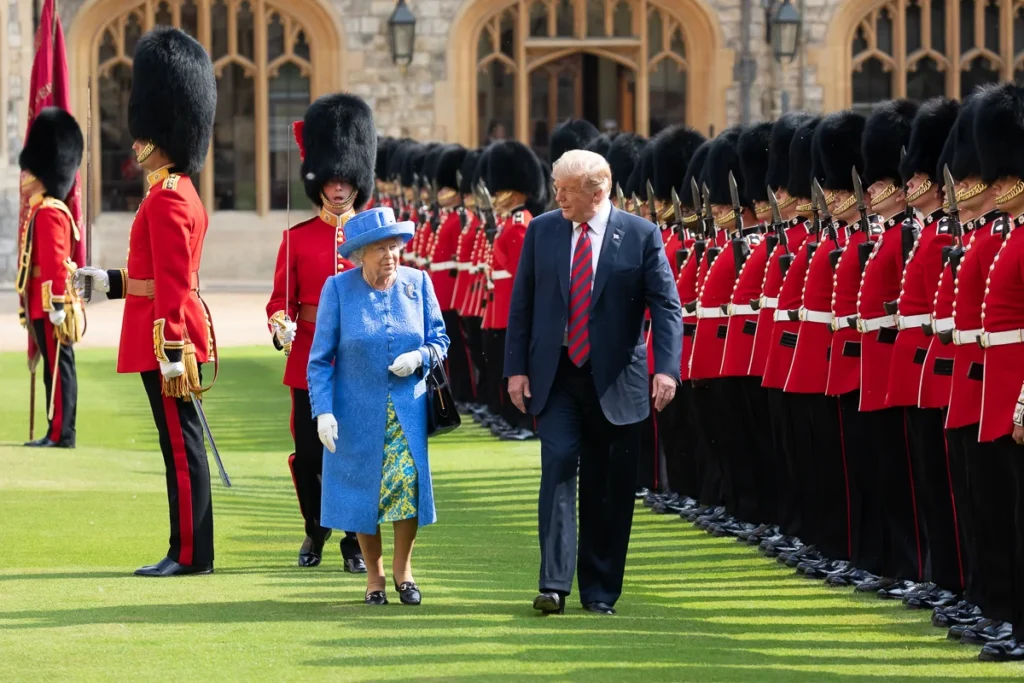

Renowned journalist Susan Page’s forthcoming book, “The Queen and Her Presidents: The Hidden Hand That Shaped History,” promises to unveil a fascinating tapestry of interactions between Queen Elizabeth II and the United States Presidents who served during her unprecedented 70-year reign. Among the most intriguing revelations is the assessment of former President Donald Trump, who, despite his well-documented admiration for the British Royal Family and particularly for Her Majesty, employed a remarkably candid descriptor: "streetwise."
Page, through her extensive research and direct interviews with former presidents, has unearthed a previously undisclosed perspective from Trump regarding the late monarch. In a quote detailed within the book, Trump reportedly told Page, "For a person that was never on the streets, she’s very streetwise." This observation, emerging from a figure known for his own direct and often blunt communication style, offers a unique insight into how the former President perceived the Queen’s astute understanding of people and situations, despite her insulated royal upbringing.
The book, slated for publication on April 23, 2026, by Harper, delves into the nuanced relationships forged between Queen Elizabeth II and a succession of American leaders, from Dwight D. Eisenhower to Joe Biden. Page’s work aims to illuminate not just the official state visits and diplomatic exchanges, but also the more personal encounters that shaped these transatlantic connections.
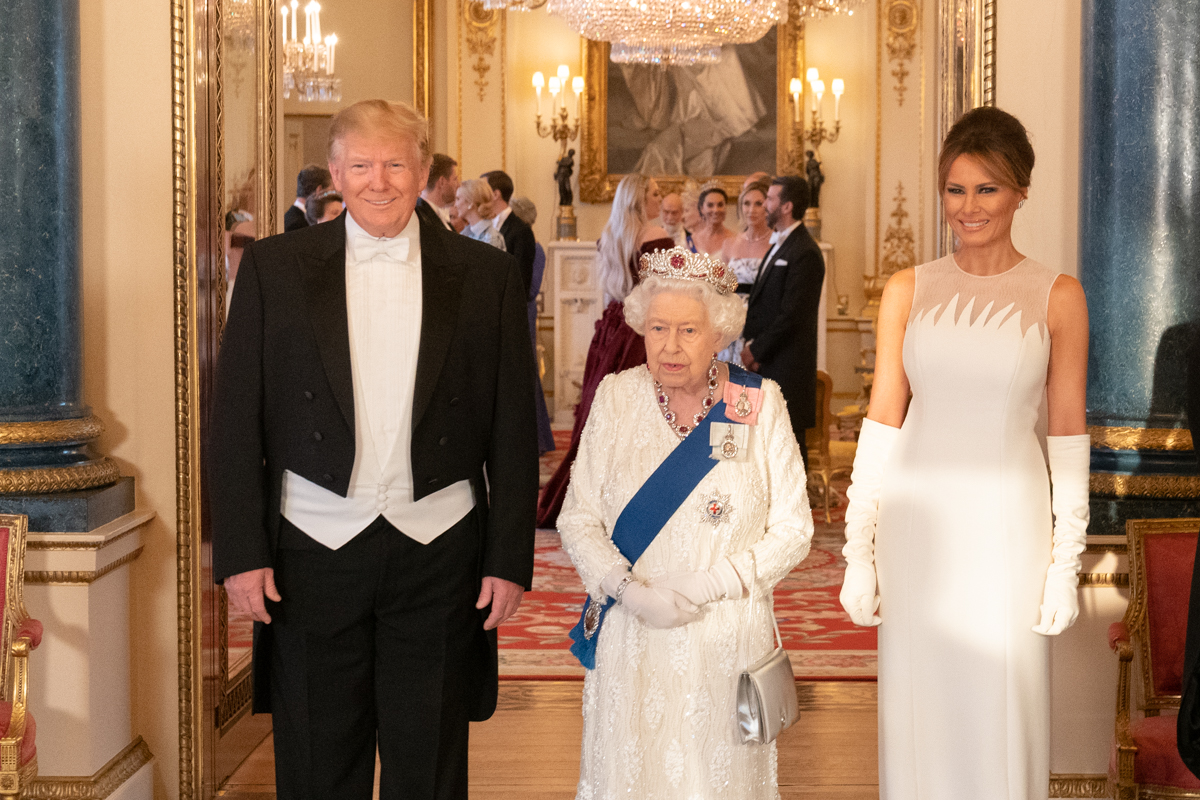
Trump’s Assessments: Beyond the Formalities
Donald Trump’s interactions with Queen Elizabeth II were marked by a notable public display of respect. His state visit to the United Kingdom in June 2019, a significant event that included a ceremonial welcome at Buckingham Palace and a banquet at the State Dining Room, provided ample opportunity for direct engagement. During this visit, and a prior meeting at Windsor Castle in July 2018, Trump reportedly engaged in extended conversations with Her Majesty.
Page’s book reveals that during these discussions, Trump probed the Queen on her preferences regarding American leaders. When asked about her favorite U.S. President, the Queen famously offered a diplomatic response, stating she had "liked them all." This consistent refusal to name a singular favorite, whether it pertained to presidents or prime ministers, struck a chord with Trump. He recounted to Page, "I said to myself, how genius is this?" This sentiment underscores Trump’s admiration for the Queen’s ability to navigate complex political landscapes with grace and impartiality, a skill he evidently recognized and respected.
The former President described a strong personal bond with the Queen, stating they "talked about everything" during his 2019 state visit. He further elaborated, "We just get along." This assertion of personal rapport, coming from a president known for his assertive personality, suggests a genuine connection formed between the two individuals beyond the ceremonial aspects of their meetings.
A Legacy of Presidential Encounters
The book promises to place Trump’s interactions within a broader historical context, highlighting the unique relationships Queen Elizabeth II cultivated with various U.S. presidents throughout her reign.

Ronald Reagan: Page notes that Queen Elizabeth II considered President Ronald Reagan a personal friend. Their shared conservative values and a mutual appreciation for horses are often cited as elements that fostered a strong rapport. Reagan’s state visit in 1982 was a landmark event, solidifying a warmth between the two leaders that extended beyond formal duties. Their exchanges often touched upon shared interests, creating a more personal dimension to their diplomatic interactions.
George W. Bush: Queen Elizabeth II engaged with President George W. Bush more frequently than with any other American leader. This included a significant state visit to Washington D.C. in 2007, the first by a reigning British monarch to the U.S. capital, and hosting President Bush at Windsor Castle in 2008. These extensive engagements underscore a particularly close working relationship and mutual respect. The 2007 visit, in particular, was a testament to the enduring alliance, with the Queen addressing a joint session of Congress, a rare honor.
Unexpected Commonalities and Subtle Insights
Page’s research also uncovers surprising common ground between seemingly disparate figures, such as Donald Trump and Barack Obama. Both presidents, it is revealed, attempted to elicit a definitive favorite American leader from Queen Elizabeth II. During his state visit in 2011, President Obama reportedly pressed the Queen with inquiries such as, "What about Eisenhower, what about Kennedy?" However, much like Trump, Obama received no specific endorsement, reinforcing the Queen’s consistent approach to maintaining neutrality and respect for all past leaders. This shared experience, despite differing political ideologies and personal styles, illustrates a common curiosity among U.S. presidents about the Queen’s unique perspective on American leadership.
The Human Element: A Corgi-Loving Monarch
Beyond the grand pronouncements and diplomatic exchanges, the book also offers glimpses into the Queen’s more personal side. A particularly charming anecdote comes from Jill Biden, who recounts a meeting with Queen Elizabeth II alongside President Joe Biden in 2021. As tea was being served, Mrs. Biden observed that the Queen’s immediate priority was to discreetly offer a sandwich to one of her beloved Corgis. This seemingly small detail humanizes the monarch, highlighting her enduring affection for her canine companions, a consistent theme throughout her life and reign.

Broader Implications and Historical Significance
The collection of anecdotes and insights presented in "The Queen and Her Presidents" offers a unique lens through which to view the evolution of Anglo-American relations over seven decades. Queen Elizabeth II, a constant figure on the world stage, served as a stable point of continuity amidst significant global political shifts. Her ability to foster rapport and maintain enduring respect across diverse American presidencies speaks volumes about her diplomatic acumen and personal charisma.
The book’s analysis of these interactions can provide valuable insights into:
- The Nuances of Diplomacy: Beyond formal protocols, the personal connections and informal exchanges between leaders can significantly impact international relations. The Queen’s ability to connect with leaders from vastly different backgrounds demonstrates the power of personal diplomacy.
- The Enduring Alliance: The consistent engagement with U.S. presidents underscores the deep and enduring nature of the special relationship between the United Kingdom and the United States. The Queen served as a living embodiment of this alliance for much of the latter half of the 20th century and the early 21st century.
- Monarchical Soft Power: Queen Elizabeth II wielded significant influence not through political power, but through her unique position and symbolic role. Her interactions with presidents highlight the concept of soft power and its impact on international perception and relationships.
- Leadership Styles and Perceptions: The varied descriptions of the Queen by different presidents offer a comparative study of leadership perception. Trump’s "streetwise" assessment, for instance, suggests an understanding of her practical intelligence and shrewdness, while Reagan’s "friendship" points to shared values and interests.
Susan Page’s meticulous research and privileged access promise a definitive account of these extraordinary relationships. "The Queen and Her Presidents: The Hidden Hand That Shaped History" is poised to be a significant contribution to historical understanding, offering readers a rare and intimate look at the woman who reigned for longer than any other monarch in British history and her enduring connections with the leaders of the world’s most powerful nation. The book’s publication will undoubtedly be eagerly anticipated by those interested in royal history, American politics, and the intricate dance of international diplomacy.