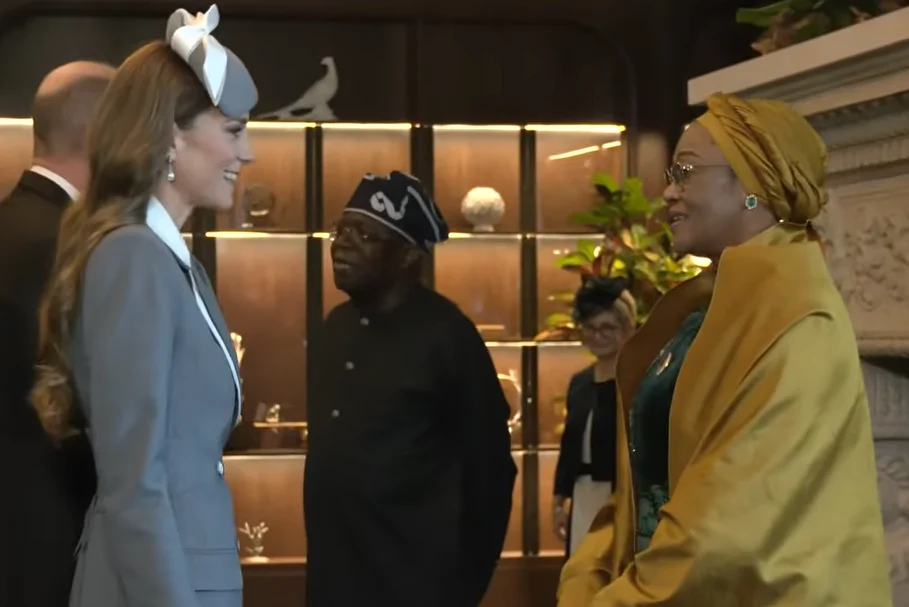

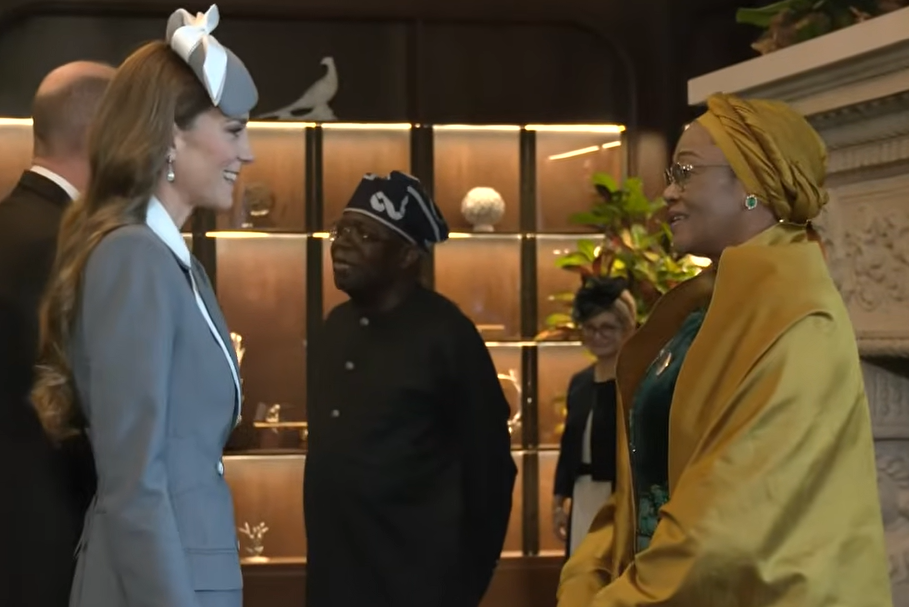
The Princess of Wales, in a striking sartorial choice for the commencement of the Nigerian State Visit to the United Kingdom, not only made a significant fashion statement but also engaged in subtle diplomatic communication through her attire. Her ensemble, selected for the official welcome of President Bola Tinubu, was a creation by British-Nigerian designer Tolu Coker, a rising talent whose work is increasingly gaining recognition on both national and international stages. The double-breasted coat dress, rendered in a sophisticated palette of grey and cream, exuded an immediate 1980s aesthetic, a visual nod that was further amplified by the garment’s contemporary corset detailing at the back. This choice marks the second notable royal endorsement for Coker, following King Charles III’s attendance at a London Fashion Week show featuring her designs just weeks prior.
A Diplomatic Wardrobe: Beyond Aesthetics
The selection of a British-Nigerian designer for such a high-profile occasion is a deliberate and meaningful gesture. It underscores the United Kingdom’s commitment to celebrating its diverse cultural tapestry and fostering stronger ties with Commonwealth nations. By championing Tolu Coker, the Princess of Wales not only highlights emerging talent but also subtly acknowledges Nigeria’s rich cultural heritage and its significant contributions to the global creative landscape. This act of sartorial diplomacy sends a powerful message of respect, recognition, and shared heritage.
Tolu Coker’s burgeoning career has already attracted considerable attention. Her designs have been observed on prominent figures, including "Traitors" star Cazzie David, who recently wore one of her creations to the Brit Awards, indicating a growing appeal across various cultural spheres. Furthermore, Coker’s commitment to sustainable fashion practices aligns with contemporary global concerns regarding environmental responsibility within the industry. In a previous interview with the London College of Fashion, Coker articulated her mission: "As well as challenging traditional perceptions of luxury, I actively address fashion’s significant contribution to global waste and pollution." This ethos of conscious creation resonates with an increasing demand for ethically produced and environmentally aware fashion, a value that the Princess of Wales has herself championed through various initiatives.
The State Visit: A Historic Occasion
The State Visit of President Bola Tinubu and his wife, Mrs. Tinubu, to the United Kingdom is a momentous event, marking the first State Visit by a Nigerian President in 37 years. Such visits are crucial diplomatic engagements, designed to strengthen bilateral relations, foster economic cooperation, and discuss matters of mutual interest between the two nations. The historical context of this visit underscores its importance, providing an opportunity to reaffirm and potentially deepen the long-standing, albeit complex, relationship between the UK and Nigeria.
The official welcome ceremony, held with considerable pomp and pageantry, set the tone for the subsequent days of engagements. The presence of the Prince and Princess of Wales alongside the King and Queen at the initial stages of the visit demonstrates the significance attached to Nigeria’s participation in this formal exchange.
Chronology of the Welcome Ceremony
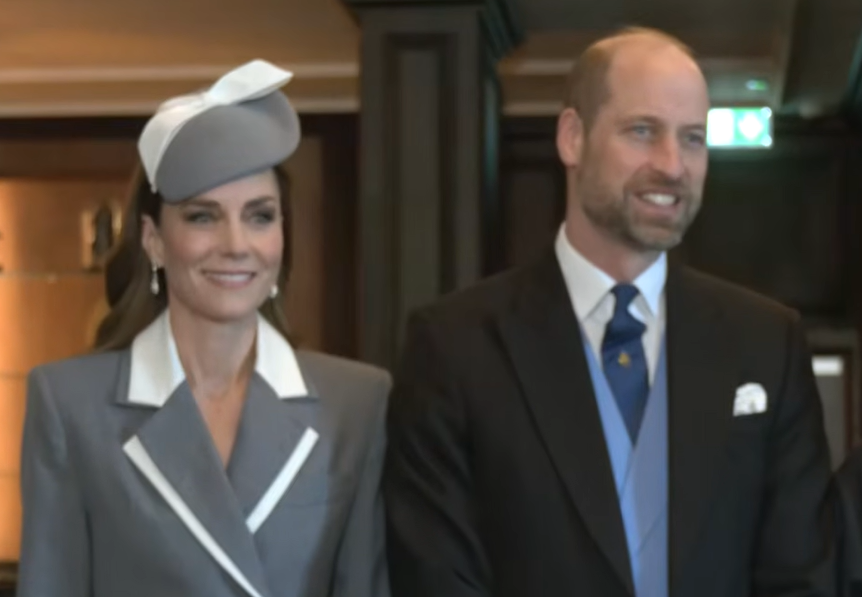
The meticulously planned itinerary commenced with the arrival of President Bola Tinubu and Mrs. Tinubu. The Prince and Princess of Wales were among the first to greet the distinguished guests, playing a key role in the initial reception. This was followed by their escort to the ceremonial welcome, a tradition steeped in royal protocol, held at Windsor Great Park.
At Windsor Great Park, His Majesty King Charles III and Her Majesty Queen Camilla assumed the primary hosting duties. The ceremony included formal introductions to a range of dignitaries, signifying the breadth of the diplomatic engagement. A subsequent coach procession offered a visually impressive display, allowing for a more public acknowledgement of the visiting delegation.
- Arrival and Initial Welcome: President Bola Tinubu and Mrs. Tinubu were met by the Prince and Princess of Wales, commencing the official proceedings.
- Journey to Windsor: The delegation proceeded to Windsor Great Park for the ceremonial welcome.
- Royal Hosting: King Charles III and Queen Camilla formally welcomed the President and First Lady, introducing them to key figures.
- Ceremonial Procession: The visiting dignitaries participated in a coach procession, a traditional element of State Visits.
- King Charles III and President Tinubu rode in the Australian State Coach.
- Queen Camilla and Mrs. Tinubu travelled in the Scottish State Coach.
- The Prince and Princess of Wales occupied the Irish State Coach, completing the royal escort.
This structured approach ensures that all members of the Royal Family play a visible role in representing the United Kingdom on the international stage, while adhering to established protocols.
Broader Context: Royal Family’s Diplomatic Role
The Royal Family’s involvement in State Visits is a cornerstone of British foreign policy. As Heads of State and senior representatives of the Crown, they lend significant weight and prestige to international engagements. Their participation serves to foster goodwill, promote cultural exchange, and reinforce diplomatic ties. Each State Visit is carefully curated to reflect the specific relationship between the UK and the visiting nation, with sartorial choices and ceremonial elements often carrying symbolic meaning.
The Princess of Wales, in particular, has increasingly embraced fashion as a tool for diplomacy. Her clothing choices are often scrutinized for their potential to convey messages about her stance on cultural heritage, sustainability, and international relations. By selecting Tolu Coker, she not only supports an individual designer but also champions the broader narrative of a multicultural Britain and its connections to nations like Nigeria.
Supporting Data and Implications
The economic and cultural links between the UK and Nigeria are substantial. Nigeria, as Africa’s largest economy and most populous nation, represents a significant trading partner and a key player in regional and global affairs. State Visits of this nature are instrumental in solidifying these relationships, leading to potential advancements in trade agreements, investment opportunities, and collaborative initiatives in areas such as education, technology, and security.
The choice of a British-Nigerian designer like Tolu Coker can have a ripple effect, inspiring other emerging designers from diverse backgrounds and encouraging greater appreciation for their work. It also contributes to the narrative of London as a global fashion capital that embraces and celebrates talent from across the diaspora.
The emphasis on sustainability by designers like Coker also aligns with the UK’s broader environmental agenda. By showcasing such designers, the Royal Family implicitly endorses these values, encouraging a wider adoption of eco-conscious practices within the fashion industry.
A Busy Week for the Prince and Princess of Wales
The State Visit to Nigeria marks a significant point in a period of considerable activity for the Prince and Princess of Wales. Earlier in the week, the Princess of Wales participated in St. Patrick’s Day celebrations, a tradition involving the presentation of shamrocks to the Irish Guards, a role she has undertaken with notable grace. Concurrently, Prince William engaged in a high-profile charity initiative, surprising BBC Radio 1 DJ Greg James by joining him for a portion of his epic cross-country bike challenge in support of Comic Relief. These diverse engagements highlight the multifaceted roles undertaken by the Prince and Princess of Wales, spanning ceremonial duties, diplomatic representation, and charitable advocacy.
The Princess of Wales’s choice of attire for the Nigerian State Visit’s commencement, therefore, is more than just a fashion moment; it is a carefully considered diplomatic act, imbued with cultural significance and reflecting a commitment to supporting emerging talent and promoting British diversity on the world stage. As the State Visit unfolds, further engagements will undoubtedly provide additional opportunities for both the Royal Family and the Nigerian delegation to strengthen their mutual understanding and cooperation.