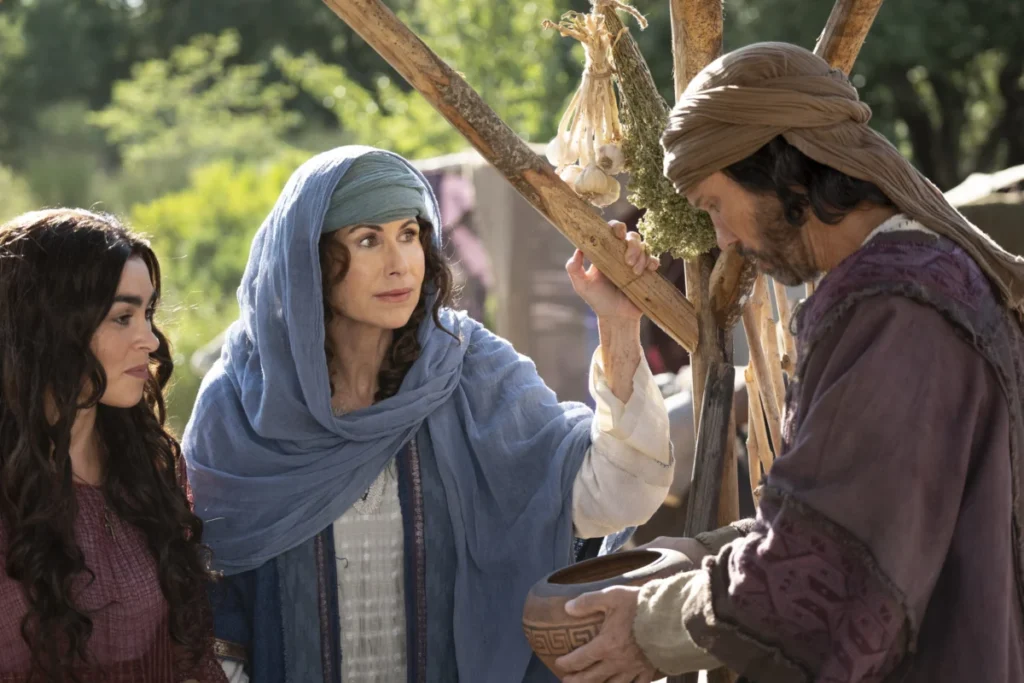

Fox’s three-part miniseries, The Faithful: Women of the Bible, has premiered to a critical reception that highlights the inherent challenges of adapting revered religious texts for a contemporary television audience. While the series ostensibly aims to recenter the female perspective within some of the most foundational narratives from the Book of Genesis, early critiques suggest it may fall short of delivering a truly substantive or insightful portrayal of its central figures. The production, which began airing on March 23, 2024, with its finale scheduled for Easter Sunday, March 31, was envisioned as a significant event miniseries, featuring a notable ensemble cast including Minnie Driver, Jeffrey Donovan, Natacha Karam, Alexa Davalos, and James Purefoy. However, initial reviews indicate that its narrative approach, particularly its reliance on pre-ordained plot developments and an overarching sense of divine intervention, may inadvertently diminish the dramatic potential and psychological complexity of these timeless stories.
Series Overview and Premise
The Faithful: Women of the Bible, created by Renée Echevarria, was positioned by Fox as an ambitious undertaking designed to explore the lives and contributions of several pivotal female figures from the Old Testament. The series structure dedicates each of its three installments to different generations of matriarchs. The inaugural episode, which was made available to critics, focuses on Sarai (later Sarah), portrayed by Minnie Driver, and her husband Abram (later Abraham), played by Jeffrey Donovan. Subsequent episodes are slated to delve into the stories of Rebekah (Alexa Davalos), Isaac’s wife, and later, Jacob’s wives, Leah (Millie Brady) and Rachel (Blu Hunt).
The overarching premise of the miniseries is to offer a fresh lens through which to view these well-known biblical accounts, emphasizing the experiences, decisions, and emotional journeys of the women often presented as secondary to their male counterparts in traditional interpretations. This intention aligns with a broader cultural movement seeking to highlight marginalized voices within historical and religious narratives. Fox’s decision to greenlight such a project also signals a continued interest in faith-based content within mainstream television programming, a genre that has seen fluctuating success over the years but consistently draws a dedicated viewership.
Critical Reception: A Question of Narrative Depth
Initial critical assessment has largely converged on a central point of contention: the series’ perceived overreliance on deus ex machina as a primary narrative driver. While the concept of divine intervention is intrinsically woven into the fabric of biblical narratives, critics argue that The Faithful employs it in a manner that stifles character development and dramatic tension rather than enhancing it. The review highlighted that "seeing God’s fingerprints all over every revelation or twist is literally the entire point," yet this omnipresent guidance paradoxically makes it "difficult not to wish… [it] offered something more substantive to hang on to."
The challenge, as articulated by reviewers, lies in the series’ treatment of its characters as "paper dolls to be pushed around at the whims of a narrative set in stone millennia ago." This approach, it is suggested, leaves little room for genuine insight into the internal lives of these women, the men surrounding them, or even the motivations of the deity who dictates their fates. The result is a portrayal that, despite its ambitious premise, offers "little actual insight" into the complexities of their struggles and triumphs.
The Challenge of Pre-Determined Narratives
Adapting sacred texts presents a unique dilemma for storytellers. The audience often arrives with a pre-existing knowledge of the plot, the characters’ destinies, and the ultimate outcomes. For a drama to resonate, it must find new ways to explore the ‘how’ and ‘why’ of these events, delving into the emotional, psychological, and social dimensions that often receive less emphasis in religious scripture. The Faithful, according to critics, struggles to overcome this hurdle. The narrative progresses along "preset story beats," with events unfolding as generic versions of their biblical counterparts, rather than emerging organically from the specific individuals within their unique historical and cultural context.
An illustrative example cited is Sarai’s swift acceptance of Abram’s divine command to leave their homeland. Despite the monumental nature of this request – abandoning everything known for an uncertain future based on an unseen God – Sarai’s initial confusion quickly gives way to unwavering support. While this aligns with the biblical account, the series’ rapid pacing in this crucial moment sacrifices the opportunity to explore the profound psychological impact and moral quandaries such a decision would entail. The speed and ease of her decision are explained, somewhat ironically, by the audience’s foreknowledge: "because it’s what’s happened in this story every time it’s been told by millions and millions of people across centuries and centuries." This reliance on audience familiarity, rather than dramatic excavation, becomes a significant narrative weakness.
Character Portrayal and Missed Opportunities
The miniseries features a talented cast, but critics suggest that even their performances are hampered by the script’s broad strokes. Characters are painted with a brush "so broad as to render them almost featureless," making it difficult for viewers to form a deep connection or invest in their personal journeys. This lack of specificity extends to the visual presentation, with scenes unfolding against "plain desert backdrops" that further contribute to a sense of genericism rather than immersive storytelling.
Despite these limitations, the review pointed to "flashes of potential," particularly in the more nuanced relationships depicted. Minnie Driver’s portrayal of Sarai, for instance, hints at a deeper emotional landscape, especially in her complex dynamic with Hagar (Natacha Karam), her Egyptian handmaid. The relationship between Sarai and Hagar, marked by fierce sisterhood, bitter jealousy, and an uneasy coexistence over years and decades as Hagar conceives with Abram to provide Sarai with an heir, offers fertile ground for dramatic exploration. Sarai’s internal conflict – her unwavering faith in her husband contrasted with her less certain relationship with the God he serves – also presents a compelling emotional bind.
Driver is credited with a "capable job of layering them on her face whenever she’s called to," suggesting an actor’s ability to imbue the character with emotional depth. However, the critique notes that she is "not called to nearly often enough." The series, in its apparent desire to "lionize them as heroines," shies away from exploring these "fascinating mixed emotions" in "darker or harder places." Instead, it maintains an "arm’s length" approach, acknowledging complex feelings only glancingly before moving to the next major plot point or time jump. This "straightforwardly noble approach," while potentially suitable for certain educational or devotional contexts, ultimately dilutes the dramatic impact for a mainstream audience seeking nuanced character studies.
Production Details and Broadcast Schedule
The Faithful: Women of the Bible is a three-part event miniseries, with each installment delving into a distinct period and set of characters within the Genesis narrative. The premiere aired on Sunday, March 23, 2024, at 8 p.m. ET/PT, with subsequent episodes scheduled for the following Sundays, culminating on Easter Sunday, March 31. Each episode, including commercials, runs for approximately two hours, with the core narrative lasting around 84 minutes.
The series boasts a diverse cast, aiming to bring these ancient figures to life. Key cast members include:
- Minnie Driver as Sarai/Sarah
- Jeffrey Donovan as Abram/Abraham
- Natacha Karam as Hagar
- Tom Mison
- Alexa Davalos as Rebekah
- Tom Payne
- Ben Robson
- Blu Hunt as Rachel
- Millie Brady as Leah
- James Purefoy
- Will Stevens
- Taylor Napier
Danny Cannon directed the initial double episode, which recounted the story of Sarai and Abram. Renée Echevarria serves as the creator, guiding the overall vision for the miniseries. The significant cast and multi-episode structure suggest a substantial investment by Fox, indicative of the network’s belief in the project’s potential to attract a broad viewership, particularly within the faith-based demographic.
Historical Context of Biblical Adaptations
The production of The Faithful: Women of the Bible is part of a long-standing tradition of adapting biblical narratives for film and television. From epics like Cecil B. DeMille’s The Ten Commandments (1956) to more recent television successes like History Channel’s The Bible miniseries (2013) and its sequel A.D. The Bible Continues (2015), biblical stories have consistently drawn audiences. These adaptations often face a delicate balancing act: remaining faithful to the sacred source material while simultaneously crafting a compelling dramatic narrative that appeals to a diverse, often secular, viewership.
The Faith-Based Entertainment Market
The market for faith-based entertainment has proven to be a lucrative, albeit specific, niche. Productions that resonate with religious audiences can achieve significant viewership and financial success. The Bible miniseries, for example, garnered massive ratings for the History Channel, demonstrating a clear appetite for high-quality biblical dramas. This success often encourages networks like Fox to invest in similar projects, seeking to tap into this loyal demographic, particularly around religious holidays such as Easter.
However, the expectations of this audience can be diverse. Some viewers prioritize strict adherence to scriptural accounts, while others are open to dramatic interpretation and character development that explores the human elements of these stories. The challenge for creators lies in navigating these varied expectations without alienating either segment of their potential audience.
Balancing Reverence and Dramatic License
One of the most persistent criticisms leveled against biblical adaptations is their struggle to balance reverence for the source material with the demands of dramatic storytelling. Overly reverent adaptations can sometimes feel didactic or lacking in genuine human conflict, while those that take too much dramatic license risk offending religious sensibilities. The deus ex machina criticism leveled against The Faithful highlights this tension. While divine intervention is central to biblical narratives, simply depicting it as an arbitrary plot device, without exploring its impact on human agency, faith, and doubt, can strip the story of its dramatic power.
Successful biblical adaptations often find ways to explore the internal struggles of their characters, their moments of doubt, their moral failings, and their ultimate redemption or transformation, even within a divinely guided framework. They use the known outcome to deepen the understanding of the journey, rather than simply rushing through it. This allows for character arcs that feel earned and relatable, even when operating within an extraordinary context.
The Women of Genesis: More Than Just Figures
The choice to focus on the "Women of the Bible" is, in itself, a significant and commendable endeavor. Figures like Sarah, Rebekah, Leah, and Rachel are not merely supporting characters; they are foundational matriarchs whose decisions, sacrifices, and faith played crucial roles in the unfolding narrative of ancient Israel.
- Sarah: Initially Sarai, her story is one of profound longing, barrenness, and a miraculous late-life motherhood. Her journey with Abraham involves incredible acts of faith, but also human frailties, such as her decision to offer Hagar to Abraham and her laughter at the prophecy of her pregnancy.
- Rebekah: A woman of strength and shrewdness, she leaves her homeland to marry Isaac and becomes instrumental in ensuring Jacob, rather than Esau, receives the patriarchal blessing. Her story involves complex family dynamics and difficult choices.
- Leah and Rachel: These sisters, wives of Jacob, are central to the story of the twelve tribes of Israel. Their rivalry for Jacob’s affection and for bearing children, intertwined with themes of love, jealousy, and divine favor, offers a rich tapestry of human emotion and sociological insight into ancient family structures.
These women’s stories are replete with drama, moral dilemmas, and deeply human emotions that resonate across millennia. They grapple with infertility, societal expectations, polygamy, sibling rivalry, and the challenges of leadership within a fledgling community. A series that truly delves into these aspects, exploring their interiority and agency within their historical constraints, could offer profound insights. The critique of The Faithful suggests that while the intention to highlight these women is present, the execution may not fully capitalize on the inherent richness and complexity of their narratives.
Creator’s Vision and Network’s Strategy
While no direct statements from Renée Echevarria beyond her creator credit were provided in the initial review, it can be inferred that the vision for The Faithful aimed to humanize these biblical figures. Echevarria’s previous work on projects such as Star Trek: The Next Generation, Deep Space Nine, and Carnivàle suggests an interest in character-driven narratives and complex world-building. For The Faithful, the goal would likely have been to present these women not just as static figures of piety, but as individuals navigating extraordinary circumstances with relatable human emotions, doubts, and aspirations. The series was likely conceived to appeal to a broad audience, including those familiar with the Bible and those new to these stories, by focusing on universal themes of faith, family, and destiny.
From Fox’s perspective, commissioning The Faithful: Women of the Bible represents a strategic move to engage with the faith-based entertainment market, particularly around significant religious holidays. The network’s decision to schedule the finale on Easter Sunday is a clear indication of this intent. Such programming can attract a dedicated viewership that may not typically tune into Fox’s other offerings, potentially boosting ratings and expanding the network’s demographic reach. The investment in a recognizable cast also suggests a commitment to producing high-quality content that can compete with other prestige dramas.
Broader Implications for Faith-Based Storytelling
The reception of The Faithful: Women of the Bible carries broader implications for the landscape of faith-based storytelling in mainstream media. It underscores the persistent challenge of translating ancient sacred texts into compelling modern drama without either sacrificing theological integrity or diluting dramatic potential.
One implication is the ongoing debate about the most effective storytelling approach for biblical narratives. Should adaptations prioritize reverence and didacticism, or dramatic interpretation and character development? The Faithful‘s struggle suggests that an overly cautious or "straightforwardly noble approach" can result in a narrative that is "unobjectionably religious-but-not-too" but fails to truly captivate a discerning audience. The article posits that while it might "play fine in Bible study classes," it is "harder to envision it capturing the attention of a channel-surfer just looking for something interesting to watch."
The series’ performance may influence future commissioning decisions by networks. If critical reception remains lukewarm and viewership does not meet expectations, it could lead to a reassessment of how biblical stories are adapted and what kind of creative risks are encouraged. Conversely, if the series finds its audience, particularly within the faith community, it could reinforce the idea that even a less dramatically adventurous approach can still find success.
Ultimately, The Faithful highlights the need for sophisticated storytelling in biblical adaptations. Audiences, whether religious or secular, increasingly seek nuanced character portrayals, intricate plot developments, and thematic depth. Merely recounting events, even divinely ordained ones, may no longer suffice. The "inherent draw of its subjects" needs to be complemented by "the power of back-to-basics storytelling" that focuses on character motivation, emotional conflict, and the human experience within the divine narrative.
Conclusion: A Missed Opportunity for Substantive Engagement
The Faithful: Women of the Bible represents a significant effort by Fox and creator Renée Echevarria to shed new light on the often-understated contributions of women in the foundational narratives of Genesis. With its impressive cast and ambitious scope, the miniseries aimed to deliver a fresh, female-centric perspective on these timeless stories.
However, based on initial critical reviews, the series appears to have encountered significant hurdles in translating its noble intentions into compelling dramatic television. Its perceived overreliance on deus ex machina and a narrative approach that prioritizes pre-ordained outcomes over organic character development and emotional depth have been identified as key weaknesses. While flashes of potential are evident, particularly in the complex relationship between Sarai and Hagar and Minnie Driver’s nuanced performance, these moments are reportedly too infrequent to sustain a deeply engaging viewing experience.
The challenge of balancing reverence for sacred texts with the demands of modern dramatic storytelling remains a persistent one for biblical adaptations. The Faithful serves as a contemporary case study, suggesting that merely depicting divine guidance, without thoroughly exploring its human impact and the intricate internal lives of its characters, may result in a production that is noble in its ambition but ultimately falls short of achieving substantive dramatic or psychological insight. As the series concludes its run on Easter Sunday, its reception will undoubtedly contribute to the ongoing dialogue about how best to bring these foundational stories to life for a contemporary global audience.