
The traditional paradigm of interior illumination is undergoing a significant transformation as homeowners and design professionals increasingly reject fixed overhead lighting in favor of versatile, portable solutions. This shift, often characterized in design circles as the "rejection of the big light," has spurred a domestic revolution where the functionality of a space is no longer tethered to the location of electrical outlets. As urban living spaces become more multifunctional and the boundary between indoor and outdoor environments blurs, the demand for high-end, rechargeable lighting has created a specialized market segment where midcentury aesthetics meet 21st-century battery technology.
The Technological Catalyst: From Incandescent to Cordless LED
The rise of the portable lamp is fundamentally a story of technological convergence. For decades, the primary obstacle to cordless lighting was the prohibitive energy requirements of incandescent bulbs and the limited capacity of lead-acid or early nickel-cadmium batteries. The widespread adoption of Light Emitting Diode (LED) technology in the early 2010s drastically reduced the wattage necessary to produce high-quality, warm-spectrum light. Simultaneously, the refinement of Lithium-ion battery technology—driven by the smartphone and electric vehicle industries—allowed for energy storage units that were small enough to fit within a lamp’s base while providing 10 to 40 hours of continuous illumination.
Current industry standards for these "forever pieces" now include USB-C charging ports, allowing for universal compatibility with modern electronic ecosystems. Furthermore, the integration of Pulse Width Modulation (PWM) dimming allows users to adjust brightness without the flickering associated with older analog dimmers, effectively mimicking the warm, diffused glow of traditional candlelight or low-wattage incandescent filaments.
A Chronology of Design: From Space Age to Modern Minimal
The current landscape of portable lighting is a blend of resurrected classics and contemporary innovations. To understand the market, one must look at the timeline of the most influential designs that have been adapted for the portable era.
1968: The Flowerpot by Verner Panton
The Flowerpot lamp, designed by Verner Panton during the height of the "Flower Power" movement, remains one of the most recognizable silhouettes in global design. Originally a pendant and later a table lamp, its hemispheric shade and base epitomized the playful, optimistic spirit of the late 1960s. The recent release of the Flowerpot V9, a rechargeable LED version, has revitalized the design for a new generation, proving that the 1968 aesthetic is uniquely suited for the "cordless" movement.
1971: The Louis Poulsen Panthella
Danish designer Verner Panton followed his 1968 success with the Panthella, created in collaboration with Louis Poulsen. Known for its "space age" mushroom shape, the Panthella was designed to ensure that both the base and the shade acted as reflectors. For its 50th anniversary in 2021, the brand released the Panthella Portable, a scaled-down version that maintains the original’s organic curves while adding three-step dimming and a hidden charging port.
.jpeg)
2005: The Bocci Influence
Vancouver-based design house Bocci entered the scene in 2005, focusing on the artisanal manipulation of glass. Their entry into portable lighting emphasized texture and the "imperfect" beauty of hand-blown materials. Their portable units often resemble glowing orbs or textured ice, signaling a shift away from plastic toward heavy, industrial materials like glass and brass.
2018: The Flos Bellhop
Designed by Edward Barber and Jay Osgerby for the London Design Museum, the Bellhop represents the modern "statement piece." Its name is a nod to the hatted hotel porters of the mid-20th century. Its rapid ascent in popularity—notably appearing in high-profile media like the television series Succession—cemented its status as a symbol of "quiet luxury."
Market Analysis: The Aesthetic of "Quiet Luxury" and Ambient Utility
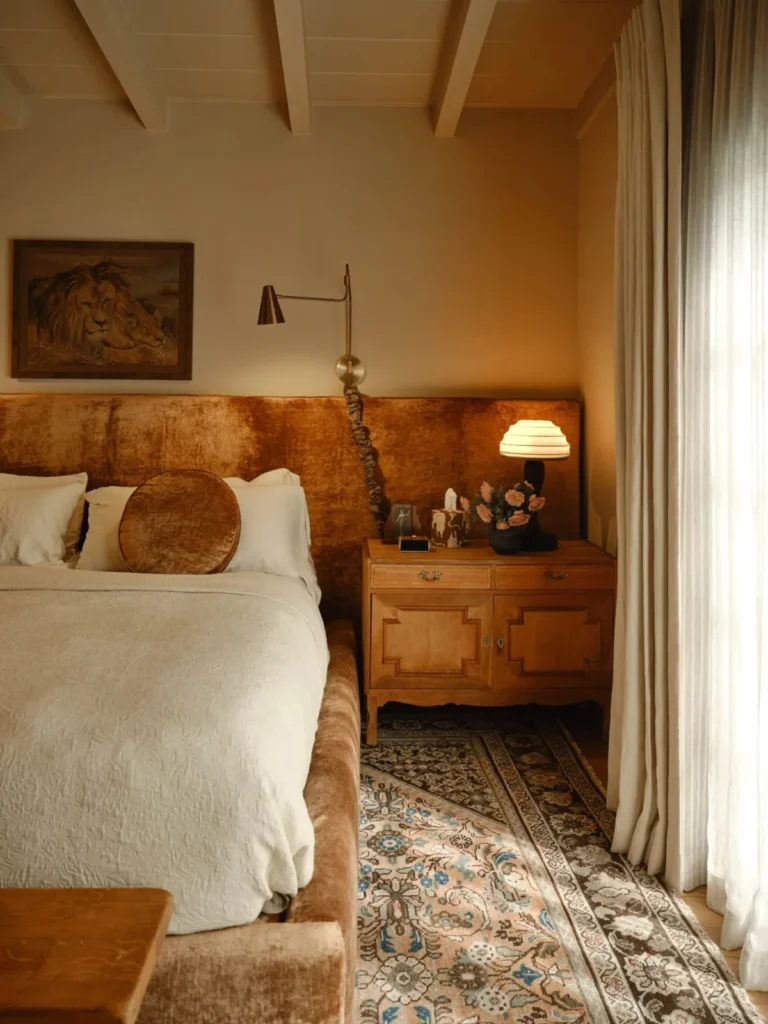
Interior designers report that the current trend toward portable lamps is driven by a desire for "layered lighting." In professional staging, the goal is to create multiple "pools" of light at different heights rather than a single, flat wash of illumination from the ceiling.
Portable lamps serve as a critical tool in this endeavor for several reasons:
- Countertop Transformation: In kitchens where electrical codes often prevent the placement of outlets near sinks or on islands, portable lamps provide task lighting without the need for expensive rewiring.
- The "Third Space": As balconies and patios become extensions of the living room, weatherproofed portables—like the In Common With Petite Gemma or the Snow Peak Home & Camp Lantern—allow for a seamless transition of atmosphere from interior to exterior.
- Color Temperature Precision: Unlike standard "smart bulbs" which can sometimes produce a sterile, blue-tinted light, high-end portable lamps are engineered for specific Kelvin ratings (typically between 2200K and 2700K) to ensure a "candlelit" warmth that enhances skin tones and wood finishes.
Detailed Profiles of Leading Portable Solutions
The selection of portable lighting is no longer merely a functional choice but a reflection of a homeowner’s design philosophy. The following categories represent the current pillars of the market.
The Heirloom Brass Segment
The collaboration between Brooklyn-based In Common With and designer Sophie Lou Jacobsen resulted in the Petite Gemma, a hand-spun brass fixture. Unlike the mass-produced plastic alternatives, these lamps are built from heavy-gauge metals that develop a patina over time. They offer a nine-hour battery life and are increasingly favored for bedside tables where a "forever piece" is preferred over a disposable electronic gadget.
The Modern Task Light
The &Tradition Caret, designed by Matteo Fogale, reimagines the classic green banker’s lamp. By replacing the emerald glass with oxblood or dark green lacquered steel, the design bridges the gap between a traditional office aesthetic and a contemporary mood light. With three dimmable settings, it serves as both a focused reading light and a soft ambient glow.
.jpeg)
The Outdoor Hybrid
Brands like Snow Peak and Zafferano have focused on the durability of the portable lamp. The Snow Peak Home & Camp Lantern is notable for its 23-hour battery life and convertible design, allowing it to function as a hanging lantern or a tabletop lamp. Similarly, the Zafferano Poldina Pro has become the industry standard for alfresco dining, utilized by high-end restaurants globally for its sleek, unobtrusive profile and weather-resistant matte finishes.
Economic Implications and Industry Reactions
The global decorative lighting market is projected to reach over $40 billion by 2030, with portable LED solutions representing one of the fastest-growing sub-sectors. Traditional lighting manufacturers who previously focused on hardwired fixtures are now pivotally investing in "rechargeable divisions."
Designers at firms like Flos and Louis Poulsen have noted that portability has changed the way they approach the "life cycle" of a product. Because these lamps contain batteries, there is a growing movement toward repairability. Industry leaders are beginning to offer replaceable battery packs and LED modules, ensuring that a $300 to $1,500 investment does not become "e-waste" when the battery eventually degrades.
Statements from the design community suggest that this is more than a passing fad. "The ability to carry light with you changes your relationship with your home," says one New York-based interior architect. "It allows the user to become the architect of their own atmosphere, moving the center of the room from the dining table to the bookshelf to the window nook at will."
Broader Impact and the Future of the Cordless Home
The proliferation of portable lamps is a harbinger of a broader movement toward the "cordless home." As charging technology improves—potentially moving toward long-range wireless charging (ambient power)—the need for the traditional wall outlet may diminish.
For now, the portable lamp remains a vital bridge between heritage design and modern convenience. It solves the "overhead lighting curse" by providing a human-centric alternative that prioritizes warmth, flexibility, and style. As battery lives extend and materials become more sustainable, the "little lamp" is poised to become as essential to the modern apartment as the smartphone or the ergonomic chair, proving that in the world of interior design, the most impactful changes are often the ones that let us see our surroundings in a better light.