
The landscape of residential architecture has undergone a fundamental shift, moving beyond aesthetic luxury to prioritize biological optimization. If 2025 was defined by the ubiquity of the home sauna—driven by a surge in heat-therapy research and the rise of the bathhouse as a social archetype—2026 marks a transition into a more sophisticated era of longevity-focused design. Americans, once hesitant to adopt the bathing rituals of South Korea, Russia, and the Nordic countries, have not only embraced the "schvitz" but are now integrating it into a broader, science-backed arsenal of residential features aimed at extending "healthspan"—the period of life spent in good health.
This evolution represents the intersection of preventative medicine and environmental psychology. Homeowners are no longer satisfied with isolated wellness amenities; they are seeking environments that "hard-code" healthy behaviors into their daily rhythms. From advanced atmospheric filtration to neuroaesthetic interiors, the modern home is being reimagined as a strategic tool for mitigating the modifiable drivers of aging.
The Scientific Foundation: Defining Longevity Medicine in the Home
Longevity medicine, as defined by Dr. Andrea Maier, founding president of the Healthy Longevity Medicine Society, is the practice of extending the years in which an individual can pursue their passions with energy and purpose. In a clinical context, this involves addressing drivers of aging such as physical inactivity, poor sleep hygiene, circadian instability, and environmental toxicity. In an architectural context, it involves designing spaces that naturally encourage the mitigation of these risks.
The transition from "wellness" to "longevity" is significant. While wellness often focuses on temporary states of relaxation, longevity design focuses on long-term physiological outcomes. According to Dr. Mark Hyman, cofounder of the health platform Function, health outcomes are the cumulative result of thousands of micro-decisions made daily. A home designed with intentionality reduces the friction associated with healthy choices. For instance, a centrally located gym or a kitchen with an open, inviting layout makes movement and nutritious cooking the path of least resistance rather than a chore.
A Chronology of Wellness Integration in Residential Design
To understand the current state of longevity design, one must look at the progression of health-focused amenities over the last several decades:

- The Fitness Era (1990s–2000s): Residential wellness was largely confined to the "home gym," often a basement or spare room filled with cardiovascular equipment.
- The Spa Era (2010s): High-end bathrooms began to incorporate steam showers, soaking tubs, and heated floors, mimicking hospitality environments.
- The Biohacking Era (2020–2024): Following the global pandemic, there was an explosion of interest in specialized devices, including infrared saunas, cold plunge tubs, and red-light therapy panels.
- The Longevity Era (2025–Present): Individual devices are replaced by integrated systems. The home itself becomes a "longevity lab," where air quality, water purity, lighting cycles, and material toxicity are managed through automated systems and strategic construction.
This chronology reflects a growing public awareness of environmental health. A 2024 report by the Global Wellness Institute noted that wellness real estate is one of the fastest-growing sectors in the global economy, reaching a market value of nearly $400 billion as consumers increasingly view their homes as their primary healthcare providers.
The "Longevity Lab" Approach: Testing and Implementation
High-end designers are now acting as the first line of testers for these emerging technologies. Kelly Wearstler, a prominent figure in the AD100 Hall of Fame, has noted that her own home serves as a testing ground for materials and amenities before they are recommended to clients. The current demand among elite homeowners has shifted toward "invisible" health upgrades: sophisticated air and water filtration, circadian lighting systems that mimic the sun’s natural progression, and dedicated zones for recovery and meditation.
In Belvedere, California, Butler Armsden Architects recently demonstrated this shift by integrating a teak spa and ipe deck into a wind-protected yard. The design was not merely about the view of the San Francisco Bay; it was about creating a micro-environment that encourages outdoor recovery sessions, bridging the gap between nature and the built environment.
Atmospheric and Material Health: Beyond Visible Design
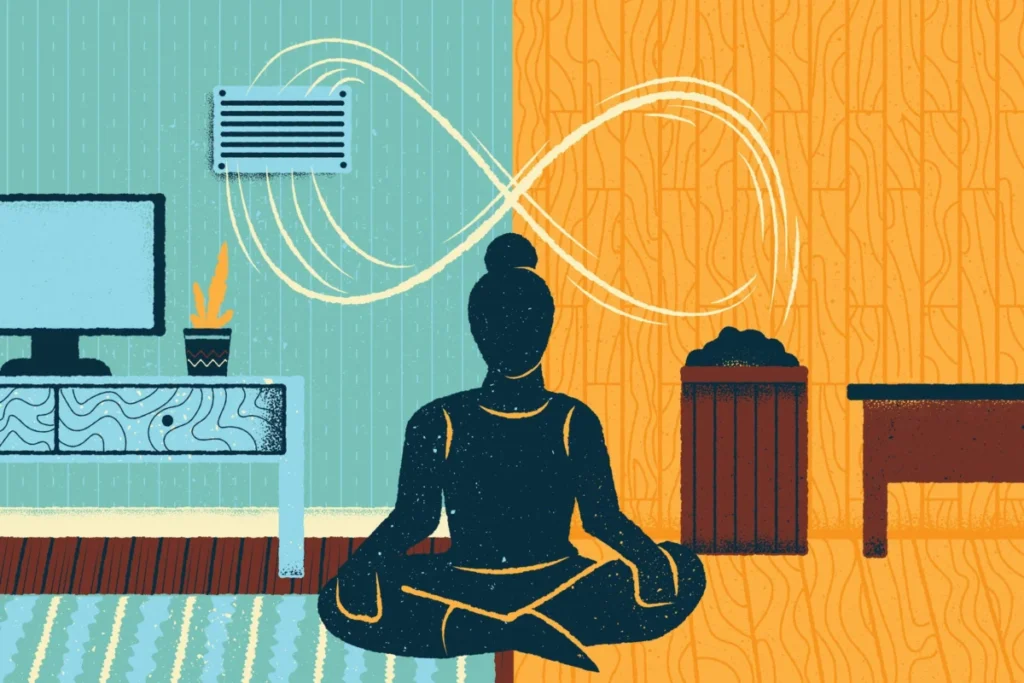
One of the most critical, yet least visible, aspects of longevity design is the management of indoor air quality (IAQ) and material toxicity. Modern homes are often more airtight than their predecessors, which can lead to the accumulation of Volatile Organic Compounds (VOCs), mold, and particulate matter.
Lisa Sternfeld, a designer based in Connecticut, highlighted this necessity after her toddler developed respiratory issues. The remediation of her home involved clearing hidden black mold and installing Energy Recovery Ventilation (ERV) systems alongside whole-home High-Efficiency Particulate Air (HEPA) technology. These systems ensure a constant supply of fresh, filtered air while maintaining energy efficiency—a crucial component for long-term respiratory health.
The choice of materials is equally vital. Jonsara Ruth, executive design director of the Healthy Materials Lab at Parsons School of Design, emphasizes that materials with the largest surface area—paint, flooring, and millwork—pose the greatest risk for off-gassing. To combat this, designers are increasingly turning to:

- Mineral-based paints: Companies like Alkemis offer paints that lack the chemical odors and toxic ingredients of traditional acrylics.
- Lime Plaster: A natural material that is breathable and inhibits mold growth.
- Formaldehyde-free wood: Flooring and cabinetry from manufacturers such as Mafi, Kahrs, and Purebond ensure that the home’s "skin" does not emit carcinogens.
The implementation of these materials requires a collaborative effort between designers and contractors. Price Latimer, cofounder of Alkemis Paint, notes that the lack of chemical odor in non-toxic paints is a significant benefit for on-site crews, eliminating the need for specialized ventilation equipment during application.
Social and Emotional Well-being: The Hidden Pillars of Longevity
While high-tech filtration and cold plunges dominate the headlines, longevity design also addresses the psychological drivers of health. The Harvard Study of Adult Development, one of the longest-running studies on human life, has consistently found that the quality of a person’s social connections is the strongest predictor of long-term health and happiness.
Architects like Jana Massat Collatz of Curious Minds Los Angeles are using this data to inform spatial layouts. By designing "nooks" for shared rituals—such as a reading corner or a centrally located kitchen island—architecture can foster the interpersonal connections that reduce cortisol levels and improve mental resilience.
This focus on the emotional impact of design is often referred to as neuroaesthetics. The concept suggests that specific visual and tactile elements—balanced lighting, natural materials, and intuitive spatial flow—can trigger physiological relaxation responses.
Future Projections: From Single-Family Homes to Floating Villages
The principles of longevity design are now expanding into multi-family and mobile environments. A prime example is Ulyssia, a residential superyacht designed as a "floating village." This project incorporates the Chenot Method, a renowned longevity protocol, and is informed by "Blue Zone" principles—behaviors observed in regions where people regularly live past 100.
In these communal environments, shared spaces are optimized through neuroaesthetics to improve mental resilience. Francesca Muzio of FM Architettura, who oversaw the yacht’s interiors, explains that when space flows naturally and materials are tactilely pleasing, the human body moves out of a "fight or flight" state and into a state of recovery.
.jpg)
Broader Implications and Economic Impact
The move toward longevity-centric design is not merely a trend for the ultra-wealthy; it is a signal of a broader shift in the housing market. As the global population ages, the demand for homes that support "aging in place" and preventative health will become a standard requirement rather than a luxury upgrade.
Data suggests that homes with certified wellness features—such as those meeting WELL Building Standards—command higher resale values and see faster absorption rates in the market. Furthermore, as the cost of technologies like ERV systems and non-toxic materials begins to decrease due to wider adoption, these "longevity labs" will likely become the blueprint for middle-market residential developments.
The integration of health into home design represents a maturation of the wellness industry. It acknowledges that there is no "magic pill" for a long life, but rather a series of environmental factors that can either accelerate or decelerate the aging process. By treating the home as a strategic ally in the pursuit of health, the design community is moving toward a future where the built environment is as essential to medicine as the pharmacy. Design, in its highest form, is becoming the ultimate blueprint for a life lived longer and better.