
The Icelandic tourism sector has undergone a seismic shift over the last decade, transitioning from a niche destination for adventurous backpackers to a global hub for luxury travel and high-end architectural tourism. Central to this transformation is the diversification of the short-term rental market, where the traditional hotel model is increasingly challenged by curated Airbnb properties that prioritize "nature as the primary amenity." From the volcanic landscapes of the South Coast to the remote creative hubs of the Westfjords, these accommodations reflect a broader trend in global travel: the demand for privacy, authentic local aesthetics, and a seamless integration between the built environment and the natural world.
The Macroeconomic Context of Icelandic Tourism
To understand the current state of luxury rentals in Iceland, one must examine the chronology of the nation’s tourism boom. Following the 2008 financial crisis and the 2010 eruption of the Eyjafjallajökull volcano—which inadvertently served as a global advertisement for the island’s raw power—visitor numbers surged. According to data from the Icelandic Tourist Board (Ferðamálastofa), foreign departures through Keflavík Airport grew from roughly 459,000 in 2010 to a peak of 2.3 million in 2018.
While the COVID-19 pandemic caused a temporary contraction, the recovery has been characterized by a shift toward "high-value" tourism. Travelers are staying longer and spending more on premium accommodations that offer safety and seclusion. This has led to the rise of architectural villas and renovated historic homes that serve as "destination stays" in their own right. The market now demands more than just a place to sleep; it requires high-speed connectivity for remote work, sustainable heating systems such as geothermal flooring, and design elements that pay homage to Nordic minimalism.
The South Coast and the Golden Circle: A Hub for High-End Design
The South Coast remains the most frequented region due to its proximity to the capital and its concentration of iconic landmarks. In this region, the Dyrhólaey Apartment near Vík serves as a prime example of the "landscape-first" design philosophy. Located along the southern coastline, the property is strategically oriented toward the Dyrhólaey peninsula. Industry analysts note that properties in this corridor command premium pricing—often exceeding $700 per night—due to their role as staging grounds for excursions to the Jökulsárlón glacier lagoon and the black sand beaches of Reynisfjara.
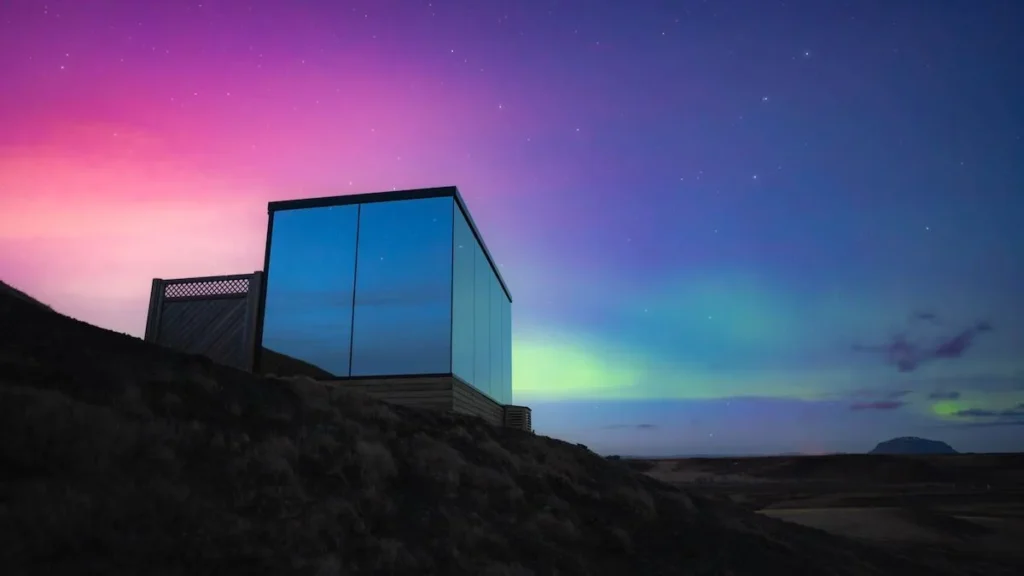
Further inland, near Hella and Selfoss, the rental market has embraced the "glass cabin" phenomenon. The Glacial Glass Cabin in Hella utilizes three walls of floor-to-ceiling glass to provide 360-degree views of the surrounding volcanoes and highlands. Similarly, the Iceland Lakeview Retreat in Selfoss, an A-frame structure overlooking Úlfljótsvatn Lake, highlights the integration of wellness amenities such as heated pools and hot tubs. Data suggests that these amenities are no longer considered "extras" but are essential requirements for properties aiming for the luxury tier in Iceland, where the climate necessitates thermal relaxation.
Urban Sophistication: The Reykjavik and Hafnarfjörður Corridor
In the capital region, the rental market is defined by a blend of mid-century modern aesthetics and historic preservation. Reykjavik, once a quiet fishing port, has evolved into a design capital. The ’60s Villa in Reykjavik represents a rare departure from the stark, ultra-modern Scandinavian style often found in new builds. By preserving mid-century elements and offering views of Mt. Esja, such properties cater to design enthusiasts who seek a residential feel within the city’s limits.
Just south of the capital, in the "town of elves," Hafnarfjörður, the market demonstrates a trend toward "heritage luxury." A notable 1800s-era cottage in the area, curated by the founders of Reykjavik Trading Co., illustrates the "Cali-Nordic" fusion—a design movement that blends Californian relaxedness with Icelandic "hygge" (coziness). This property emphasizes the "slow travel" movement, featuring on-site greenhouses and chicken coops, allowing guests to engage in a form of localized, sustainable living that hotels cannot easily replicate.
The Northern Frontier: Akureyri and Husavik
As the southern routes become more saturated, the Icelandic government has actively promoted the "Arctic Coast Way" to distribute tourism more evenly across the country. This has spurred development in Akureyri, the "Capital of the North," and Husavik, the whale-watching capital of Europe.
The rental market in the North is characterized by larger, group-oriented villas. The Villa Lola Apartment in Akureyri, wrapped in driftwood-inspired larch, and the four-bedroom Villa in Akureyri reflect a shift toward multigenerational travel. These properties provide the logistical support needed for groups—large kitchens, multiple bathrooms, and proximity to the Diamond Circle (a northern alternative to the Golden Circle). In Husavik, luxury villas are often positioned to take advantage of the region’s unique geological features, such as the mud pits of Mývatn and the nearby ski slopes, offering "ski-in/ski-out" capabilities that are rare in the North Atlantic.
The Westfjords and Snaefellnes: Remote Luxury and Creative Hubs
The Westfjords represent the "final frontier" of Icelandic tourism. Due to its rugged terrain and historical isolation, the region has developed a distinct cultural identity. Flateyri, a small village in the Westfjords, has emerged as a hub for the "creative class." Accommodations here, such as the Victorian-style Westfjords Villa, lean into a bohemian, maximalist aesthetic that contrasts with the minimalism found elsewhere on the island.
On the Snaefellnes Peninsula, often called "Iceland in Miniature," the architectural focus shifts toward modern farmhouses. The Contemporary Farmhouse in Hraundalur, constructed from concrete and Siberian larch, demonstrates how modern materials are being used to withstand the harsh Atlantic elements while providing a luxury experience. These properties are often equipped with electric vehicle (EV) chargers, reflecting Iceland’s commitment to a carbon-neutral tourism infrastructure.
Regulatory Environment and Community Impact
The rapid growth of the Airbnb market has not been without controversy. The Icelandic government has implemented strict regulations to ensure that the surge in short-term rentals does not deplete the housing stock for local residents. Under current laws, individuals can rent out their primary residences for up to 90 days per year or until they reach a specific income threshold (approximately 2 million ISK) before requiring a commercial hospitality license.
Official statements from the Icelandic Ministry of Tourism emphasize a "quality over quantity" approach. By encouraging the development of high-end, legally compliant rentals, the government aims to mitigate the environmental impact of mass tourism while maximizing the economic benefits for local municipalities. This regulatory framework has forced a professionalization of the market; the "Airbnbs" of today are often managed by professional property firms that ensure high standards of maintenance and guest service.
Architectural Analysis: The Nordic Aesthetic
From a design perspective, the properties dotting the Icelandic landscape are a masterclass in functionalism. The use of Siberian larch is prevalent because of its ability to weather naturally into a silver-grey patina that mimics the surrounding stone. Floor-to-ceiling glass is a structural response to the "Midnight Sun" of summer and the "Northern Lights" of winter, turning the sky into a dynamic element of the interior decor.
Furthermore, the "moody" interiors described in many Icelandic rentals—characterized by dark woods, textured wool throws, and ambient lighting—are a direct response to the island’s geography. In a land where winter days may only see four hours of sunlight, the interior environment must act as a sanctuary. This "inward-facing luxury" is a key selling point for international travelers seeking a "digital detox" or a retreat from urban congestion.
Future Outlook and Broader Implications
The trajectory of Iceland’s luxury rental market suggests a move toward even greater seclusion and sustainability. Future developments are expected to integrate "regenerative tourism" practices, where the rental property contributes to the restoration of the local environment, perhaps through reforestation projects or carbon-offsetting initiatives.
As global travel patterns continue to evolve, Iceland’s model of "nature-centric luxury" serves as a blueprint for other remote destinations. The success of these Airbnbs indicates that modern travelers are willing to pay a significant premium—often ranging from $400 to over $1,600 per night—for an experience that offers a profound connection to the landscape.
In conclusion, the diversification of Iceland’s accommodation sector reflects the country’s resilience and adaptability. By leveraging its unique geography and a sophisticated design sensibility, Iceland has moved beyond the "volcano-tourism" phase and established itself as a premier destination for architectural and experiential travel. Whether it is a renovated 19th-century cottage or a glass-walled villa on a lava field, these homes provide more than just shelter; they offer a curated portal into the soul of the North Atlantic.