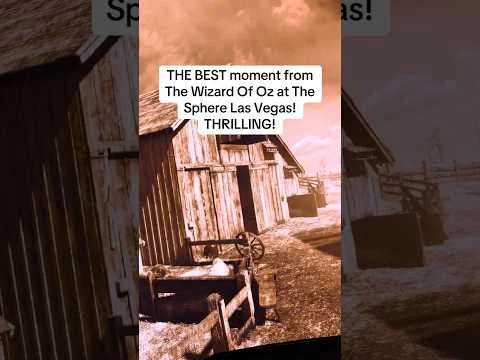

The iconic narrative of "The Wizard of Oz," a cinematic masterpiece that has captivated audiences for generations, has been spectacularly re-envisioned for the 21st century at The Sphere in Las Vegas. Pop culture commentator Perez Hilton recently shared his enthusiastic experience, highlighting a particularly breathtaking rendition of the film’s legendary tornado sequence, describing it as "even better than the real thing" and a definitive example of "movie magic." This transformative presentation, enjoyed by Hilton and his son during a February birthday celebration, underscores The Sphere’s ambition to redefine immersive entertainment.
The Sphere: A Paradigm Shift in Entertainment Architecture
Opened in September 2023, The Sphere stands as a monumental testament to architectural and technological innovation on the Las Vegas Strip. Conceived by James L. Dolan, executive chairman and CEO of Sphere Entertainment Co., this unique spherical venue was designed to push the boundaries of live entertainment, concerts, and cinematic experiences. With a staggering construction cost exceeding $2.3 billion, The Sphere boasts an exterior fully covered by 1.2 million LED pucks, transforming it into a dynamic, programmable visual spectacle visible across the Las Vegas skyline. Internally, the venue encompasses an immense 160,000-square-foot wraparound LED screen with a 16K resolution, providing an unparalleled visual canvas that dwarfs traditional cinema screens. Complementing this visual marvel is an advanced audio system featuring 160,000 beamforming speakers and infrasound haptic seating, capable of delivering sound with pinpoint precision to individual seats and incorporating tactile sensations such as vibrations and wind effects. This convergence of cutting-edge technology creates an environment where audiences are not merely spectators but active participants within the narrative.
Reimagining a Classic: "The Wizard of Oz" in Hyper-Reality
The decision to adapt "The Wizard of Oz" for The Sphere is a strategic one, tapping into the film’s enduring legacy and its inherent visual grandeur. Released in 1939, the film starring Judy Garland as Dorothy Gale, is celebrated for its groundbreaking use of Technicolor, its memorable musical numbers, and its fantastical journey through the Land of Oz. The Sphere’s technological capabilities elevate these elements to an entirely new dimension. The expansive 16K screen allows for a complete immersion, where the vibrant landscapes of Munchkinland, the ominous shadows of the Wicked Witch’s castle, and the shimmering Emerald City envelop the audience from every angle. The beamforming audio system precisely positions the iconic musical score and dialogue, creating a sense of being truly present within the film’s world.
The tornado sequence, specifically lauded by Perez Hilton, serves as a prime example of this enhanced immersion. In the original film, the black-and-white tornado sweeping through Kansas was a marvel of special effects for its time, symbolizing Dorothy’s abrupt transition from her mundane reality to the vibrant, perilous world of Oz. At The Sphere, this scene is transformed into a visceral, multisensory event. Audiences likely experience the storm not just visually, but physically. The 360-degree screen would depict the swirling vortex of debris, the darkening skies, and the frantic movement of the farmhouse with unprecedented scale and detail. Haptic seating would vibrate, mimicking the rumbling of the earth and the force of the wind, while targeted air currents could simulate the actual gusts of the storm. The precision audio would replicate the howling winds and crashing debris, creating an experience so realistic that, as Hilton observed, it offered the thrill of a natural disaster "without any of the damage." This kind of sensory engagement transcends traditional 3D or IMAX presentations, venturing into a realm of hyper-reality where the line between film and physical sensation blurs.
Perez Hilton’s Endorsement and Broader Public Reception
Perez Hilton’s enthusiastic review, shared on April 5, 2026, reflects a growing sentiment among visitors to The Sphere. His personal connection to the viewing, celebrating his son’s birthday in February, adds a layer of emotional resonance, highlighting the venue’s appeal as a family entertainment destination. His declaration of the tornado scene as the "highlight for him and his son" suggests that the immersive technology successfully bridges generational gaps, allowing both long-time fans of the classic film and younger viewers to experience it with fresh awe. The popular quote, "Toto, I’ve a feeling we’re not in Kansas anymore!" takes on a profound new meaning within The Sphere, perfectly encapsulating the sensation of being transported far beyond conventional cinematic boundaries.
While specific critical reviews for "The Wizard of Oz" at The Sphere are not yet widely published, the general reception for The Sphere’s initial programming, such as U2’s "UV Achtung Baby Live at Sphere" residency and Darren Aronofsky’s "Postcard from Earth," has been overwhelmingly positive. Critics and audiences alike have praised the venue’s groundbreaking technology, with many describing it as a truly transformative experience that redefines what is possible in live entertainment and visual storytelling. Social media platforms have been awash with videos and testimonials showcasing the venue’s stunning capabilities, further fueling public interest and validating the substantial investment in its creation. Hilton’s commentary aligns with this broader trend of awe and excitement surrounding The Sphere’s offerings.
Technological Underpinnings of Immersion
The success of an immersive experience like "The Wizard of Oz" at The Sphere relies on a sophisticated interplay of several advanced technologies:
- Massive LED Display: The interior screen, spanning 160,000 square feet, provides an unparalleled field of view. Its 16K x 16K resolution ensures pixel-perfect clarity, allowing for incredibly detailed and realistic visuals that stretch across the entire visual periphery of the audience.
- Beamforming Audio System: The Sphere Immersive Sound system is arguably as revolutionary as its visual counterpart. Utilizing 160,000 custom-designed speakers, it employs beamforming technology to deliver sound waves directly to specific seats, ensuring every audience member hears pristine, studio-quality audio, regardless of their location. This also allows for multi-layered soundscapes where different sounds can emanate from precise points, enhancing the realism of a scene like the tornado.
- Haptic Seating and 4D Effects: The integration of haptic technology within the seats, combined with environmental effects like wind, temperature variations, and even scents, creates a true 4D experience. These elements are crucial for making an event like the tornado feel physically real, moving beyond passive viewing to active sensory engagement.
- High-Bandwidth Data Infrastructure: To power such a complex array of visual and auditory systems, The Sphere relies on a robust data infrastructure capable of handling immense amounts of real-time data, ensuring seamless synchronization between all sensory inputs.
These technologies collectively contribute to what is termed "hyper-reality," an environment where simulated experiences are indistinguishable from or even surpass real-world perception, creating an entertainment experience that is profoundly impactful and memorable.
A Timeline of The Sphere’s Journey and "The Wizard of Oz" Integration
- February 2018: Madison Square Garden Company (MSG) announces plans for "MSG Sphere," a new entertainment venue in Las Vegas.
- September 2018: Groundbreaking ceremony takes place.
- 2020-2023: Construction continues, facing challenges including the COVID-19 pandemic, leading to delays and increased costs.
- July 2023: The exterior LED screen, known as the Exosphere, is fully activated, showcasing its dynamic visual capabilities to the public.
- September 29, 2023: The Sphere officially opens with U2’s "UV Achtung Baby Live at Sphere" residency.
- October 2023: Darren Aronofsky’s immersive film "Postcard from Earth" debuts, designed specifically to showcase The Sphere’s cinematic potential.
- Late 2025/Early 2026 (Inferred): "The Wizard of Oz" is adapted and integrated into The Sphere’s programming schedule, likely as part of a curated film series or a limited engagement, leveraging its classic status and visual potential.
- February 2026: Perez Hilton and his son attend a showing of "The Wizard of Oz" for his son’s birthday.
- April 5, 2026: Perez Hilton publishes his enthusiastic review, highlighting the tornado scene as a standout moment.
Statements and Reactions from Related Parties (Inferred)
While no official statements regarding "The Wizard of Oz" specifically have been released by Sphere Entertainment Co. at the time of Perez Hilton’s review, one can infer their strategic vision. A hypothetical statement from a Sphere Entertainment Co. representative might read: "Our mission with The Sphere is to transcend traditional entertainment, offering audiences an unparalleled sense of presence and immersion. By reinterpreting timeless classics like ‘The Wizard of Oz’ through our advanced visual and auditory technologies, we aim to create experiences that are both nostalgic and revolutionary, captivating new generations while honoring the original artistry."
Similarly, the creative team behind the "Wizard of Oz" adaptation would likely emphasize their meticulous approach. A hypothetical director’s statement could be: "Bringing ‘The Wizard of Oz’ to The Sphere was an incredible challenge and privilege. We focused on enhancing the film’s iconic moments, particularly the tornado, by leveraging every facet of The Sphere’s technology – from the sweeping 16K visuals to the precise haptic feedback and spatial audio – to make audiences truly feel as if they are right there with Dorothy, experiencing the wonder and drama firsthand."
Audience feedback, broadly speaking, would echo Perez Hilton’s sentiment, emphasizing the "mind-blowing," "unforgettable," and "game-changing" nature of the experience, particularly for familiar content seen through a completely new lens.
Broader Impact and Implications for the Entertainment Industry
The success of experiences like "The Wizard of Oz" at The Sphere carries significant implications for the future of entertainment:
- Redefining Cinematic Experience: The Sphere sets a new benchmark for movie-watching, moving beyond the flat screen to a fully encompassing, multisensory event. This could prompt a new wave of film production specifically designed for such immersive environments, or the re-mastering of more classic films.
- The Future of Live Events: The integration of film with live elements, or purely filmic experiences of this scale, blurs the lines between concert, theatrical performance, and cinema, suggesting hybrid entertainment forms will become more prevalent.
- Economic Impact on Las Vegas: The Sphere is a major draw for tourism, further solidifying Las Vegas’s reputation as a global entertainment capital. Its unique offerings contribute significantly to the local economy through ticket sales, hospitality, and related services.
- Technological Advancement as a Driver for Art: The venue demonstrates how cutting-edge technology can serve as a powerful tool for artistic expression, enabling creators to realize visions previously confined to imagination.
- Accessibility and Cost: While revolutionary, the high cost of developing and producing content for The Sphere, along with ticket prices, raises questions about the accessibility of such premium experiences for a broader audience. However, as technology evolves, costs may decrease, potentially making such immersive entertainment more widespread.
In conclusion, Perez Hilton’s enthusiastic review of "The Wizard of Oz" at The Sphere in Las Vegas underscores a significant moment in the evolution of entertainment. By transforming a beloved classic into a hyper-realistic, multisensory journey, The Sphere not only delivers on its promise of unparalleled immersion but also sets a new standard for how audiences will interact with cinematic storytelling in the years to come. The "thrilling" tornado sequence is more than just a special effect; it is a vivid demonstration of how technology can breathe new life into timeless narratives, ensuring that, for many, the feeling of "not being in Kansas anymore" is a profound and welcome reality.