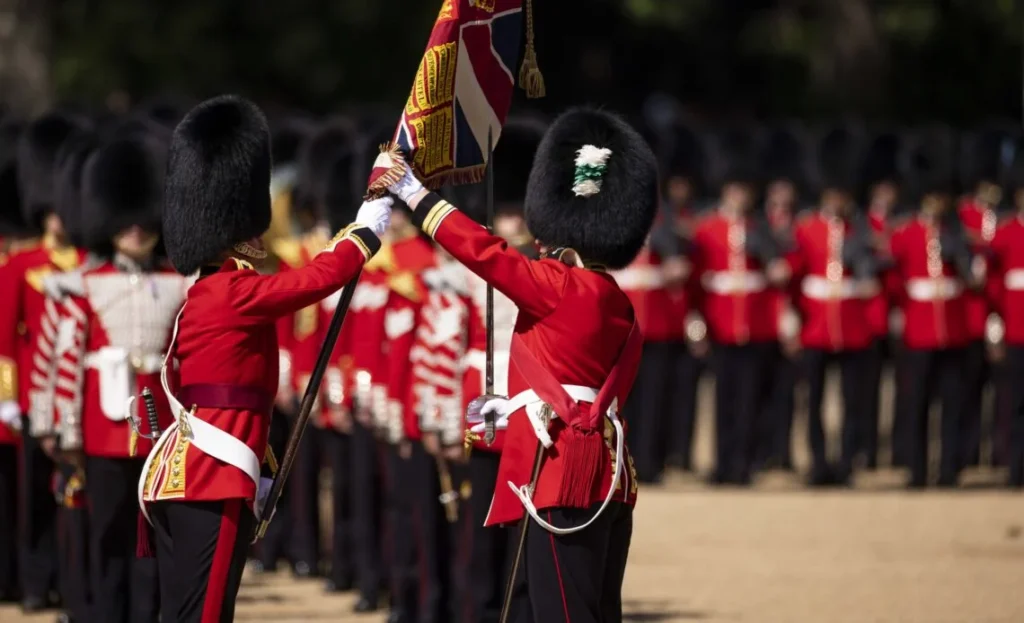

With the sands of time rapidly running out, aspiring attendees have mere days remaining to enter the ballot for a coveted spot at one of the year’s most anticipated royal spectacles: Trooping the Colour, the Sovereign’s Official Birthday Parade. This prestigious event, steeped in centuries of military tradition and royal pageantry, offers a unique opportunity to witness the precision and grandeur of the British Armed Forces in a ceremonial setting. The application window for the public ballot is set to close imminently, marking the final chance for individuals to secure a ticket to this iconic celebration.
The process for attending Trooping the Colour is governed by a public ballot system, designed to offer a fair chance to those wishing to experience the event firsthand. It is crucial to understand that entering the ballot does not guarantee a ticket; rather, it places hopeful attendees into a draw. Successful applicants, whose names are randomly selected in the days following the ballot’s closure, will then be extended the opportunity to purchase tickets for the parade. This system acknowledges the immense public interest in the event while managing capacity and ensuring a structured distribution of available seats.
This year’s Trooping the Colour is scheduled to take place on Saturday, June 13th, returning to its traditional and historic venue at Horse Guards Parade in the heart of London. The ceremony itself is a breathtaking display of military might and discipline, featuring the King’s Company, 1st Battalion Grenadier Guards, as they "troop their colour" in the presence of His Majesty King Charles III. The scale of the event is considerable, with an estimated 1,350 soldiers from the Household Division and the King’s Troop Royal Horse Artillery participating. Adding to the sonic spectacle, over 300 musicians from the Massed Bands will provide a stirring musical backdrop. Weeks of rigorous rehearsals precede the main event, ensuring every movement, every note, and every display of precision is executed flawlessly.
The ceremonial route of Trooping the Colour also involves a significant military presence. An additional 250 service personnel are tasked with lining the ceremonial route, a task that demands unwavering composure and professionalism. This procession begins at Buckingham Palace, where His Majesty departs, and culminates at Horse Guards Parade for the main ceremony, before returning to the Palace. While historically, the Sovereign would ride on horseback, King Charles III now typically arrives at the parade ground by carriage, a modern adaptation to the long-standing tradition. The Prince of Wales, however, is expected to participate on horseback, a poignant nod to the continuity of royal involvement in military traditions.
Beyond the main Trooping the Colour event, there are two earlier opportunities for the public to witness aspects of this grand display. The Colonel’s Review, a dress rehearsal of sorts, is held approximately a week before the main parade. This year, the Colonel’s Review is scheduled for Saturday, June 6th, 2026. Tickets for this event are priced at £15 and can be purchased directly through the British Army’s official website, offering a more accessible entry point for those unable to secure tickets for the main parade.
A week prior to the Colonel’s Review, on Saturday, May 30th, the Major General’s Review takes place. This iteration of the rehearsal features a slightly scaled-back contingent, notably without the ceremonial lining of the route by additional service personnel and with a reduced number of mounted officers. The tickets for the Major General’s Review are even more affordable, costing £10, and are also available for purchase directly via the Army’s dedicated portal. These earlier reviews provide a valuable glimpse into the meticulous preparations undertaken for Trooping the Colour and offer alternative avenues for public engagement with this significant military ceremony.
The Historical Tapestry of Trooping the Colour
The origins of Trooping the Colour are deeply embedded in British military history, tracing back to the reign of King Charles II. In its nascent form, the parade served as a practical method for regiments to "troop their colour," meaning to parade their regimental flag or standard. This was a crucial practice for soldiers to familiarize themselves with their unit’s colours, which were vital for identification and rallying on the battlefield in times of conflict. The distinctive visual of the flag served as a central point of recognition for soldiers, particularly in the smoke and chaos of battle.
The evolution of Trooping the Colour into an official celebration of the Sovereign’s birthday began in 1748. It was at this juncture that the decision was made to formalize this significant ceremonial event as an annual fixture to mark the monarch’s official birthday. This tradition was further cemented during the reign of King George III, who ascended to the throne in 1760. Under his long and influential rule, the parade became a steadfast annual occurrence, solidifying its place in the nation’s calendar.
The timing of the parade has also seen strategic adjustments over the centuries. Historically, it has been held on a Thursday, often aligned with the Sovereign’s actual birthday. However, in recent decades, the parade has been consistently scheduled for the second Saturday in June. This shift is primarily attributed to the more favourable weather conditions typically experienced in early summer, ensuring a more pleasant and reliable experience for both participants and spectators. A notable exception occurred in 2022, when Trooping the Colour was held on a Thursday to serve as the inaugural major event of Queen Elizabeth II’s Platinum Jubilee celebrations, a testament to the event’s adaptability and significance in marking pivotal royal milestones.
Supporting Data and Scale of the Event
The logistical undertaking of Trooping the Colour is immense, involving thousands of personnel and a complex coordination of military units. The Household Division, responsible for the ceremonial duties of the monarch, comprises over 8,000 regular soldiers and guardsmen, making it a significant component of the British Army. The King’s Troop Royal Horse Artillery, a ceremonial unit, also plays a vital role, providing gun salutes and participating in parades.
The Massed Bands, a crucial element of the auditory experience, are drawn from the various regiments of the Household Division and the Royal Corps of Army Music. These bands collectively number in the hundreds and perform a wide repertoire of military marches, traditional tunes, and contemporary pieces, contributing significantly to the parade’s majestic atmosphere. The sheer number of musicians involved underscores the rich musical heritage that accompanies British military ceremonies.
The economic impact, while not always directly quantifiable in simple terms, is significant for London. Trooping the Colour attracts a considerable number of domestic and international tourists, contributing to the hospitality, retail, and transportation sectors. Furthermore, the event serves as a powerful ambassador for the United Kingdom, showcasing its traditions and military prowess on a global stage. The associated costs of staging such an event are substantial, encompassing personnel deployment, equipment maintenance, logistical support, and security. However, these are often viewed as investments in national heritage and international relations.
Official Channels and Future Prospects
Information regarding the ballot, ticket purchasing for the review events, and further details about Trooping the Colour are readily available through official channels. The British Army’s website serves as the primary portal for all official announcements and application processes related to these events. This ensures that the public receives accurate and up-to-date information directly from the source, mitigating the risk of misinformation.
The continued success and popularity of Trooping the Colour highlight the enduring public fascination with royal events and military pageantry. As King Charles III continues his reign, the event will undoubtedly evolve, potentially incorporating new elements while retaining its core traditions. The dedication of the soldiers and musicians involved, coupled with the strategic planning and execution, ensures that Trooping the Colour will remain a cornerstone of the British ceremonial calendar for years to come. The opportunity to participate, whether as a spectator or through the diligent efforts of the armed forces, offers a profound connection to the nation’s history and its evolving traditions. The upcoming ballot closure serves as a timely reminder of the limited window to engage with this extraordinary annual celebration.