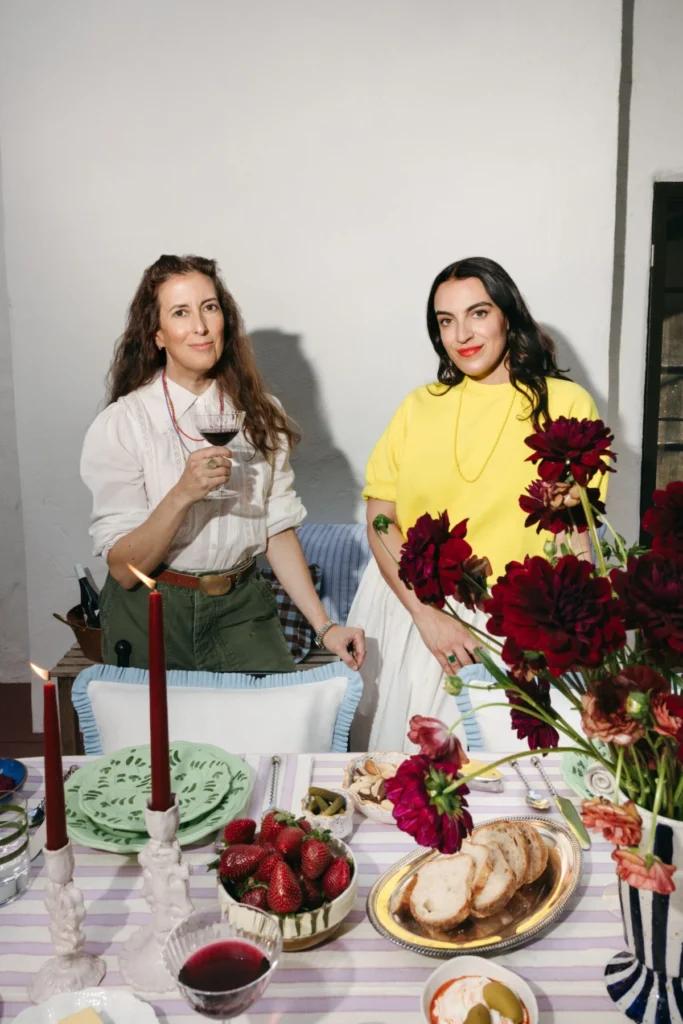

The art of the dinner party has undergone a significant transformation in the post-pandemic era, shifting away from rigid formality toward a more collaborative, intentional, and aesthetically driven experience. This evolution is exemplified in the latest installment of the Table Mates series, which features a partnership between two pillars of the Los Angeles creative community: fashion designer Clare Vivier and textile designer Heather Taylor. By merging Vivier’s signature "French-chic" sensibilities with Taylor’s mastery of traditional craftsmanship and textiles, the duo has established a blueprint for modern entertaining that balances European sophistication with the relaxed atmosphere of Southern California.

The Foundation of a Two-Decade Creative Partnership
The collaboration between Clare Vivier and Heather Taylor is rooted in a friendship spanning 20 years, a period during which both women built eponymous brands that define the "LA Cool" aesthetic. Vivier, the founder of Clare V., is celebrated for accessories that blend Parisian influence with functional American design. Taylor, through Heather Taylor Home, has revitalized the market for high-end linens, bringing hand-woven patterns and vibrant colors to the modern table.
Their hosting philosophy is built on the principle of "divide and conquer," a strategy that mitigates the stress typically associated with solo entertaining. In their established system, responsibilities are partitioned according to their professional strengths and personal preferences. Vivier, whose husband Thierry provides a direct link to French culinary traditions, typically manages the main course and the wine selection. Taylor, meanwhile, focuses on the "visual landscape" of the evening, providing the floral arrangements, table linens, and dessert.

This symbiotic relationship allows the hosts to remain present with their guests—a core tenet of their philosophy. According to Taylor, the goal is to create an environment where the logistics are invisible. "If people are cozy and the table looks beautiful, everything else falls into place," she noted during the planning of their dream gathering in Vivier’s newly redesigned Los Angeles backyard.
The Anatomy of the Tablescape: A Pastel-Fueled Vision
The visual centerpiece of the Vivier-Taylor collaboration was a meticulously curated tablescape designed to capture the "golden hour" of a Los Angeles evening. The design process began with a riff on hand-painted dinner plates and a copper beverage tub, which dictated a palette dominated by pastels and metallic accents.

Textiles and Linens
As the founder of a premier textile brand, Taylor emphasized the importance of high-quality linens as the foundation of any table. For this event, they utilized the Heather Taylor Home Lilac & Cream Stripe Tablecloth, a piece that provides a soft, rhythmic backdrop for the more structured elements of the setting. The use of stripes—a recurring motif in both designers’ work—serves to bridge the gap between traditional craft and contemporary fashion.
Glassware and Ceramics
To complement the linens, the pair selected items that emphasize texture and form. The George Bronwin Thallo Pedestal Vase in cobalt served as a structural focal point, while the Los Vasos de Agua Clara Halos Water Glasses added a layer of artisanal transparency. The inclusion of the Mariposa Pearl Drop Oval Platter and the Fresco Dinner Plate in spring green highlighted a trend toward "maximalist minimalism," where simple shapes are elevated by unique textures and vibrant, nature-inspired hues.

Lighting and Ambiance
Lighting is perhaps the most critical, yet often overlooked, component of their hosting strategy. The designers utilized a combination of ambient outdoor light and the Pottern Barn Modern Taper Candles (Set of 6) housed in The Exvotos Aguila Bicefala Candleholders. This blend of traditional candlelight and the natural transition of the sun creates an evolving atmosphere that moves from the bright energy of an aperitif to the intimate warmth of an after-dinner conversation.
Culinary Etiquette: A Fusion of French and Californian Traditions
The influence of French culture is a defining characteristic of Vivier’s approach to dining. This is most evident in her insistence on assigned seating—a practice often viewed as overly formal in California but regarded as essential for social engineering in France.

The Logic of the Seating Chart
Vivier adheres to the French custom where the host directs each guest to a specific seat, often purposefully separating couples. The objective is to stimulate new conversations and prevent the social stagnation that can occur when guests remain within their comfort zones. "At a French dinner party, nobody sits until the host tells them where to sit," Vivier explained. By bringing this tradition to Los Angeles, the duo creates a structured environment that paradoxically leads to more spontaneous and diverse interactions.
Menu and Beverage Selection
The menu reflects a preference for "family-style" service over pre-plated courses. This approach encourages movement and interaction among guests as they pass platters and share portions. While Vivier’s husband often takes the lead on the main French-inspired courses, Taylor contributes decadent finishes, such as Ina Garten’s chocolate brownie pudding—a choice that highlights the "high-low" mix of sophisticated surroundings and nostalgic, comfort-driven food.

In terms of beverages, the designers maintain strict standards. Vivier specializes in wines from the Loire Valley, favoring both reds and whites from the region for their acidity and food-friendly profiles. A notable "hosting pet peeve" mentioned by Vivier is the arrival of guests with California wine when a specific European theme has been established—a humorous but pointed reminder of the intentionality behind their curation.
Chronology of the Event: From Preparation to the After-Party
The success of a Vivier-Taylor gathering is attributed to a specific timeline that prioritizes the host’s ability to mingle.

- Advance Preparation: Both designers advocate for completing as much work as possible in the 24 hours preceding the event. This includes floral arrangements, table setting, and "mise en place" for the kitchen.
- The Arrival Window: The hosts expressed a strong preference for guests who arrive on time or slightly late, citing "early arrivals" as a significant hosting faux pas. The period immediately before the start time is reserved for the final lighting of candles and the pouring of the first drinks.
- The Transition to Jazz: The evening typically begins with a French or jazz-heavy playlist to set a sophisticated tone. As the dinner progresses and the energy shifts, the music transitions to more eclectic choices, such as the Traveling Wilburys, to facilitate a more relaxed environment.
- The After-Party and Games: Rather than allowing the evening to dissipate after dessert, Vivier introduces the French custom of after-dinner games. Activities such as backgammon, rummy, or card games serve to extend the gathering and provide a structured way for guests of all ages to interact.
- The Cleanup Philosophy: Unlike many modern hosts who leave the dishes for the following morning, Taylor insists on cleaning that night. This ensures that the "hosting cycle" is completed and the home returns to a state of order immediately following the event.
Market Analysis: The Rise of "Curated Entertaining"
The collaboration between Vivier and Taylor reflects a broader market trend toward the "lifestyle brand." Data from the home decor sector indicates that consumers are increasingly looking to fashion designers to inform their choices in the domestic sphere. According to industry reports, the global "tabletop and dinnerware" market is projected to reach significant growth by 2030, driven largely by the influence of social media and the desire for "instagrammable" home experiences.
The Table Mates series identifies a shift where the "experience" of the meal is valued as much as the food itself. By providing a "shop the look" component, the collaboration monetizes the aesthetic of friendship and hospitality. The brands featured—ranging from the accessible luxury of Pottery Barn to the artisanal niche of Gohar World—demonstrate a sophisticated understanding of consumer behavior, where high-end "investment pieces" are mixed with more attainable items.

Broader Impact and Implications for Modern Hosting
The Vivier-Taylor model offers several key takeaways for the modern host. First, it validates the idea that hosting is a skill that can be shared, reducing the barrier to entry for those who find the prospect of entertaining daunting. Second, it emphasizes that a successful party is a multisensory experience; the tactile feel of a linen tablecloth, the specific frequency of a playlist, and the visual impact of a cobalt vase are all as vital as the menu.
Ultimately, the blend of "LA Cool" and "French Sophistication" represents a move toward a more globalized, eclectic style of living. It suggests that the most memorable gatherings are those that respect tradition—such as assigned seating and regional wine pairings—while remaining flexible enough to accommodate the relaxed, outdoor-centric lifestyle of the American West. As Vivier and Taylor demonstrate, the secret to a perfect soirée lies in the details, the partnership, and the willingness to let the night linger long after the final course has been served.