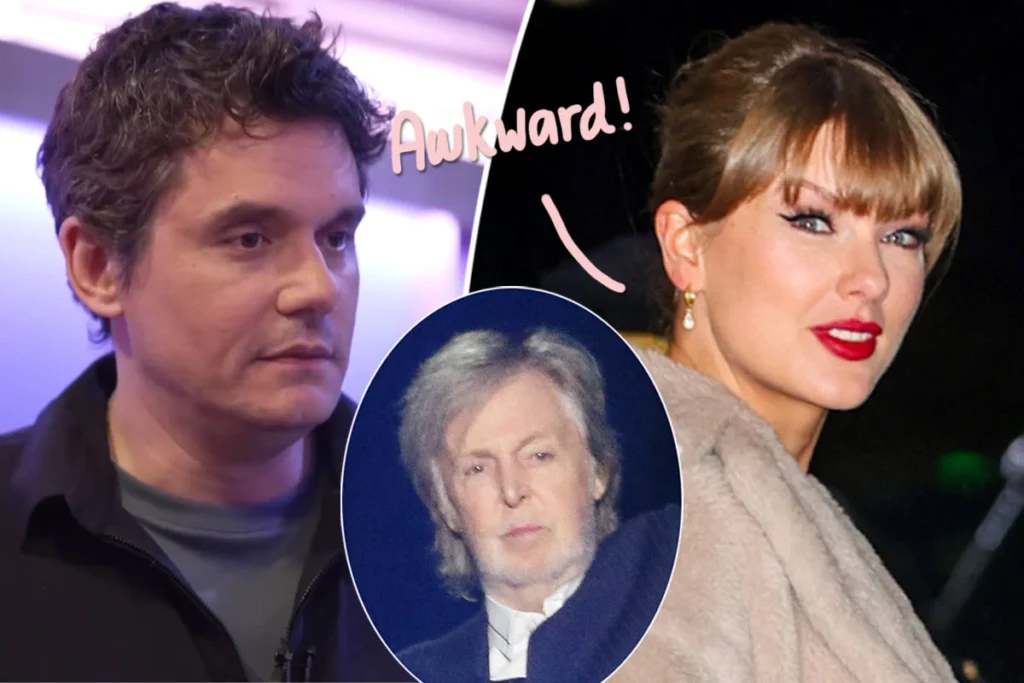

In a highly anticipated evening of musical reverence that transcended generations, global superstar Taylor Swift and acclaimed musician John Mayer found themselves in close proximity at an intimate Paul McCartney concert held at the historic Fonda Theatre in Los Angeles on Saturday. The event, which drew a constellation of A-list attendees, presented a subtle yet widely observed dynamic as the two artists, whose past romantic entanglement has been a recurring subject of public fascination and musical discourse, reportedly maintained a deliberate distance, culminating in Swift’s discreet departure via a separate exit. This near-encounter underscores the intricate challenges high-profile individuals face in navigating their personal histories under the constant scrutiny of public and media attention, even within the seemingly private confines of an exclusive cultural gathering.
The Setting: A Revered Musical Icon Draws a Star-Studded Crowd
The Fonda Theatre, an iconic venue in Hollywood with a rich history dating back to 1926, provided the backdrop for Paul McCartney’s special performance. Known for its ornate Spanish Colonial Revival architecture and intimate capacity, the Fonda frequently hosts exclusive events and legendary artists seeking a more personal connection with their audience. McCartney, a living legend whose influence spans over six decades, commands a unique respect across the music industry, making his concerts magnet for fellow musicians and celebrities. Such events are often characterized by an electric atmosphere, blending casual camaraderie among peers with the underlying buzz of high-profile attendance. On this particular Saturday, the guest list was no exception, reportedly including a diverse mix of actors, musicians, and industry luminaries, creating a vibrant, albeit potentially complicated, social tapestry. The presence of multiple generations of artists, from established icons to burgeoning stars, further highlighted the pervasive influence of McCartney’s work.
Chronology of the Evening: A Calculated Avoidance
According to photographs and reports from sources such as TMZ, Taylor Swift, currently one of the most prominent figures in global entertainment, was observed enjoying the concert in the company of fellow pop sensation Olivia Rodrigo and other associates. Swift, known for her strategic public appearances and carefully curated image, appeared engaged in conversation and the musical experience. Simultaneously, in another section of the venue, John Mayer, an accomplished guitarist and songwriter with his own substantial following, was reportedly seen interacting with his own circle of acquaintances. The spatial arrangement within the Fonda, while intimate, allows for distinct areas where guests can congregate, providing a degree of separation that proved instrumental in this instance.
As the concert progressed and drew to a close, the potential for an unintentional run-in became more pronounced, particularly during the egress of attendees. However, reports indicate a conscious effort to prevent such a direct confrontation. Swift, in what appeared to be a pre-planned maneuver or an on-the-spot decision, reportedly opted for an alternative exit strategy, successfully departing the venue without directly crossing paths with Mayer. This act of navigating separate egress routes is not uncommon for high-profile celebrities, especially when managing delicate personal dynamics in public spaces. Security teams and publicists often coordinate such movements to ensure the comfort and privacy of their clients, minimizing opportunities for awkward encounters or unwanted media narratives. The seamless execution of this departure suggests either a keen awareness of Mayer’s presence or a standing protocol for managing public interactions in crowded environments.
The Historical Context: A Relationship and Its Echoes in Music
The public’s enduring interest in the dynamic between Taylor Swift and John Mayer stems from their brief but highly publicized relationship in late 2009. At the time, Swift was 19 years old, an emerging global phenomenon with a rapidly growing fanbase known for dissecting the lyrical content of her songs for autobiographical clues. Mayer, then 32, was an established and critically acclaimed musician, already well-known for his intricate guitar work and introspective songwriting, as well as a history of high-profile relationships. The significant age difference between the two artists at the time of their involvement became a focal point of public discussion and later, a thematic element in Swift’s songwriting.
The relationship gained particular notoriety with the release of Swift’s song "Dear John" on her 2010 album Speak Now. The track, widely interpreted by fans and media alike as a direct address to Mayer, features lyrics that candidly describe a challenging and emotionally manipulative relationship, lamenting the age difference and the emotional toll it took. Lines such as "Don’t you think nineteen’s too young to be played by your dark twisted games?" left little room for ambiguity in the eyes of the public. "Dear John" quickly became one of Swift’s most poignant and discussed songs, solidifying her reputation for transforming personal experiences into universally resonant narratives.
Mayer, for his part, publicly addressed the song in a 2012 interview with Rolling Stone, stating that he was "really humiliated" by it and felt it was "cheap songwriting." He expressed frustration at being blindsided by the track, remarking, "I never got an email. I never got a phone call. I was really caught off guard." These comments further fueled the media’s attention on their past and the complex interplay between celebrity relationships and artistic expression. The legacy of "Dear John" has continued to resonate, especially with Swift’s ongoing re-recording project, "Taylor’s Version," which saw the re-release of Speak Now (Taylor’s Version) in 2023. This re-release brought renewed attention to the track and the narrative surrounding her relationship with Mayer, allowing a new generation of fans to engage with the song and its emotional depth, while older fans revisited its significance with fresh perspective. The re-recorded version, while musically identical, carries the weight of over a decade of personal growth and career evolution for Swift, imbuing the lyrics with a different kind of power and a sense of reclamation.
Supporting Data and Contextual Details
The Fonda Theatre, located at 6126 Hollywood Blvd, has a standing capacity of approximately 1,200 people, making it an intimate venue for an artist of McCartney’s stature. This relatively small size means that celebrity attendees are often visible and in closer proximity than at larger arenas. Security protocols for such high-profile events are meticulously planned, involving both venue staff and the personal security details of attending celebrities. These teams are adept at managing crowd flow, identifying potential issues, and facilitating discreet movements for their clients. The ability of Swift’s team to navigate her exit without a direct confrontation speaks to the efficiency of these protocols and the likely awareness of the potential for such an encounter.
Celebrity attendance at concerts, especially those featuring legendary artists, is a common occurrence in Los Angeles. It provides both an opportunity for artists to enjoy music as fans and a chance for networking or casual social interaction within their peer group. However, it also inherently carries the risk of encountering past acquaintances or former partners, particularly in a city where the entertainment industry’s elite often frequent the same exclusive venues and events. The public’s fascination with these encounters is a testament to the blurring lines between celebrity personal lives and their public personas, often fueled by media coverage and fan speculation.
Broader Impact and Implications: The Enduring Narrative of Celebrity Exes
The incident at the Fonda Theatre, though a non-event in terms of a direct interaction, is significant precisely because of its avoidance. It highlights the ongoing narrative surrounding celebrity exes, particularly when their past relationships have been immortalized in art. For artists like Taylor Swift, whose discography is famously autobiographical, every past relationship, even those from over a decade ago, continues to hold relevance for her fanbase. The "Dear John" narrative remains a potent part of Swift’s lore, influencing how fans perceive her artistic journey and her personal growth.
This situation also underscores the unique challenges faced by public figures in maintaining personal boundaries and privacy. Even in a seemingly relaxed social setting like a concert, the presence of cameras and the constant potential for public scrutiny necessitates a heightened level of awareness and strategic planning. The ability to control one’s narrative, particularly regarding past relationships, is a perpetual endeavor for celebrities. Swift’s reported choice of a separate exit is a subtle yet powerful statement about her agency and desire to manage her public image and personal comfort. It signals a preference for avoiding potentially awkward or headline-generating encounters, reinforcing a boundary that has been established through her music and public statements.
Furthermore, the public’s reaction to such near-misses reflects a broader cultural fascination with the intersections of celebrity, romance, and artistic expression. The speculation and discussion that follow such events, even those without direct interaction, indicate a sustained interest in the human drama behind the headlines. It also serves as a reminder that even for global icons, personal histories, once made public, can continue to shape their present-day experiences and public perception, regardless of how much time has passed or how much individual growth has occurred. The narrative of "Dear John" is not merely a song; it’s a cultural touchstone that continues to inform public understanding of Taylor Swift’s journey as both an artist and an individual navigating the complexities of fame and personal relationships. This near-encounter at the Paul McCartney concert, therefore, was more than just two individuals attending a show; it was a subtle moment in the ongoing saga of celebrity, memory, and public perception.