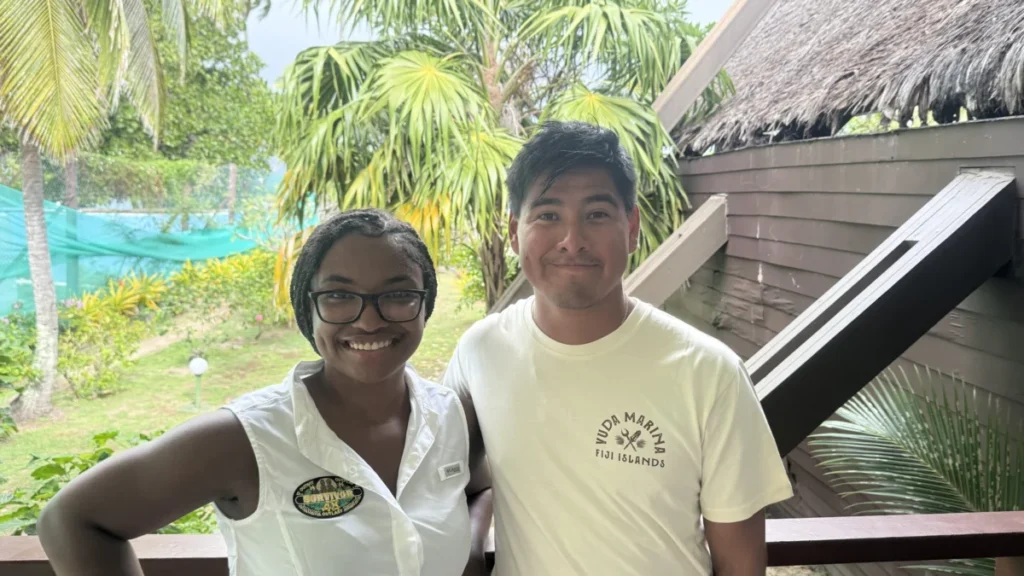

Long before host Jeff Probst issues his iconic "Come on in!" command to contestants embarking on a Survivor challenge, an indispensable, yet largely unseen, collective known as the "Dream Team" has already meticulously navigated every obstacle, tested every mechanism, and simulated every possible scenario. These individuals, far from being on-screen personalities, represent a foundational pillar of the globally renowned reality competition, ensuring the integrity, safety, and spectacle that have defined Survivor across its unprecedented run of nearly 50 seasons. What began as a practical solution for producers has evolved into a sophisticated talent incubator, a tight-knit backstage community, and a vital pipeline for a significant portion of the show’s behind-the-scenes professionals.
The Genesis of a Critical Production Element
The inception of the Dream Team traces back to a pragmatic need within Survivor‘s intricate production ecosystem. Early in the show’s history, as challenges grew in complexity and physical demand, co-executive producer John Kirhoffer recognized the impracticality and potential safety risks of relying solely on production staff to test elaborate obstacle courses. The solution was the formation of a dedicated team whose primary role would be to rigorously test each challenge, identifying flaws, refining gameplay, and ensuring participant safety. This initial logistical workaround quickly blossomed into an integral component of Survivor‘s operational structure, laying the groundwork for a unique model of talent development in reality television.
The challenges on Survivor are not merely physical feats; they often involve intricate puzzles, strategic elements, and psychological components. Each challenge must be meticulously constructed, tested for fairness, and proven to be solvable within the constraints of gameplay. This iterative process, involving repeated trials and adjustments, falls squarely on the shoulders of the Dream Team. Their efforts guarantee that when contestants face a challenge, it is not only safe but also balanced, providing an equitable playing field and opportunities for dramatic outcomes, which are crucial for the show’s narrative.
A Day in the Life: Rigors of Testing and Production
Operating from the remote, idyllic yet demanding locale of Fiji, the Dream Team’s daily schedule is a testament to the extensive groundwork required for a show of Survivor‘s magnitude. Their days, often stretching 11 to 12 hours, encompass a diverse array of tasks far beyond merely running through obstacles. As current Dream Teamers Skylar Williams and Kevin Martinez describe, their responsibilities extend into the art department, where they contribute to the elaborate set design, painting and assembling challenge pieces for days on end. "Painting a single wooden post can take days," Williams notes, highlighting the meticulous detail involved in creating the show’s signature aesthetic.
Beyond the physical testing of challenges, which involves leaping, climbing, balancing, and bracing for impact, Dream Team members also serve as crucial stand-ins during tribal councils and other filming segments. This role ensures that lighting, camera angles, and sound setups are perfected before the actual contestants arrive, providing a seamless production flow. "We stand in at tribal councils, sitting where contestants do while lighting and camera setups get tested," explains Brittany Crapper, a former Dream Teamer who has ascended to co-executive producer. This comprehensive involvement across various departments—from physical exertion to artistic contribution and technical stand-in duties—provides an unparalleled, holistic understanding of television production. The remote Fijian environment further intensifies this experience, fostering a self-sufficient and tight-knit working culture among the crew.
The Unconventional Audition: Diverse Paths to the Dream Team
Entry into the exclusive Dream Team is not through conventional job postings but often via industry connections, passionate advocacy, and a unique audition process. For many, it represents a highly coveted gateway into the competitive world of television production. Brittany Crapper recounts hearing about the opportunity through a family friend, describing it as "the best job in the world." Her application involved submitting a video, an experience she humorously recalls as "atrocious" but ultimately successful, underscoring Kirhoffer’s discerning eye for potential.
Similarly, Skylar Williams learned about the team through her uncle, a former producer on the show, and passionately pursued the role, driven by her love for sports, travel, and a desire to enter TV. Her persistence paid off after two years of communication, culminating in what she calls "the most exciting day of my life" upon being accepted at age 21.
Kevin Martinez found his way to Survivor via supervising producer Chris Marchand, with whom he had previously worked on Big Brother. Martinez, initially unfamiliar with Survivor, quickly became "hooked" after watching the show, drawn into its unique production environment.
Perhaps one of the most compelling entry stories belongs to Zach Sundelius, now a supervising producer. A dedicated Survivor fan since its inception, Sundelius spent years sending unsolicited emails and resumes to CBS, with no success. His breakthrough came through creating a "Future Dream Team" Twitter account, where he connected with Survivor writer Gordon Holmes. Holmes, impressed by Sundelius’s passion, forwarded his information to Kirhoffer, leading to an interview and a subsequent invitation to join the Dream Team in Samoa. This narrative highlights the power of persistence and networking, even in the absence of a formal application channel, underscoring the team’s unique recruitment philosophy.
Brothers Tim and Chris Barker also found their way to the Dream Team through a friend working in the challenge department. Chris joined first, in season 18, and encouraged Tim to follow suit the next year in season 19, recognizing the incredible opportunity it presented. These varied recruitment stories illustrate that while connections can open doors, passion, resilience, and a genuine interest in the show are equally, if not more, crucial.
From Testers to Trailblazers: The Dream Team as a Talent Pipeline
Beyond its immediate operational function, the Dream Team has become a recognized and highly effective launchpad for aspiring television professionals. Its comprehensive exposure to diverse aspects of production, coupled with a culture of mentorship, provides an unparalleled training ground for future industry leaders. The career trajectories of many Dream Team alumni serve as compelling evidence of this phenomenon.
Brittany Crapper’s journey from Dream Teamer to co-executive producer exemplifies this upward mobility. Her time on the team allowed her to "explore different departments to see what interested me," eventually identifying producing as her passion. She shadowed producers, learned their roles, and steadily climbed the ranks: nighttime segment producer, daytime segment producer, producer, supervising producer, and finally, co-executive producer. This organic progression within the Survivor family is a hallmark of the show’s talent development strategy.

Zach Sundelius, another supervising producer, shares a similar narrative. His journalism background drew him to storytelling and producing. After his stint on the Dream Team, he worked briefly on The Jeff Probst Show before returning to Survivor as a night segment producer, then daytime, and eventually a challenge producer/supervising producer. His path underscores how the foundational knowledge gained as a Dream Teamer provides a robust base for specialized roles.
The Barker brothers demonstrate the pipeline’s capacity to foster technical expertise. Tim Barker, who had a pre-existing love for cameras, found his entry into the field through Survivor. "Joining Survivor meant meeting pros who took me under their wing, showing me gear and teaching me," he recounts. After several years as a camera assistant (AC), he advanced to camera operator, a role he holds today. His brother, Chris Barker, leveraged his initial role as a camera assistant into pioneering the show’s aerial photography. With the emergence of drone technology, Chris and a few colleagues brought their own drones to set, developed reels, and secured approval to integrate them into production. Starting with Ghost Island (2017), the show now employs approximately 15 drones, eliminating the need for helicopters and solidifying Chris’s role as Director of Aerial Photography. This evolution showcases the Dream Team’s environment not only for internal promotion but also for fostering innovation and embracing new technologies.
Current Dream Teamers like Skylar Williams and Kevin Martinez are already charting their own courses within this framework. Williams is keenly interested in producing, having shadowed and assisted producers in recent seasons. Martinez, aspiring to assistant directing or camera operating, has actively engaged in both roles, expressing his desire to direct eventually. Both articulate a shared sentiment: "At Survivor, everyone wants you to succeed and teaches you to be the best in your field. We learn the show’s details and are prepped for long-term roles here." This proactive mentorship and internal development model significantly contribute to Survivor‘s consistent production quality and its ability to retain institutional knowledge across decades.
Building a Community: The Enduring Survivor Family
Beyond professional advancement, the Dream Team and the broader Survivor crew are characterized by an extraordinary sense of camaraderie and family. The unique production environment—living and working together in remote locations for extended periods—fosters bonds that transcend typical professional relationships. Kevin Martinez remarks, "I’ve never felt this kind of camaraderie on other shows. Here, it’s like, ‘We got you, we’ll help you.’ We eat together, breakfast, lunch, dinner. I want to be here until I’m 80."
Skylar Williams echoes this sentiment, describing the crew as "a huge happy family. We’re together 24/7. I feel like that also helps build the bond and family that is Survivor." Zach Sundelius elaborates on the "institutional community" that has been cultivated since the show’s inception. "When you step into it, you immediately get this sense that this is more than a job. People really care not only about the show but about each other." This collective pursuit of a common goal, combined with shared living experiences, creates a supportive and enduring network.
Brittany Crapper vividly illustrates the depth of these connections, highlighting the numerous personal relationships that have blossomed within the Survivor family. "I met my husband here," she reveals, detailing how their romance began when she was a Dream Teamer and he was in standby props. Three years later, they married and now have three daughters, a testament to the profound personal impact of working on the show. She notes the significant number of "Survivor babies" and marriages, estimating "we’re creeping on the 50s or 60s" for babies alone. This phenomenon, while perhaps inevitable given the extended time spent abroad, underscores the unique environment where professional collaboration intertwines with deep personal connections, creating a truly unparalleled work culture.
John Kirhoffer: The Heartbeat of Challenges and the Team
At the core of this unique ecosystem is John Kirhoffer, whose role extends far beyond co-executive producer. He is widely regarded as the "father figure" and mentor to the Dream Team, embodying the show’s commitment to nurturing its talent. Skylar Williams describes him as "genuinely a father figure. He wants the best for all of us… He’s like a safe space for all of us."
Kevin Martinez shares this perspective, noting, "He’s our boss but he doesn’t feel like your typical boss." Kirhoffer’s leadership style is characterized by a profound care for his team’s well-being, particularly concerning safety during challenge testing. "Even during challenges, he always tells us, ‘If you’re uncomfortable, don’t do it,’" Martinez emphasizes, highlighting Kirhoffer’s understanding of individual limitations and phobias. This empathy ensures that while challenges are rigorously tested, the safety and comfort of the Dream Teamers remain paramount.
Brittany Crapper praises Kirhoffer for his deep personal investment in the Dream Teamers, stating he "really takes these Dream Teamers in as his own children." She credits him with providing invaluable advice and unwavering support, even years after her time on the team. Chris Barker succinctly captures Kirhoffer’s role as "kind of like the camp counselor," a leader who fosters bonding through shared experiences of eating, running challenges, and working on art together. Tim Barker reinforces this, noting how Kirhoffer’s introductions quickly integrate new team members into the larger 300-person crew, transforming strangers into a network of friends and family over years. Kirhoffer’s unwavering dedication to both the show’s quality and his team’s welfare is undeniably a driving force behind the Dream Team’s success and Survivor‘s enduring appeal.
Broader Implications for Reality Television Production
The Survivor Dream Team model offers significant implications for the broader reality television industry. In an era where long-running franchises are increasingly common, the need for sustainable production practices, talent retention, and consistent quality is paramount. The Dream Team provides a blueprint for how a production can internally cultivate expertise, ensuring a continuous flow of skilled professionals who are deeply familiar with the show’s unique demands and ethos.
This model contributes to the show’s remarkable consistency and safety record over 50 seasons. By having a dedicated team meticulously test every challenge, Survivor minimizes risks for contestants and maintains fairness, which are critical elements for maintaining audience trust and engagement. Furthermore, by fostering an internal talent pipeline, the show mitigates the challenges of hiring external crew for specialized roles, ensuring that key positions are filled by individuals who have grown up within the Survivor system. This institutional knowledge is invaluable for preserving the show’s unique identity and operational efficiency.
The "family" atmosphere cultivated within the Survivor crew, largely initiated through the Dream Team experience, also speaks to a successful strategy for employee satisfaction and retention in a demanding industry. Highlighting human connection and mutual support, as evidenced by numerous marriages and families formed on set, creates a powerful incentive for dedicated professionals to return season after season.
As Survivor continues to air new episodes on Wednesdays at 8 PM on CBS and Paramount+, the unseen efforts of the Dream Team remain a vital, albeit uncredited, component of its global success. Their rigorous testing ensures the spectacle and integrity of the challenges, while their collective journey exemplifies an innovative model for developing and nurturing talent in the ever-evolving landscape of reality television. The Dream Team is not just a group of testers; they are the unsung architects of Survivor‘s enduring legacy, a testament to the power of teamwork, dedication, and an unwavering commitment to excellence behind the scenes.