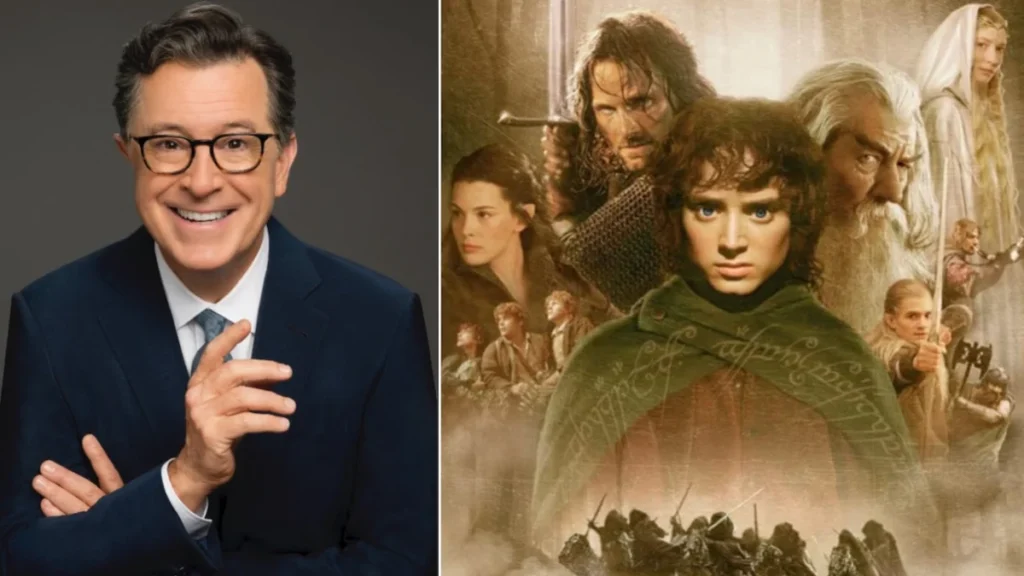

Warner Bros. Pictures has announced that Stephen Colbert, the esteemed host of CBS’s The Late Show with Stephen Colbert and a renowned devotee of J.R.R. Tolkien’s Middle-earth saga, is set to co-write a new cinematic installment titled The Lord of the Rings: Shadows of the Past. This development underscores Warner Bros.’ strategic commitment to maintaining its licensing agreement for the venerable fantasy franchise, which reportedly mandates the continuous development of new Lord of the Rings projects every few years. The film, co-penned by Colbert, his son Peter McGee, and veteran Lord of the Rings screenwriter Philippa Boyens, promises a fresh yet deeply rooted exploration of Tolkien’s world.
The Genesis of Shadows of the Past
The decision to greenlight Shadows of the Past comes as part of Warner Bros.’ broader strategy to capitalize on its most valuable intellectual properties. The studio’s need to continually develop new content for The Lord of the Rings franchise is rooted in a complex licensing agreement originally established with the Saul Zaentz Company, which held certain adaptation rights to Tolkien’s works for decades. While the precise terms are proprietary, industry observers understand that active production or development is crucial for retaining these rights, ensuring the franchise remains a cornerstone of Warner Bros.’ cinematic portfolio. This imperative has driven various projects, including the successful Peter Jackson trilogies, The Hobbit films, and the forthcoming animated feature The Lord of the Rings: The War of the Rohirrim.
Stephen Colbert’s involvement marks a significant and intriguing pivot for the franchise. Known for his profound and often encyclopedic knowledge of Tolkien lore, Colbert has frequently demonstrated his expertise on The Late Show, engaging guests and audiences with intricate details of Middle-earth, often challenging actors from the films with trivia, or hosting elaborate segments dedicated to the mythology. His passion for the source material, described by some as "fan boy" level, is seen by many as a unique asset, offering a blend of reverence and creative insight that could resonate deeply with the global fanbase.
The inspiration for Shadows of the Past draws directly from the foundational text of The Fellowship of the Ring. Colbert revealed in a video announcement, shared by Warner Bros. on March 25, 2026 – a date chosen to coincide with Tolkien Reading Day and the symbolic destruction of the One Ring in the lore – that the film will adapt six specific chapters (III-VIII) that were largely omitted or significantly condensed in Peter Jackson’s seminal 2001 film adaptation. These chapters, spanning from “Three Is Company” to “Fog on the Barrow-Downs,” cover the early leg of the hobbits’ journey from the Shire, through the Old Forest, their perilous encounter with the Barrow-wights, and their pivotal meeting with Tom Bombadil before reaching Bree and Strider.
Colbert articulated his vision, stating, "The thing I found myself reading over and over again were the six chapters early on in [The Fellowship of the Ring] that ya’ll never developed into the first movie back in the day… I thought, ‘Oh, wait, maybe that could be its own story that could fit into the larger story. Could we make something that was completely faithful to the books while also being completely faithful to the movies that you guys had already made?’" This dual fidelity—to both the literary source and the established cinematic continuity—is a challenging but potentially rewarding artistic tightrope walk.
A Deep Dive into the Narrative and Unexplored Territories
The official logline for The Lord of the Rings: Shadows of the Past offers tantalizing glimpses into its plot: “Fourteen years after the passing of Frodo, Sam, Merry and Pippin set out to retrace the first steps of their adventure. Meanwhile, Sam’s daughter, Elanor, has discovered a long-buried secret and is determined to uncover why the War of the Ring was very nearly lost before it even began.”
This synopsis immediately highlights several key elements. Firstly, the setting in the Fourth Age, “fourteen years after the passing of Frodo,” places the narrative in a largely unexplored period of Middle-earth’s history. Frodo Baggins, having borne the Ring and suffered its corruption, departed Middle-earth for the Undying Lands in TA 3021. Fourteen years later would place the film around FA 14-15, a time of relative peace and rebuilding, but also one where the echoes of past conflicts could still resonate. This offers significant creative freedom, as Tolkien himself left fewer detailed accounts of the Fourth Age compared to the First, Second, and Third Ages.
The decision to have Samwise Gamgee, Merry Brandybuck, and Pippin Took retrace their initial journey from the Shire carries profound emotional and thematic weight. This pilgrimage could serve as a powerful exploration of memory, loss, friendship, and the enduring impact of their legendary quest. It presents an opportunity to see how the Shire and its inhabitants have changed, matured, and perhaps grappled with the legacy of their heroic deeds. For audiences, it promises a blend of nostalgia and fresh perspective, seeing beloved characters in a new light, reflecting on their past while navigating their present.
Central to the new narrative is Elanor Gamgee, Sam’s eldest daughter and Frodo’s goddaughter. Elanor is a figure of minor but significant importance in Tolkien’s appendices, known for her beauty and for inheriting the Red Book of Westmarch, which contained Bilbo and Frodo’s accounts of their adventures. Her discovery of a "long-buried secret" that threatened the War of the Ring even before it began suggests a narrative that could delve into hidden machinations, forgotten prophecies, or overlooked vulnerabilities during the tumultuous Third Age. This mystery element could connect to unexplored facets of Sauron’s power, ancient evils predating the Dark Lord, or even political intrigues among the Free Peoples that nearly fractured their resistance. Such a plot device allows the film to honor established lore while introducing new dramatic tension and expanding upon the known history of Middle-earth.
The Creative Team: A Confluence of Expertise and Passion
The collaborative writing team behind Shadows of the Past is a compelling mix of seasoned experience and fervent dedication. Philippa Boyens, a key architect of Peter Jackson’s Lord of the Rings and The Hobbit trilogies, brings an invaluable understanding of adapting Tolkien’s work for the screen. Her involvement ensures continuity in tone, characterization, and the intricate world-building established in the beloved films. Boyens’ deep textual knowledge and experience navigating the complexities of Middle-earth canon, coupled with the practical demands of blockbuster filmmaking, will be crucial in translating Colbert’s vision into a cohesive screenplay.
Stephen Colbert’s son, Peter McGee, joining the writing team, adds another layer to the creative dynamic. While specific details about McGee’s prior screenwriting credits are still emerging, his collaboration with his father on such a high-profile project suggests a shared creative sensibility and perhaps a generational perspective on the material. This familial collaboration could foster a unique creative environment, blending Colbert’s deep scholarly appreciation with fresh narrative approaches.
For Stephen Colbert himself, this project represents a significant career transition. He announced that he would begin working on the script once his tenure as host of The Late Show concludes this spring. This move from a demanding nightly television schedule to full-time screenwriting for a major franchise highlights the depth of his commitment to The Lord of the Rings and signals a new chapter in his professional life, allowing him to channel his passion into a creative endeavor of immense scale.
A Chronology of Middle-earth on Screen
The Lord of the Rings: Shadows of the Past enters a rich and continually expanding cinematic and television universe based on Tolkien’s writings. The journey began definitively with Peter Jackson’s The Lord of the Rings trilogy (2001-2003), which garnered immense critical acclaim and box office success, culminating in The Return of the King winning 11 Academy Awards, including Best Picture. Jackson followed this with The Hobbit trilogy (2012-2014), which, while commercially successful, received a more mixed critical reception.
More recently, Amazon Prime Video launched The Lord of the Rings: The Rings of Power in 2022, set in the Second Age of Middle-earth, thousands of years before the events of The Hobbit and The Lord of the Rings. This series represented a monumental investment and a strategic move by Amazon to compete in the high-stakes fantasy streaming market. Its reception has been varied, igniting passionate debates among fans regarding its faithfulness to Tolkien’s expanded lore.
Alongside Shadows of the Past, Warner Bros. is actively developing other cinematic projects. Notably, Andy Serkis is directing The Hunt for Gollum, which has a targeted release date of December 2027. This film is expected to delve into the period between The Hobbit and The Lord of the Rings, exploring Gandalf’s search for Gollum. Reports suggest that Ian McKellen may reprise his iconic role as Gandalf, further cementing the connection to Jackson’s original trilogy. Furthermore, an animated film, The Lord of the Rings: The War of the Rohirrim, is slated for release, focusing on the history of Helm’s Deep and the legendary King Helm Hammerhand.
These multiple projects demonstrate a multi-pronged strategy by Warner Bros. and Middle-earth Enterprises to explore different eras, characters, and narrative styles within Tolkien’s vast mythology, ensuring a continuous stream of content to satisfy fan demand and maintain the franchise’s commercial viability.
Industry Reactions and Broader Implications
The announcement of Stephen Colbert’s involvement has generated significant buzz across the entertainment industry and among the global Lord of the Rings fanbase. Industry analysts view this as a shrewd move by Warner Bros., leveraging Colbert’s established celebrity, his undeniable passion for the material, and his intellectual gravitas to inject fresh energy into the franchise. His unique position as a public figure who is also a deeply knowledgeable fan could help bridge the gap between purist expectations and the demands of cinematic storytelling.
The decision to adapt previously unfilmed chapters of The Fellowship of the Ring, combined with a Fourth Age mystery, suggests a bold approach to expanding the cinematic canon. Tolkien scholars and purists will undoubtedly scrutinize the adaptation of characters like Tom Bombadil, whose whimsical and enigmatic nature has always posed a challenge for direct adaptation. His inclusion, or the way his narrative arc is integrated, will be a key indicator of the film’s faithfulness to the original text. The Fourth Age setting, meanwhile, offers fertile ground for new narratives without directly re-treading familiar ground, a common pitfall for long-running franchises.
For Warner Bros., Shadows of the Past represents a crucial piece in its ongoing strategy to compete in a crowded entertainment landscape. In an era where intellectual property is king, maintaining and expanding flagship franchises like The Lord of the Rings is paramount. The success of this film, along with The Hunt for Gollum and other planned projects, will be vital in demonstrating the long-term viability and profitability of Middle-earth content beyond the initial Jackson trilogies. It also signifies the studio’s willingness to take creative risks by entrusting such a beloved property to a writer with a non-traditional background in feature film screenwriting.
The transition for Colbert from late-night comedy to feature film writing is a testament to his versatility and commitment to creative endeavors beyond television. It marks a significant personal and professional evolution, allowing him to pursue a passion project on a grand scale. The anticipation surrounding Shadows of the Past is palpable, as fans eagerly await to see how this unique confluence of talent, passion, and unexplored lore will shape the next chapter of Middle-earth on the silver screen.