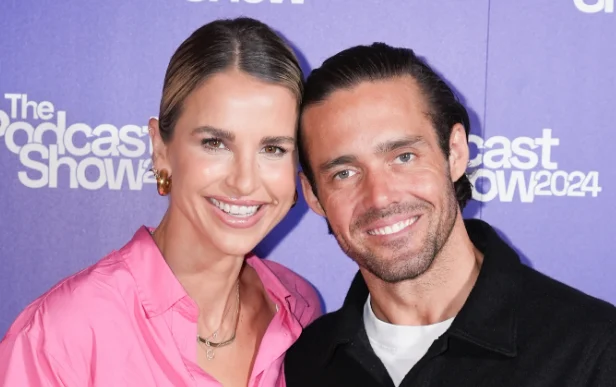

Prominent television personality and entrepreneur Spencer Matthews, 37, has recently offered a candid and deeply personal account of his struggles with alcohol, detailing the evolution of his drinking habits from early career days to a transformative journey towards mindful moderation. Speaking openly on various platforms, including the "On the Mend with Matt Willis" podcast and his wife Vogue Williams’ "Taboo Talks" podcast, Matthews shed light on the pressures that fuelled his past consumption and the pivotal moments that led him to reassess his relationship with alcohol, ultimately influencing his decision to launch his own successful alcohol-free beverage brand, CleanCo. His narrative underscores the complex interplay of professional culture, personal relationships, and the profound impact of fatherhood in confronting problematic habits.
The Genesis of a Habit: Early Career Influences
Matthews’ journey with alcohol began long before his public persona on reality television series like "Made in Chelsea" took shape. He revealed that his early career as a trader at ICAP fostered an environment where heavy drinking was not merely tolerated but implicitly encouraged and even seen as a professional asset. "I always had jobs where being able to handle your drink really well was a huge bonus," Matthews explained on the "Taboo Talks" podcast. He vividly recalled a daily routine that involved consuming "five to 10 pints every single day," followed by entertaining clients well into the night. This pervasive "work hard, play hard" culture, prevalent in many high-pressure sectors, particularly in finance during that era, normalised excessive alcohol consumption as a mechanism for both social bonding and stress relief. The ability to keep pace with colleagues and clients in drinking sessions was, by his account, a prerequisite for success, effectively blurring the lines between professional duty and personal indulgence. This sustained exposure to a high-drinking culture laid the foundation for habits that would later become a significant personal challenge. Research into occupational drinking patterns often highlights how certain industries, particularly those involving client entertainment or high-stress environments, can inadvertently cultivate problematic alcohol use among employees, making it difficult for individuals to distinguish between social drinking and dependency.

A Relationship Under Strain: Vogue Williams and the Unspoken Truth
The arrival of Vogue Williams into his life, culminating in their marriage in June 2018, marked a gradual but significant shift in Matthews’ perception of his drinking. The couple, who now share three children—son Theodore, seven, daughter Gigi, five, and son Otto, three—initially navigated their relationship with a shared enjoyment of alcohol. However, as Matthews candidly admitted on the "On the Mend with Matt Willis" podcast, he harboured an underlying fear that his "bad habits" with booze would eventually lead to the dissolution of his marriage. "I was very aware that if I carried on with my drinking and bad habits, that she would get bored, and she would leave me," he confessed. This internal apprehension persisted despite Vogue never issuing an ultimatum or directly confronting him with such a threat. "She never sat me down and gave me some kind of ultimatum or anything like that," he clarified, "But I could feel it. I could feel that she was a bit disappointed in me." This unspoken tension, a silent undercurrent of concern from his partner, served as a powerful, albeit subtle, catalyst for self-reflection. The psychological burden of perceived disappointment from a loved one can often be a significant motivator for individuals to examine and ultimately address problematic behaviours, even in the absence of explicit demands.
The Turning Point: Fatherhood and Self-Reflection
The true "light was shone on my boozing," Matthews revealed, when Vogue fell pregnant with their firstborn, Theodore. This transformative life event, while joyous, starkly exposed the divergence in their lifestyles. As Vogue naturally ceased drinking during her pregnancy, what had once been "joint fun" quickly transformed into "solo fun" for Spencer. "And I just didn’t, I carried on, and it created this kind of divide in the relationship, but also made me realise, you know, maybe my drinking habits are not normal," he recounted. This period marked the beginning of a conscious questioning of his alcohol consumption. Vogue’s observations, initially gentle, grew more pointed. Matthews recalled conversations where he would defend his habit, rationalising, "Darling, we’re watching a film, like, of course it’s, like, normal to have a few glasses of red wine." Yet, Vogue’s simple, direct questioning – "You’re drinking on your own?" and "Well, because I’m not drinking, do you have to, do you have to drink?" – chipped away at his justifications. These seemingly innocuous exchanges forced him to confront the solitary nature of his drinking and its potential implications, prompting him to "begin to question stuff, perhaps for the first time." The arrival of children is a well-documented turning point for many adults in re-evaluating health and lifestyle choices, with parenthood often serving as a powerful impetus for reducing or eliminating harmful habits.
The Moment of Clarity: A Personal Reckoning
While the gradual questioning from Vogue and the shift in their shared lifestyle laid the groundwork, Matthews pinpointed a specific, stark incident that served as his ultimate moment of clarity. One night, alone, he found himself drinking a bottle of whiskey to the point of severe intoxication. The experience was profoundly unsettling. "I had a bottle of whiskey and struggled to get myself to bed," he admitted, describing himself as "hammered drunk." The physical and mental discomfort of that night culminated in a powerful epiphany upon waking the following day. "I remember waking up the next day and I thought, ‘I don’t need this in my life,’" he stated. This acute realisation, a sudden and undeniable rejection of his current path, provided the impetus he needed to instigate significant change. Such pivotal moments, often referred to as "rock bottom" or "aha moments," are frequently cited by individuals as the turning point in overcoming addiction or problematic behaviours. They represent a collision between the perceived normalcy of a habit and its undeniable negative consequences, leading to a profound shift in perspective and a strong motivation for change.

Embracing Sobriety and Mindful Moderation
Following this crucial realisation, Spencer Matthews embarked on a deliberate journey to redefine his relationship with alcohol. He has since adopted an approach he describes as "mindful moderation," a stark contrast to his previous daily reliance on alcohol. "I’m sober most of the time, now. I’ve gone from problem-drinking on a daily basis to having a drink if I feel like it very irregularly," he explained. This personal philosophy moves beyond the binary choice of complete abstinence or uncontrolled consumption, instead focusing on conscious choices and maintaining balance. For Matthews, this means alcohol is no longer a default or a coping mechanism but an occasional, considered indulgence that does not disrupt his overall well-being or family life. "I no longer see it as a problem. I have great balance in my life," he affirmed. This approach resonates with a growing movement towards mindful drinking, where individuals actively reduce their alcohol intake, focus on quality over quantity, and prioritise the positive impacts of sobriety or reduced consumption on their physical and mental health. This personal testimony provides a relatable model for many who seek to reform their drinking habits without necessarily committing to lifelong abstinence.
From Personal Struggle to Entrepreneurial Success: CleanCo
Matthews’ personal transformation was not confined to his private life; it quickly spilled over into his entrepreneurial endeavours. Inspired by his own journey and the perceived gap in the market for sophisticated, adult-oriented non-alcoholic alternatives, he launched CleanCo in 2019. The brand offers a range of alcohol-free spirits designed to replicate the taste and experience of traditional alcoholic beverages without the ethanol. His personal experience of seeking non-alcoholic options that didn’t feel like a compromise directly informed the development and mission of CleanCo. The timing of CleanCo’s launch aligned perfectly with a burgeoning global trend towards reduced alcohol consumption. The low and no-alcohol market has seen significant growth in recent years, with data from IWSR Drinks Market Analysis showing that the market value exceeded $11 billion in 2022 across ten key global markets. This growth is driven by increasing health consciousness, a desire for balanced lifestyles, and a broader cultural shift towards mindful drinking. Matthews’ ability to leverage his personal narrative and public profile to promote CleanCo has undoubtedly contributed to its success, positioning him as a credible advocate for the very lifestyle he now champions. His entrepreneurial venture stands as a tangible outcome of his personal reckoning with alcohol, turning a challenge into an innovative business solution.
The Broader Conversation: Celebrity Influence and Public Health
Spencer Matthews’ decision to share his alcohol journey publicly holds significant implications beyond his personal story. As a prominent media figure, his candidness contributes to destigmatising discussions around alcohol dependency and problematic drinking. Celebrities opening up about such struggles can provide a relatable narrative for countless individuals who may be silently grappling with similar issues but fear judgment or lack the courage to seek help. His experience, particularly highlighting the insidious nature of work-related drinking culture and the subtle influence of a partner’s concern, offers valuable insights for a wider audience. Moreover, his transition from a reality TV persona often associated with partying to a responsible entrepreneur advocating for mindful drinking presents a powerful narrative of personal growth and redemption. This public discourse encourages self-reflection among consumers and contributes to a societal shift towards greater awareness of alcohol’s impact on health and well-being. Podcasts, in particular, have emerged as powerful platforms for such intimate revelations, allowing public figures to share complex narratives in a nuanced and engaging manner, reaching audiences directly and fostering a sense of community around shared experiences.

The Family Dynamic and Support System
While Matthews explicitly stated that Vogue Williams never issued an ultimatum, her consistent and gentle questioning played an undeniable, albeit indirect, role in his journey. Her observations acted as a mirror, reflecting back his habits and prompting him to see them from a different perspective. This subtle form of support, characterised by concern rather than confrontation, allowed Matthews to arrive at his own conclusions organically. The presence of their children, particularly the shift in dynamics when Vogue was pregnant, provided an additional layer of motivation. The desire to be a present, healthy, and responsible father often serves as a powerful incentive for individuals to address problematic behaviours. Experts in addiction and family dynamics frequently highlight the crucial role of family support, even if it’s not always overt or direct, in an individual’s path to recovery or moderation. A supportive partner who expresses concern and facilitates an environment for self-reflection can be instrumental in prompting an individual to seek change, illustrating the profound interconnectedness of personal habits and familial well-being.
A New Chapter: Redefining Identity Beyond Reality TV
Spencer Matthews’ public sharing of his alcohol journey marks a significant chapter in his evolving public identity. Moving beyond the often-caricatured persona of a privileged reality TV star, he has cultivated an image as a thoughtful entrepreneur, devoted family man, and advocate for healthier lifestyle choices. This transformation is not merely about sobriety but about redefining his personal brand and contributing meaningfully to conversations around well-being. His journey exemplifies how public figures can leverage their platforms to promote positive change and challenge societal norms around alcohol consumption. The long-term implications for Matthews include a strengthened personal narrative, increased credibility as a wellness advocate, and a deeper connection with an audience that values authenticity and resilience. His story serves as a testament to the power of self-awareness, personal accountability, and the courage to confront deeply ingrained habits for a more balanced and fulfilling life.