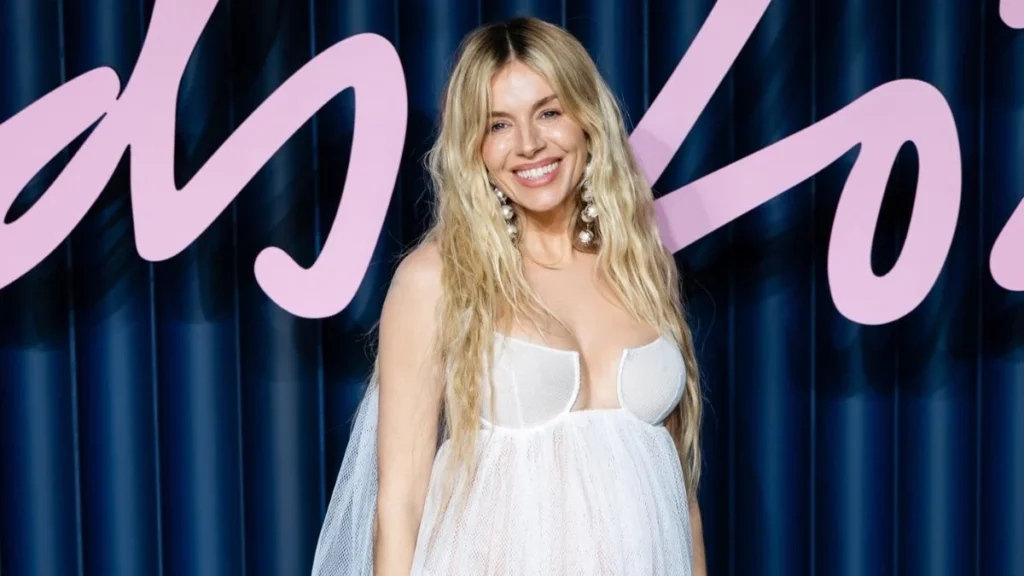

Sienna Miller, the British-American actress acclaimed for her roles in "Anatomy of a Scandal" and "Layer Cake," has sparked a global conversation regarding the intersection of age, career, and motherhood. In a series of candid reflections, most notably during a comprehensive interview with Glamour magazine, Miller has challenged the long-standing societal stigmas associated with "advanced maternal age." Currently expecting her second child with her partner, actor Oli Green, the 42-year-old actress has articulated a perspective that frames later-in-life parenting not as a challenge to be overcome, but as a period of profound personal and emotional advantage. Her insights provide a window into the evolving landscape of modern family dynamics and the increasing rejection of rigid biological and social timelines for women.
The Dichotomy of Experience: Parenting at 29 versus 42
At the heart of Miller’s recent public discourse is a direct comparison between her first experience with motherhood and her current journey. Miller gave birth to her first daughter, Marlowe, in 2012, when the actress was 29 years old. At that time, Miller was a frequent fixture of the British tabloids, navigating the peak of a high-profile career while simultaneously managing the intense scrutiny of her personal life. Reflecting on that period, Miller described her younger self as feeling "scattered," a sentiment many young parents share as they attempt to balance burgeoning professional ambitions with the demands of a newborn.
The actress noted that her late 20s and 30s were characterized by a sense of "chaos"—a decade defined by the pressure to settle down, the drive to achieve career milestones, and the persistent "Fear Of Missing Out" (FOMO) that often accompanies early adulthood. In contrast, Miller characterizes her current pregnancy at 42 as a vastly more "grounded" experience. She noted that the internal conflict between wanting to be socially active and needing to be present for her family has largely evaporated. The maturity that comes with her 40s has allowed her to embrace a slower pace of life, citing a simple evening spent reading in bed by 9:00 p.m. as a source of genuine contentment rather than a sacrifice.
Chronology of a Public Pregnancy
The timeline of Miller’s second pregnancy has been marked by a deliberate reclaim of her public narrative. The news first surfaced in August 2023, when paparazzi photographs captured Miller on a beach in Ibiza, showing a visible baby bump. Rather than retreating from the public eye, Miller chose to lean into the moment, using high-profile appearances to celebrate her changing body.
A pivotal moment in this chronology occurred in September 2023 at the Vogue World event in London. Miller made headlines globally by wearing a dramatic, midriff-baring Schiaparelli ensemble that featured a voluminous puffed skirt and a cropped top, intentionally highlighting her pregnancy. The fashion choice was widely interpreted as a defiant statement against the traditional "hiding" of the pregnant form, particularly for women over 40.
Following this appearance, Miller’s interview with Glamour provided the verbal context for her visual defiance. By December 2023, her comments regarding the "easier" nature of motherhood in one’s 40s began to circulate, prompting a mixture of support from women in similar positions and criticism from those adhering to more traditional views on maternal age.
Challenging the Societal Double Standard
One of the most poignant aspects of Miller’s commentary involves her critique of the gendered double standard regarding parental age. She pointedly observed the disparity in how society views older fathers compared to older mothers. Miller referenced the narrative surrounding men who father children well into their 70s and 80s—citing examples like Al Pacino and Robert De Niro, both of whom recently welcomed children in their late 70s and early 80s—noting that these men are rarely subjected to the same level of biological or moral scrutiny as women in their 40s.
"We don’t judge men who are having kids in their 80s," Miller stated, questioning why a restrictive narrative still exists for women who choose to conceive in their fifth decade. This statement touches on a broader sociological issue: the "biological clock" is often weaponized against women as a source of anxiety, whereas male fertility is frequently celebrated as a sign of vitality, regardless of the age at which they become parents. Miller’s refusal to "give a shit" about external opinions reflects a growing trend among high-profile women who are utilizing their platforms to dismantle these outdated scripts.
Supporting Data: The Rise of Later Motherhood
Miller’s personal experience aligns with significant demographic shifts in the Western world. According to data from the Centers for Disease Control and Prevention (CDC) and the Office for National Statistics (ONS) in the UK, birth rates for women in their 40s have been steadily increasing over the last two decades, while birth rates for women in their 20s have seen a decline.
Several factors contribute to this trend:
- Economic Stability: Women in their 40s are often more established in their careers, providing a level of financial security that may have been absent in their 20s.
- Medical Advancements: The accessibility of Assisted Reproductive Technology (ART), including In Vitro Fertilization (IVF) and egg freezing, has extended the window of opportunity for conception. Miller herself has been open in the past about freezing her eggs at age 40 to mitigate the "existential threat" of the biological clock.
- Psychological Readiness: Studies in developmental psychology suggest that older parents often possess higher levels of "ego development" and emotional regulation, which can lead to a more stable home environment.
By speaking openly about her pregnancy, Miller is humanizing these statistics, showing that the "geriatric pregnancy"—a clinical term that many find offensive or outdated—is becoming a standard and successful path for many modern families.
Implications for Modern Parenting and Professional Life
The implications of Miller’s stance extend beyond the realm of celebrity gossip; they touch upon the structural ways in which society views the female lifecycle. For decades, the professional world was designed around a male-centric timeline that assumed a "peak" in one’s 30s and 40s—the same years women were traditionally expected to prioritize childbearing.
Miller’s narrative suggests a "re-sequencing" of life. By having a child in her 40s, she is demonstrating that a woman’s "prime" is not a fixed point but a fluid state. Her ability to balance a resurgent career—highlighted by her critically acclaimed performance in "Anatomy of a Scandal"—with a new chapter of motherhood serves as a blueprint for a more flexible understanding of womanhood.
Furthermore, her relationship with Oli Green, who is 15 years her junior, further challenges traditional domestic structures. The pairing, alongside her choice to parent at 42, signals a move toward "intentional living," where personal happiness and timing take precedence over the expectations of previous generations.
Responses and Broader Cultural Impact
The reaction to Miller’s transparency has been multifaceted. On social media platforms, her comments have resonated with a demographic of women who feel "aged out" by traditional media. Advocacy groups for maternal health have praised her for destigmatizing later pregnancies, noting that her visibility helps reduce the shame and "hush-hush" nature often associated with IVF and late-stage conception.
Conversely, some critics have pointed out that Miller’s "easier" experience is supported by a level of wealth and access to childcare that the average woman does not possess. While Miller acknowledges her groundedness comes from internal maturity, the external reality of her status as a successful actress undoubtedly mitigates many of the stressors—such as lack of paid maternity leave or healthcare costs—that make late-stage pregnancy difficult for others.
Despite these nuances, the broader impact of Miller’s advocacy is clear: she is contributing to a cultural "vibe shift." The narrative of the "fading" woman in her 40s is being replaced by the image of a woman who is at her most confident, fertile, and creatively vibrant.
Conclusion: A New Paradigm of Maturity
Sienna Miller’s journey into motherhood at 42 serves as a case study in the power of self-possession. By articulating the benefits of being a "grounded human" who no longer seeks external validation, she has reframed the conversation around maternal age from one of "risk" to one of "readiness."
As she prepares to welcome her second child, Miller’s message is one of empowerment and patience. Her story suggests that the "perfect time" to have a child is not determined by a calendar or a societal norm, but by an individual’s internal sense of peace and stability. In doing so, she has not only enriched her own life but has provided a compelling argument for the value of the 40s as a decade of renewal rather than decline. The "chaos" of the 30s may be a memory, but for Sienna Miller, the 40s represent a new, more intentional beginning.