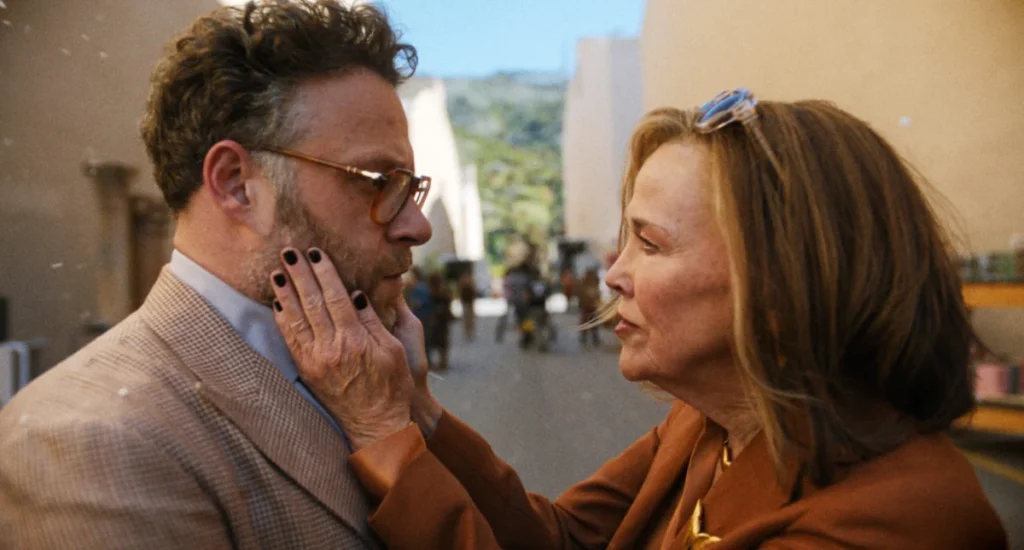

Filmmakers Seth Rogen and Evan Goldberg have spoken candidly about the immense challenges and emotional toll of navigating the second season of their acclaimed Apple TV+ series, The Studio, in the wake of the unexpected passing of their star, Catherine O’Hara. O’Hara, who portrayed the pivotal character of movie executive Patty Leigh, died on January 30, 2025, at the age of 71, leaving a significant void that the creative team is now grappling with as they proceed with the show’s highly anticipated return. The duo’s recent interview with The Times shed light on how O’Hara’s absence has fundamentally reshaped their plans, acknowledging her role as the undisputed "anchor" of the series.
The Unforeseen Challenge for The Studio Season 2
In the interview, Rogen and Goldberg underscored the profound difficulties encountered since O’Hara’s death, particularly given that her character, Patty Leigh, was central to the planned narrative arc of the upcoming second season. Goldberg articulated the magnitude of the situation, stating, "It has been an unbelievable challenge navigating her absence, also because her character was written into season two." He elaborated on the dual nature of this challenge: "Obviously emotionally, dealing with the loss, but also when it comes to the show itself. We wrote it for her to be there. We had it all set and the shock waves permeate throughout the entire new season." He concluded by echoing the interviewer’s apt description: "It’s been difficult. You worded it better than we could — she was the anchor and now the anchor is gone."
Rogen further expanded on this concept of O’Hara as the series’ anchor, revealing how the production intends to integrate this profound loss into the fabric of the show. "If anything, we’re acknowledging the idea that we are a little anchorless," Rogen admitted. He then connected this artistic decision to universal human experience: "But, honestly, that is a part of life and what we all experience. And so while we try to not dwell too much on heavy themes in this show, they will be there in this second season. We are not ignoring it." This approach suggests a nuanced handling of the tragedy, allowing it to inform the narrative and character development without necessarily becoming the sole focus, thereby maintaining the show’s comedic essence while honoring O’Hara’s impact.
Catherine O’Hara’s Enduring Legacy and Impact on The Studio
Catherine O’Hara’s death marked the end of an illustrious career spanning decades, characterized by her unparalleled comedic timing, dramatic depth, and an uncanny ability to create unforgettable characters. Born in Toronto, Canada, O’Hara began her career in the early 1970s as a member of The Second City improvisational comedy troupe, where she honed the skills that would make her a legend. Her early work on the sketch comedy show SCTV (Second City Television) brought her widespread recognition, showcasing her incredible range and knack for character impersonation. She created iconic figures like Lola Heatherton and Dusty Towne, demonstrating a versatility that would define her career.
Her filmography boasted a string of memorable performances, including her roles in classic films like Tim Burton’s Beetlejuice (1988), where she played the eccentric artist Delia Deetz, and the beloved holiday comedies Home Alone (1990) and Home Alone 2: Lost in New York (1992) as Kevin McCallister’s mother, Kate. These roles cemented her status as a versatile actress capable of both broad comedy and heartfelt moments.
In recent years, O’Hara experienced a resurgence in popularity with her Emmy-winning portrayal of the flamboyant, often melodramatic Moira Rose in the critically acclaimed series Schitt’s Creek. Her performance as the former soap opera star navigating a new life of destitution became a cultural phenomenon, earning her numerous accolades, including a Primetime Emmy Award for Outstanding Lead Actress in a Comedy Series in 2020. This role reintroduced her to a new generation of fans and reaffirmed her status as a comedic titan.
On The Studio, Rogen and Goldberg’s Apple TV+ comedy, O’Hara portrayed Patty Leigh, a formidable and often chaotic movie executive. Her character quickly became a fan favorite, providing a grounded yet hilariously unhinged presence that served as a crucial counterbalance to the show’s ensemble cast. She appeared in all 10 episodes of The Studio’s hit first season, anchoring the comedic chaos with her distinctive delivery and impeccable timing. Her performance was not just critically lauded but also resonated deeply with viewers, who saw in Patty Leigh a character both relatable and uniquely O’Harian.
A Timeline of Tributes and Posthumous Recognition
The news of Catherine O’Hara’s passing on January 30, 2025, sent shockwaves through Hollywood and among her legions of fans. Immediately following her death, a deluge of tributes poured in from colleagues, collaborators, and admirers across the entertainment industry. Apple TV+ and Lionsgate Television, the studios behind The Studio, released a joint statement expressing their collective grief: "We are all heartbroken by the loss of Catherine O’Hara." This sentiment was widely echoed by her co-stars and the broader creative community, highlighting the profound respect and affection she commanded.
Her final performance as Patty Leigh in The Studio continued to garner significant critical attention even after her death. She notably earned a posthumous nomination for a 2025 Emmy Award and a 2026 Golden Globe nod for Best Supporting Actress in a Comedy Series. These nominations underscored the enduring quality of her work and the industry’s recognition of her talent, even as it mourned her absence.
The culmination of this posthumous recognition came at the 2026 Actor Awards, where Catherine O’Hara was honored with the award for Best Actress in a Comedy Series for her work in The Studio. Seth Rogen, representing the cast and crew, took the stage to accept the prestigious award on her behalf, delivering a poignant and heartfelt speech. "I was asked to assume the honor of accepting this award on O’Hara’s behalf," Rogen stated to a reverent audience. "I know she would have been honored to receive this award from her fellow performers who I know she respected so much. She was such a big fan of all of yours." The moment served as a powerful testament to O’Hara’s impact on her peers and the industry.
Rogen and Goldberg had also previously paid homage to O’Hara during the awards season, particularly after their victory at the 2026 DGA Awards for outstanding directorial achievement for a comedy series. In their acceptance speech, both directors reflected on their profound admiration for the late actress. "Honestly, there’s no one we wish we could thank in person at this moment more than we would love to thank Catherine O’Hara," Rogen declared, prompting a spontaneous eruption of applause from the audience. Goldberg added a personal touch, emphasizing their long-standing reverence: "We grew up in Canada, and she is and was quite literally our idol since we were children." Rogen concluded their speech by dedicating their award to her: "Every day we worked very hard to make the show good enough to warrant her time and her presence. So, ultimately, we would like to thank the DGA for this, but we would mostly like to thank Catherine O’Hara for being such a wonderful person." These public statements consistently highlighted not just O’Hara’s professional brilliance but also her personal warmth and inspiring presence.
Navigating the Narrative Void: Creative Decisions for Season 2
The challenge facing Rogen and Goldberg extends far beyond emotional processing; it delves into the very core of narrative construction and character development. When a central figure, particularly one described as an "anchor," unexpectedly departs, writers and producers are confronted with a series of difficult creative decisions. The initial scripts for The Studio Season 2 were crafted with Patty Leigh’s active involvement, meaning substantial rewrites are now inevitable.
One primary consideration is how to address Patty Leigh’s absence within the show’s universe. Rogen’s statement about "acknowledging the idea that we are a little anchorless" suggests that the character’s death will likely be incorporated into the storyline, rather than simply having her disappear without explanation. This approach, while emotionally resonant, presents its own set of narrative complexities. It requires striking a delicate balance: honoring the character and the actress without letting the somber tone overwhelm the comedic spirit of the show. Integrating grief and loss into a comedy can be a powerful artistic choice, offering audiences a cathartic experience, but it demands careful execution to avoid tonal whiplash.
The writers will need to consider how Patty Leigh’s absence impacts the other characters and their storylines. As the "anchor," she likely served as a linchpin for various subplots and character relationships. Her departure will necessitate adjustments to the arcs of other characters, potentially forcing them into new roles or dynamics. This could lead to unforeseen creative opportunities, allowing other actors to step into more prominent positions or for new characters to be introduced to fill certain narrative functions. However, it also risks disrupting established chemistry and character development that made the first season successful.
The production timeline will also be affected. Rewriting entire arcs, character motivations, and dialogue takes time, potentially delaying the release of Season 2. The logistical challenges of re-planning scenes, re-casting (if a new character is introduced), and ensuring a cohesive narrative flow are considerable. This process requires not only creative ingenuity but also sensitivity and respect for O’Hara’s legacy.
The Rogen-Goldberg Partnership: A History of Innovation
Seth Rogen and Evan Goldberg have forged one of the most successful and distinctive creative partnerships in contemporary Hollywood. Their collaboration, which began in their teenage years in Vancouver, Canada, has yielded a string of critically acclaimed and commercially successful projects across film and television. Known for their unique blend of irreverent humor, heartfelt storytelling, and a penchant for pushing genre boundaries, Rogen and Goldberg have cultivated a recognizable brand.
Their film credits include writing and producing hits like Superbad, Pineapple Express, This Is the End, and The Interview. They have also directed several features, often employing a collaborative, improvisational style that allows their actors considerable freedom. In television, their work on series like Preacher and The Boys demonstrated their ability to adapt complex source material and deliver sophisticated, often subversive, narratives.
The Studio represents another facet of their diverse portfolio, leaning into a more industry-centric satire while retaining their signature comedic voice. The show’s premise, revolving around the inner workings of a major movie studio, allowed them to explore themes of ambition, creativity, and the absurdity of modern entertainment. O’Hara’s involvement from the outset was a testament to their ability to attract top-tier talent, further solidifying their reputation as creators who can deliver both popular appeal and critical depth. Her portrayal of Patty Leigh was a perfect fit for their comedic sensibilities, highlighting her ability to navigate both the absurd and the genuinely poignant.
Broader Implications for Television Production
The situation with The Studio is not unprecedented in television history, though each instance presents unique challenges. The death of a lead or pivotal cast member often forces productions to make difficult choices, balancing artistic integrity with practical considerations and respect for the deceased. Examples include the passing of John Ritter during 8 Simple Rules for Dating My Teenage Daughter, where the show chose to incorporate his character’s death into the storyline, and the death of James Gandolfini, which ended The Sopranos but not during production. More recently, the passing of Luke Perry necessitated significant rewrites for Riverdale, and the legacy of Carrie Fisher had to be addressed in the Star Wars sequel trilogy.
These situations highlight the profound human element inherent in collaborative creative endeavors like television production. Beyond the contractual obligations and narrative demands, there is the grieving process of the cast, crew, and creative team. Rogen and Goldberg’s emphasis on the emotional aspect underscores this reality; they are not just rewriting scripts but also navigating a collective loss.
The decision to "not ignore" O’Hara’s death and to acknowledge the show’s "anchorless" feeling sets a precedent for how The Studio will mature. It signals a commitment to authenticity and emotional honesty, even within a comedic framework. This approach can potentially deepen the show’s impact, transforming a moment of tragedy into a rich vein of storytelling that explores universal themes of loss, resilience, and memory.
Looking Ahead: The Future of The Studio
As The Studio moves forward with its second season, the shadow of Catherine O’Hara’s absence will undoubtedly loom large, both creatively and emotionally. The anticipation for the new season will be tinged with a sense of bittersweet curiosity: how will Rogen and Goldberg honor O’Hara’s legacy? How will the characters adapt to Patty Leigh’s departure? And can the show maintain its unique comedic voice while grappling with such a significant loss?
The commitment demonstrated by Rogen and Goldberg to acknowledge O’Hara’s pivotal role and the impact of her death suggests that Season 2 will be a profound tribute to her artistry. It will serve not only as a continuation of The Studio‘s narrative but also as a testament to the enduring influence of Catherine O’Hara, an actress whose talent and presence left an indelible mark on every project she touched. Her final performance in The Studio and the subsequent creative journey of the series will undoubtedly be remembered as a poignant chapter in television history, honoring a comedic legend who will be deeply missed. Fans and critics alike will be watching closely to see how this challenging yet potentially transformative phase shapes the future of the beloved series.