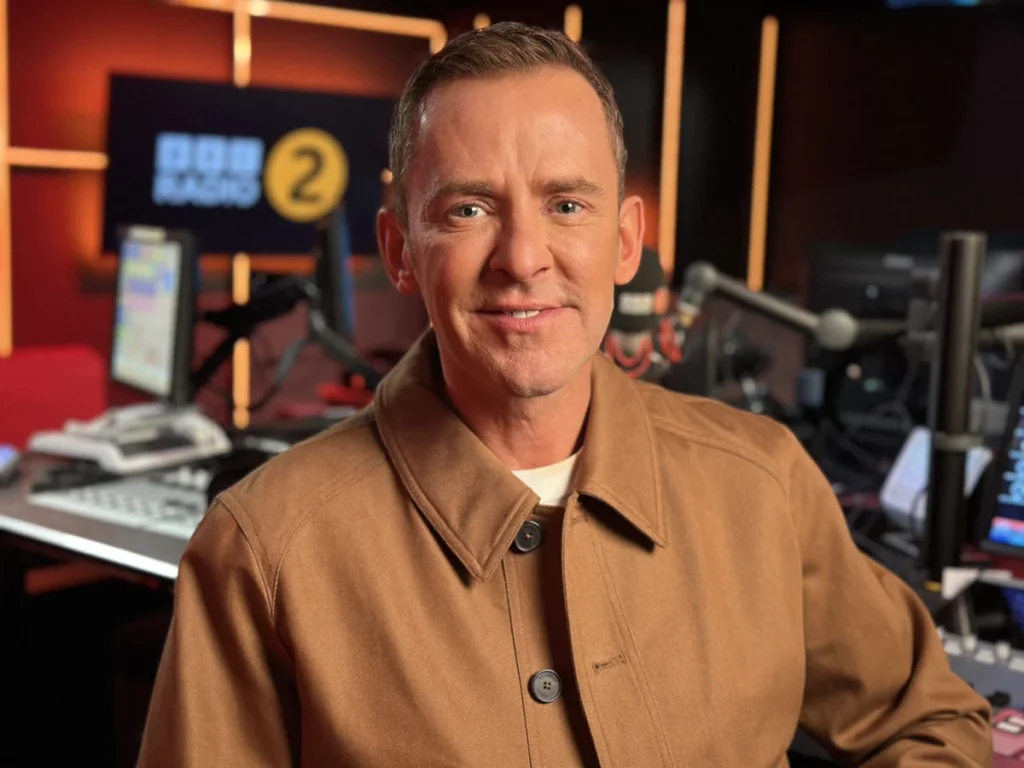

Veteran BBC presenter Scott Mills has been dismissed from his role at BBC Radio 2, a move described by internal sources as "sudden and unexpected," following the emergence of details surrounding a past police investigation into alleged serious sexual offences. The 53-year-old broadcaster, who had recently taken over the flagship Radio 2 breakfast show, was questioned under caution several years ago in connection with allegations involving a teenage boy under 16. While a comprehensive police investigation concluded with no charges being brought by the Crown Prosecution Service (CPS) due to insufficient evidence, the revelations have cast a significant shadow over Mills’ abrupt departure from the public broadcaster.
The Metropolitan Police confirmed details of the historical investigation, stating that enquiries began in December 2016 following a referral from another police force. The allegations related to serious sexual offences against a teenage boy, reportedly occurring between 1997 and 2000. During the course of these enquiries, a man in his 40s—later identified as Mills—was questioned by police under caution in July 2018. A full file of evidence was subsequently submitted to the Crown Prosecution Service. However, in May 2019, the CPS determined that the evidential threshold required to bring charges had not been met, leading to the closure of the investigation. The Met spokesperson explicitly confirmed that the alleged victim was under 16 at the time of the reported incidents.
Abrupt Departure and Internal Shockwaves

Scott Mills’ dismissal from the BBC has sent shockwaves through the organisation, particularly given his long-standing and prominent career. Reports indicate that Mills himself was "blindsided" by the claims and the subsequent decision to terminate his contract. His last broadcast reportedly concluded with him signing off, "See you tomorrow," unaware of the imminent end to his tenure.
The BBC issued a concise statement regarding the matter: "While we do not comment on matters relating to individuals, we can confirm Scott Mills is no longer contracted to work with the BBC." This official line, while standard for personnel matters, contrasts with the palpable surprise expressed internally. An internal message circulated to staff, seen by the Mirror, underscored the unexpected nature of the news. Lorna Clarke, Director of Music, reportedly informed staff: "I wanted to personally let you know that Scott Mills has left the Breakfast show, and the BBC. I know that this news will be sudden and unexpected and therefore must come as a shock. Not least as so many of us have worked with Scott over a great many years, across a broad range of our programmes on R1, 5Live, R2 and TV. I felt it was important to share this news with you at the earliest opportunity."
The reaction within the BBC newsroom was immediate and dramatic, with a BBC reporter describing "gasps" from staff upon learning of Mills’ sacking. The reporter further highlighted the significance of such a move, stating: "The fact that the bosses had to do this means there must be something potentially very significant here to let one of their big names go. As I said, this is a huge name in the BBC." The news comes just weeks after Mills was announced as a host for The Detour, a spin-off series of the popular Race Across The World, indicating that his career trajectory appeared stable and upward-bound prior to this development.
A Distinguished Career at the BBC: A Chronology

Scott Mills’ career at the BBC spanned over two decades, establishing him as one of the broadcaster’s most recognisable and enduring voices. His journey began in 1998 when he joined BBC Radio 1, initially presenting the early breakfast show from 4am to 7am. His engaging style and rapport with listeners quickly saw him rise through the ranks.
- 1998: Joins BBC Radio 1, hosting the early breakfast show.
- July 2005: Moves to an early evening weekday slot, covering for Sara Cox during her maternity leave. When Cox opted not to return, the programme evolved into The Scott Mills Show.
- 2006-2007: Ventures into television, appearing in the medical drama Casualty as reporter Paul Lang, showcasing his versatility beyond radio.
- 2007-2022: The Scott Mills Show becomes a staple of Radio 1’s daytime schedule, airing from 1pm to 4pm, Monday to Friday. During this period, he cultivates a loyal listenership and becomes synonymous with the station’s youth-oriented programming.
- 2014: Participates in Strictly Come Dancing series 12, paired with professional dancer Joanne Clifton. Despite being the fifth couple eliminated, his participation further elevated his public profile.
- Beyond Radio 1: Mills also presented a weekend show on BBC Radio 5 Live and made numerous television appearances on popular shows such as Never Mind The Buzzcocks, Supermarket Sweep, Mastermind, and Most Haunted.
- July 2022: A major career shift is announced as he prepares to move to BBC Radio 2, a station catering to an older demographic. This move was widely seen as a significant promotion and a testament to his broad appeal.
- 31 October 2022: His new afternoon show on Radio 2 launches, running from 2pm to 4pm, replacing the long-running Steve Wright in the Afternoon. This transition marked a new chapter in his broadcasting career.
- Last Year (implied 2023): Mills steps into the prestigious flagship Radio 2 breakfast slot, taking over from Zoe Ball, solidifying his position as one of the BBC’s most prominent presenters.
- Recent Weeks: Announced as a host for Race Across The World spin-off The Detour, further diversifying his portfolio into television presenting.
This extensive and varied career underscores the gravity of his sudden dismissal and the profound impact it has had within the BBC and among his dedicated fanbase.
The Crown Prosecution Service and Evidential Thresholds
The decision by the Crown Prosecution Service (CPS) not to bring charges against Scott Mills, despite the police investigation and his questioning under caution, is a critical element of this developing story. In the UK legal system, the CPS applies a two-stage test when deciding whether to prosecute: the evidential stage and the public interest stage.

For a prosecution to proceed, the evidential stage must be met first. This requires there to be a "realistic prospect of conviction." This means that the prosecutor must be satisfied that there is enough evidence to provide a realistic prospect of conviction against each defendant on each charge. This is an objective test, based on the prosecutor’s assessment of how a court would likely apply the law to the evidence. If the evidential threshold is not met, the case cannot proceed, regardless of any public interest considerations.
In Mills’ case, the CPS determined that the evidential threshold had not been met. This does not equate to an innocence declaration but signifies that, based on the evidence presented, there was insufficient material to secure a conviction. This distinction is crucial in understanding the legal outcome of the 2016-2019 investigation.
BBC’s Scrutiny and Safeguarding Policies
The BBC, as a public service broadcaster, operates under intense scrutiny regarding the conduct of its employees, particularly in light of historical safeguarding failures such as the Jimmy Savile scandal. That scandal, which came to light posthumously, revealed significant institutional failings within the BBC to address widespread sexual abuse by one of its most prominent stars. This led to a profound reassessment of the BBC’s safeguarding policies, reporting mechanisms, and corporate culture.

Since then, the BBC has emphasised its commitment to upholding the highest standards of personal conduct from its staff and talent. Any allegation, particularly those involving vulnerable individuals or historical sexual offences, is treated with extreme seriousness. While the BBC has not explicitly linked Mills’ dismissal to the police investigation, the timing of the news and the statement regarding "personal conduct" by other news outlets strongly suggest a connection. The BBC’s stance typically involves strict contractual clauses relating to moral conduct and bringing the organisation into disrepute. Even if a police investigation concludes without charges, an employer may still take disciplinary action if they believe an individual’s conduct has breached internal codes of conduct or poses a reputational risk.
The fact that the allegations relate to a period when Mills was working at BBC Radio 1 raises questions about what the BBC knew, and when. The original article states, "it is not known if the BBC was told of the investigation at the time." This ambiguity adds another layer of complexity to the situation and will likely be a point of public discussion, especially concerning the BBC’s internal communication protocols and its handling of allegations against high-profile talent. The broadcaster has faced criticism in the past for its perceived slowness or reluctance to act on information regarding misconduct by its stars.
Broader Impact and Implications
Scott Mills’ unexpected departure carries several implications, both for his personal career and for the BBC. For Mills, a celebrated figure in British radio for over two decades, this marks an abrupt end to a long and successful chapter. His future career prospects will undoubtedly be impacted by these revelations, regardless of the legal outcome of the police investigation. The public nature of his dismissal and the serious nature of the allegations, even without charges, will inevitably influence public perception.

For the BBC, this incident places renewed focus on its internal processes for vetting and managing talent, particularly concerning historical allegations. The organisation has worked diligently to rebuild trust in its safeguarding procedures since past scandals. Any suggestion that it failed to act appropriately or was unaware of serious allegations against a prominent presenter will inevitably lead to further questions from the public, media, and potentially regulatory bodies. The public’s trust in institutions, especially those funded by public money, is paramount, and any perceived lapse in maintaining ethical standards can have significant consequences for reputation and legitimacy.
The abruptness of the announcement and the internal "shock" among colleagues suggest that the decision was made swiftly, likely in response to the details of the police investigation becoming public or reaching a critical point internally. This indicates a proactive stance by the BBC to manage potential reputational damage, reflecting a more cautious approach than in previous eras.
The situation also highlights the ongoing challenge for individuals and institutions in navigating historical allegations, particularly when legal processes conclude without charges. While the justice system may deem there insufficient evidence for a criminal prosecution, the court of public opinion and an employer’s internal conduct policies can operate on different thresholds and considerations.
As the story continues to unfold, further details may emerge regarding the specific reasons for the BBC’s decision and the timeline of their awareness of the police investigation. For now, the departure of Scott Mills represents a significant moment for one of the UK’s most beloved broadcasters, underscoring the enduring sensitivity and seriousness with which allegations of this nature are treated in the public sphere. The Standard has attempted to contact Scott Mills’ representatives for comment regarding these developments.